A Guide to Safe Garage Door Crisis Repair
A garage door emergency is more serious than a simple access problem. The United States Consumer Product Safety Commission once reported that 73 children had become trapped and killed beneath automatic garage doors over a period beginning in 1982. That history helped drive stronger reversing and entrapment protection requirements for residential openers.
AI Overview
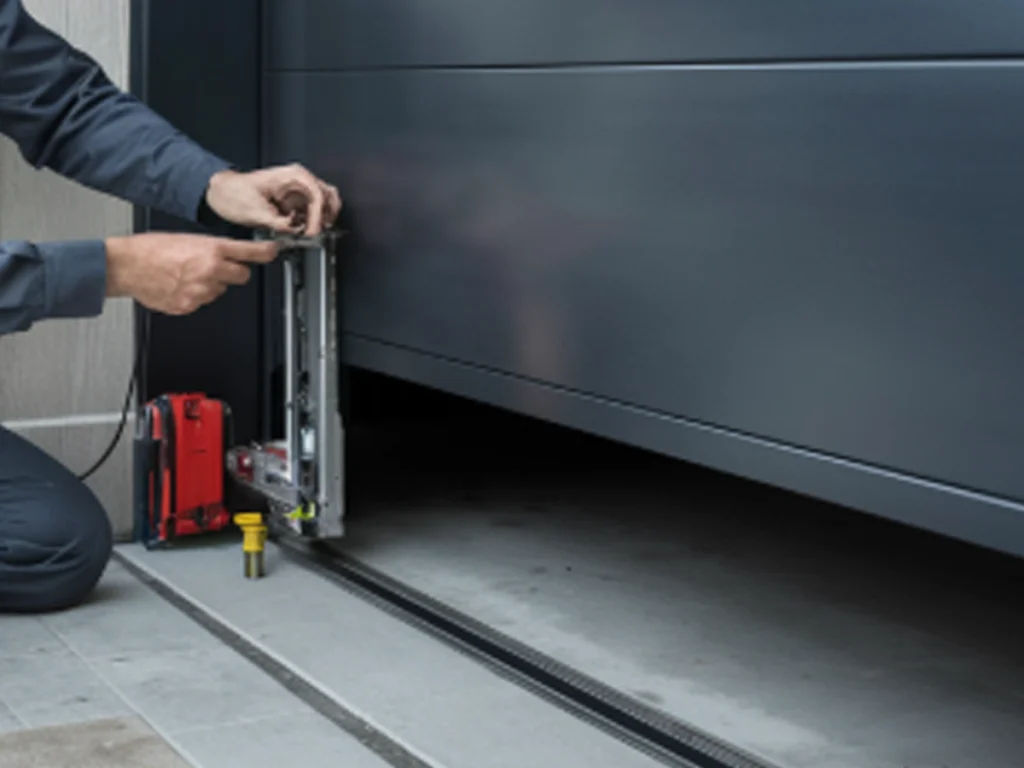
Professional garage door repair management is a structured way to control an urgent door failure safely. First, the technician identifies immediate risks and keeps people away from the damaged system. Then, the technician checks the springs, cables, rollers, tracks, panels, operator, controls, and safety devices.
A garage door crisis may involve a broken spring, loose cable, crooked door, damaged track, failed opener, vehicle impact, or door that will not close. Each problem requires a different response. Therefore, a trained technician should diagnose the cause before replacing parts or changing opener settings.
The best emergency service does more than make the door move again. It restores balance, checks connected parts, tests safety functions, and explains any remaining risks. It also gives the homeowner a clear repair plan before work begins.
For Franklin homeowners, effective crisis management protects people, property, vehicles, and home security. It also helps prevent a rushed repair from creating a second failure after the technician leaves.
Why Professional Garage Door Repair Management Matters
A garage door is usually the largest moving part of a home. Moreover, its springs and cables help manage considerable weight during each cycle.
Therefore, a sudden failure must be treated as a safety event.
- Professional control reduces the chance of sudden movement.
- A complete inspection helps uncover connected damage.
A broken component may place extra stress on several nearby parts. For example, a failed spring can leave the opener trying to lift a door that is too heavy.
Likewise, a cable that leaves its drum may cause the door to rise unevenly. The rollers may then bind inside the tracks.
Professional garage door repair management addresses this chain of risk. First, the system is stabilized.
This process matters because a door can appear stable while stored energy remains inside the spring or cable system.
As a result, safe crisis management must come before speed.
What Counts as a Garage Door Crisis?
Not every unusual sound requires an emergency call. However, some conditions should stop normal door use at once.
A crisis often involves unsafe movement, blocked access, lost security, or visible damage to load bearing parts.
- A hanging or crooked door can move without warning.
- A door that cannot close may leave the home exposed.
Urgent conditions may include:
- A broken torsion or extension spring
- A loose, frayed, or disconnected cable
- A door that has left one or both tracks
- A door that falls or closes too quickly
- An opener that runs while the door remains still
- A damaged panel that affects normal travel
- A door struck by a vehicle
- A burning smell, smoke, or unusual heat near the opener
- A failed safety reversal system
- A door trapped halfway above the opening
If smoke or fire is present, emergency services should be contacted before a repair provider.
However, if the problem is mechanical, a qualified garage door technician should secure and inspect the system.
The First Critical Step Is Protecting People
During a garage door crisis, the first goal is not restoring access. Instead, the first goal is keeping everyone away from danger.
Children and pets should remain outside the garage. Vehicles should also stay clear of the door path.
- No person should stand beneath a damaged door.
- No one should pull, push, or shake an unstable system.
A tilted door may suddenly drop when a roller, cable, or bracket moves. Likewise, a door with a failed spring may be far heavier than expected.
The Consumer Product Safety Commission advises homeowners to inspect the door and opener regularly. It also warns that a severely unbalanced door can fall unexpectedly.
The area should remain controlled until a technician confirms that movement is safe.
Why the Door Should Not Be Forced
A stuck garage door may tempt a homeowner to push harder or press the remote several times. However, repeated operation can increase the damage.
The opener may pull against a broken spring, bent track, jammed roller, or locked door.
- Continued operation can strain the opener.
- Forced movement may pull the door farther out of alignment.
A garage door opener is designed to move a properly balanced door. It is not meant to lift the full dead weight of a door with failed springs.
Likewise, forcing a crooked door can bend tracks or damage panels. It can also cause a cable to unwrap from its drum.
Therefore, professional garage door repair management begins by stopping needless movement.
The technician can then determine which parts are carrying the load and which parts have failed.
How a Professional Emergency Call Is Triaged
Good crisis management begins before the technician reaches the home.
A service coordinator should ask focused questions that reveal the level of risk and likely equipment needs.
- Clear questions help prepare the correct tools.
- Useful photos may help identify visible damage.
The homeowner may be asked:
- Is one side higher than the other?
- Did anyone hear a loud bang?
- Are any cables hanging loose?
- Is a spring visibly separated?
- Did a vehicle strike the door?
- Is the opener making noise?
- Is the home secure?
- Are people or animals near the door?
These questions do not replace an onsite inspection. However, they help the technician prepare for the likely problem.
They also help the service team explain immediate precautions before arrival.
How Technicians Secure a Dangerous Door
Once onsite, a technician should assess the door before touching controls or hardware.
The technician checks the door position, spring system, cable condition, track alignment, panel damage, and nearby hazards.
- The door must be supported before risky parts are handled.
- Electrical and mechanical energy must be controlled.
In workplace settings, OSHA requires control of hazardous energy when unexpected startup or stored energy could injure employees. Its standard covers electrical, mechanical, and other energy sources during servicing.
Residential service follows the same core safety logic. The technician prevents unwanted movement and disconnects power when needed.
The exact securing method depends on the door type and failure. No single method is correct for every crisis.
Broken Springs Need Expert Control
A loud bang from the garage may signal a broken spring. The door may then become difficult or impossible to lift.
Torsion springs sit above the opening on many residential doors. Extension springs run beside the horizontal tracks on other systems.
- Springs store energy used to balance the door.
- Incorrect spring work can cause severe injury.
A broken spring should not be touched, stretched, or removed by a homeowner. Likewise, winding cones and anchor points should not be loosened.
The technician must identify the correct spring size and confirm the door’s weight and configuration.
In addition, related parts should be inspected. Cables, drums, bearings, brackets, rollers, and the opener may have experienced added stress.
Professional garage door repair management does not end with fitting a new spring.
Loose Cables Can Create Sudden Movement
Garage door cables work with the spring and drum system. Therefore, a loose cable may signal a larger failure.
A cable may become slack after a spring breaks. It may also leave the drum when the door binds or rises unevenly.
- Loose cables should never be pulled by hand.
- Bottom brackets may remain under strong tension.
The technician first determines why the cable moved. Replacing or rewinding the cable without finding the cause may lead to another failure.
The full inspection may include cable condition, drum grooves, shaft position, spring tension, track alignment, and bottom fixtures.
Once repairs are complete, both sides should lift at the same rate.
This balanced movement reduces strain and helps the door remain level.
An Off Track Door Requires Immediate Restraint
A garage door can leave its tracks after an impact, cable failure, damaged roller, or severe alignment problem.
When this happens, the door may hang from only part of its support system.
- An off track door may twist or fall.
- Opener use can make the condition worse.
First, the door must be secured and the reason for derailment must be found.
A complete review includes the tracks, rollers, hinges, cables, brackets, panels, and mounting points.
If a vehicle caused the damage, the lower track and door sections may need close inspection.
After the repair, the technician should check clearances and travel through the entire opening cycle.
Opener Failure May Hide a Door Problem
When the opener stops working, many homeowners assume that the motor has failed. Yet the door itself may be placing too much strain on the operator.
A weak spring, tight roller, bent track, or damaged hinge can create excessive resistance.
- Electrical testing can identify control or power faults.
- Manual balance testing can reveal mechanical problems.
The technician may inspect the outlet, wall station, remote controls, wiring, logic board, drive system, travel settings, and motor.
Replacing an opener without correcting a heavy door can shorten the life of the new equipment.
Therefore, crisis management connects opener testing with a complete mechanical inspection.
Safety Sensors Need More Than Quick Alignment
A door that refuses to close may have blocked or misaligned photoelectric sensors.
However, sensor problems can also come from damaged wires, loose brackets, sunlight, moisture, or control board faults.
- Clean sensor lenses support a clear signal.
- Stable brackets help maintain correct alignment.
The Consumer Product Safety Commission explains that external entrapment protection became a federal requirement for residential opener systems. Its guidance also advises testing the automatic reversal function.
A technician should therefore test more than the indicator lights. The complete closing and reversal functions should be checked.
Force settings should not be increased simply to overcome a mechanical fault.
Instead, resistance inside the door system should be found and corrected.
Vehicle Impact Changes the Repair Plan
A vehicle strike may damage much more than the visible panel.
The impact can affect tracks, rollers, hinges, cables, brackets, framing, and opener alignment.
- Hidden damage can remain after the panel looks straight.
- Structural movement can change door clearances.
The technician should inspect the direction and location of the impact. Then, both sides of the system should be compared.
A damaged section may sometimes be replaced. However, replacement depends on model availability, door age, color, design, and structural condition.
The homeowner should receive a clear explanation of repair and replacement choices before deciding.
A Professional Diagnosis Prevents Repeat Failures
An emergency visit should not rely on one visible symptom.
For example, a cable may have come loose because a roller jammed. Likewise, an opener may have stopped because the spring system failed.
- Root cause diagnosis prevents incomplete repairs.
- Connected part checks reduce return visits.
A structured diagnosis usually covers:
- Door balance
- Spring condition
- Cable and drum condition
- Roller travel
- Track position
- Hinge and bracket condition
- Panel integrity
- Opener response
- Sensor operation
- Manual and automatic controls
The technician should explain which finding caused the crisis. Any added damage should also be identified.
This approach turns an urgent repair into a lasting solution rather than a temporary reset.
Clear Communication Reduces Crisis Stress
Garage door emergencies often happen before work, during bad weather, or late in a busy day.
Therefore, homeowners may feel pressure to approve the first proposed repair.
- A written scope helps prevent confusion.
- Itemized choices support informed decisions.
A professional provider should explain what is unsafe, what must be repaired now, and what can wait.
The technician should also clarify the parts, labor, testing, and warranty included in the service.
Instead, professional garage door repair management gives the homeowner enough information to make a sound choice.
Crisis Repair Should Include Final Safety Tests
A door that opens once is not automatically repaired.
The technician should confirm balance, smooth travel, even cable movement, full opening, full closing, and proper control response.
- Final testing verifies the completed work.
- Safety checks identify problems before normal use resumes.
The Consumer Product Safety Commission recommends checking the door balance, hardware, and automatic reversal function. It also advises regular inspection of the door and opener.
Testing may include several complete operating cycles.
The technician should listen for rubbing, popping, grinding, or delayed movement. Sensors and wall controls should also work as intended.
Finally, the homeowner should receive clear guidance about safe use and future maintenance.
Illustrative Case Study: A Trapped Vehicle
Consider an illustrative Franklin homeowner preparing to leave for work. The opener runs, but the door rises only a few inches.
The homeowner notices a gap in the spring above the door and stops using the opener.
- Stopping early prevents added opener strain.
- A clear phone description helps prepare the service call.
During inspection, the technician confirms a broken torsion spring. The cables remain in place, but the door is too heavy for normal opener use.
The technician secures the door, measures the system, installs the correct replacement spring, and checks connected hardware.
This is an educational example rather than a claim about a specific Everlast Garage Doors – Franklin customer.
Illustrative Case Study: A Crooked Door
In another illustrative case, a homeowner finds the door halfway open with one side lower than the other.
A loose cable is visible near the lower corner. The homeowner keeps everyone away and avoids pressing the remote.
- Avoiding operation limits further track damage.
- Keeping the opening clear protects family members.
The technician secures the tilted door before inspecting the cable and drum system.
Further inspection reveals that a damaged roller caused binding. The uneven movement then allowed the cable to lose its correct position.
The repair addresses the roller, cable position, track condition, and door balance.
This example shows why repairing only the visible cable would have left the original cause in place.
What Homeowners Can Safely Check
Homeowners may complete a few visual checks from a safe distance. However, they should not remove covers or touch high tension parts.
First, they can confirm whether the opener has power. They can also look for a blocked sensor path.
- Observe the door without standing underneath it.
- Stop immediately when movement is uneven or harsh.
Homeowners may note:
- The door position
- Any visible spring gap
- Loose cables
- Bent tracks
- Damaged panels
- Flashing opener lights
- Unusual sounds
- A burning smell
- Recent impacts
Photos may help the service team prepare. However, they do not replace an onsite safety assessment.
What Homeowners Should Never Do
Several garage door repair steps are unsafe without training and suitable equipment.
Homeowners should not adjust springs, loosen cable drums, remove bottom brackets, or force a hanging door.
- High tension parts can release energy suddenly.
- Improvised tools may slip during adjustment.
Likewise, a homeowner should not crawl beneath a stuck door.
Opener force should not be raised to push through resistance.
Finally, damaged sensors should not be bypassed for continued automatic use.
These actions may restore movement briefly. However, they can create a more severe hazard.
How to Choose an Emergency Garage Door Provider
A trustworthy provider should have clear business details, relevant experience, and a professional inspection process.
The company should be willing to explain its findings before starting nonessential work.
- Ask for a written repair scope.
- Confirm what testing follows the repair.
Useful questions include:
- What caused the failure?
- Is the door currently safe?
- Which parts need immediate repair?
- What does the quoted price include?
- Are the replacement parts compatible?
- Will the opener safety functions be checked?
- Is repair practical, or is replacement safer?
- What warranty applies?
A clear answer is a strong sign of professional crisis management.
Why Preventive Service Reduces Emergency Risk
Not every crisis can be prevented. However, planned inspection may reveal worn parts before a sudden failure occurs.
Loose hardware, frayed cables, noisy rollers, poor balance, and weak seals may provide early warning.
- Regular checks support safer operation.
- Service records help track repeated problems.
The Consumer Product Safety Commission advises regular inspection and testing of residential garage doors and opener systems.
The correct service schedule depends on door use, age, environment, and manufacturer guidance.
Homeowners should also report changes quickly. New sounds, slow movement, shaking, or uneven travel deserve attention.
Early repairs are often easier to plan than emergency work after the door becomes trapped.
Why Franklin Homes Need a Local Crisis Plan
Franklin households often depend on garage doors for daily vehicle access and home entry.
Therefore, a sudden door failure can affect schedules, security, storage, and family safety.
- Local service supports faster site access.
- Familiarity with common door systems improves preparation.
Weather can also expose weak seals, electrical connections, and metal components. In addition, power loss or storm debris may affect normal operation.
A local crisis plan should include a trusted service contact and basic safety steps.
Family members should know not to force the door or stand beneath a damaged system.
This simple planning can reduce panic when an unexpected failure occurs.
How Everlast Garage Doors – Franklin Manages Risk
Everlast Garage Doors – Franklin approaches urgent service as a process rather than a quick part change.
The first priorities are safety, system control, and accurate diagnosis.
- The complete door system receives attention.
- Repair options are explained in clear terms.
The service approach considers the springs, cables, tracks, rollers, panels, opener, controls, and safety functions.
Moreover, the repair plan reflects the door’s condition and the homeowner’s immediate needs.
The goal is not merely to restore movement. Instead, the goal is to restore dependable and safe use.
That method helps position Everlast Garage Doors – Franklin as a trusted source for professional garage door repair management.
Trusted Garage Door Safety Resources
Homeowners can use recognized sources to learn more about garage door and repair safety.
- Public resources explain important consumer risks.
- Industry guidance supports proper door care.
The United States Consumer Product Safety Commission provides consumer warnings, safety publications, and product recall information.
The Occupational Safety and Health Administration explains hazardous energy controls for servicing and maintenance in covered workplaces.
The Door and Access Systems Manufacturers Association provides technical and safety information for door and access systems.
These sources support informed decisions. However, manufacturer instructions and onsite professional findings should guide each specific repair.
Frequently Asked Questions
What should I do when my garage door suddenly breaks?
Keep people, pets, and vehicles away from the door. Stop using the opener and do not force the door by hand. Note its position, visible damage, unusual sounds, and whether the home is secure. Then contact a qualified repair provider. Mention loose cables, a spring gap, impact damage, smoke, or a trapped vehicle when requesting service.
Is a broken garage door spring an emergency?
A broken spring can become urgent because it leaves the door heavy and may trap a vehicle or prevent secure closing. Continued opener use can also strain other components. Do not touch the spring, cables, drums, or bottom brackets. A trained technician should secure the system, match the replacement spring, restore balance, and inspect connected parts.
Can I manually open a garage door with a broken spring?
A door with a broken spring may be extremely heavy and difficult to control. Attempting to lift it can cause injury or allow the door to fall. The opener release should not be pulled while the door is raised or unstable. Professional assistance is the safer choice, especially when cables are loose or the door is crooked.
Why is my garage door stuck halfway?
A door may stop halfway because of a broken spring, jammed roller, damaged track, cable problem, opener fault, or obstruction. Because several causes can produce the same symptom, repeated opener use is risky. Keep the area clear and request an inspection. The technician should secure the door before testing individual parts or restoring movement.
When should a garage door be replaced instead of repaired?
Replacement may be more practical when several panels are badly damaged, the door has severe structural distortion, repair parts are unavailable, or failures occur often. Repair may remain suitable when the structure is sound and damage is limited. A professional comparison should consider safety, repair cost, remaining service life, insulation, reliability, and future maintenance.
Conclusion
Professional garage door repair management brings order to a stressful and potentially dangerous event.
It begins by keeping people away from the damaged door. Next, the system is secured against unwanted movement.
The technician then identifies the cause, checks connected parts, and explains suitable repair options.
This method is especially important for broken springs, loose cables, crooked doors, failed openers, damaged tracks, and vehicle impacts.
Moreover, the repair should end with balance checks, movement tests, control tests, and safety reversal checks.
A rushed repair may restore movement without correcting the root cause. By contrast, professional crisis management seeks a safe and lasting result.
Everlast Garage Doors – Franklin provides focused residential garage door service for homeowners in Franklin, Tennessee. The service approach centers on accurate findings, responsible repairs, compatible parts, and clear communication.
Contact Everlast Garage Doors – Franklin
Do not force a damaged, crooked, stuck, or unusually heavy garage door. Keep the area clear and request a professional safety inspection.
At Everlast Garage Doors, we provide complete Garage Door Services for both residential and commercial properties. Our team handles Garage Door Installation, Repair, Maintenance, Custom Designs , and full Door Replacements to ensure long-lasting performance and reliability. We also offer Emergency Garage Door Service to quickly resolve urgent issues and keep your property secure and fully operational. With Everlast Garage Doors, you can count on quality, durability, and trusted service every step of the way.
Contact us at
Phone: 615-808-8806
Location: 1107 Battlewood St #222, Franklin, TN 37069