
A garage door opener is covered by a dedicated federal safety rule in the United States. Automatic residential garage door operators must comply with 16 CFR Part 1211, which addresses entrapment protection. Therefore, replacing a garage door is more than changing visible panels. The safest approach considers the door, springs, tracks, opener, sensors, hardware, and final safety tests as one complete system. U.S. Consumer Product Safety Commission
AI Overview: Why Garage Door Replacement Methods Matter
Garage door replacement methods affect safety because every major part of the system works with the other parts.
A replacement door needs the correct size, weight, track system, spring setup, hardware, and opener compatibility. In addition, the finished system must move smoothly and remain properly balanced.
The safest replacement method begins with an inspection. Next, the technician determines whether the property needs a full door replacement, individual section replacement, opener replacement, or a wider system upgrade.
Professional installation also considers safety sensors and entrapment protection when an automatic opener is used. Federal rules govern automatic residential garage door operators, while UL 325 provides important entrapment protection requirements referenced by those rules.
For homeowners and decision makers, several points deserve close attention.
- Replace damaged parts based on the condition of the whole system.
- Match springs and hardware to the actual weight of the replacement door.
- Confirm that tracks support smooth and stable door travel.
- Test safety systems after installation and adjustment.
- Never treat the opener as a solution for a poorly balanced door.
Therefore, garage door replacement should focus on safety first.
Appearance, insulation, convenience, and value still matter. However, safe movement and reliable control should guide every major decision.
Why Safe Garage Door Replacement Starts With Inspection
Every useful replacement plan should begin with a careful inspection.
A damaged panel may look like the main problem. However, another part may have also changed after an impact or years of wear.
For example, tracks can move out of position. Hardware can loosen. Rollers can wear. Springs can also lose performance.
Therefore, replacing only the visible damage may leave another concern unresolved.
A professional inspection should look at how the complete door operates.
- Check the condition and alignment of the tracks.
- Inspect rollers, hinges, cables, brackets, and related hardware.
- Review the condition and suitability of the springs.
- Observe how smoothly the door moves.
- Check whether the door remains properly balanced.
- Review opener and safety sensor performance.
notes that a garage door is often the largest moving part of a home. The organization also explains that parts can wear over time and create possible safety problems
That is why inspection must come before replacement decisions.
The best method solves the confirmed problem instead of simply replacing the most obvious part.
Full Garage Door Replacement Can Solve Wider Problems
Full replacement is often considered when damage affects several areas of the door.
However, age alone does not automatically prove that replacement is required.
The condition of the sections, tracks, hardware, springs, opener, and structure should guide the decision.
Full replacement can also make sense when several parts no longer work well together.
For example, badly damaged sections can affect movement. Corrosion can weaken materials. A door can also become difficult to balance correctly.
A full replacement process allows the new components to be selected as one compatible system.
- Select the correct door size and construction.
- Match the spring system to the weight of the door.
- Confirm that tracks and rollers suit the replacement system.
- Review opener capacity and compatibility.
- Complete safety checks before normal use.
This method can remove several connected problems at one time.
However, replacement should never be recommended without evaluating repair options first.
A responsible garage door professional should explain why replacement offers a better safety or performance outcome.
Panel Replacement Can Be Safe in the Right Situation
Not every damaged garage door needs complete replacement.
Sometimes, one section can be replaced while the remaining system stays in service.
However, panel replacement depends on more than appearance.
The replacement section must be suitable for the existing door. Its construction and weight can affect the balance of the system.
In addition, the remaining sections should still be structurally sound.
- Check whether compatible replacement sections are available.
- Inspect nearby sections for cracks, bends, rust, or other damage.
- Confirm that the replacement does not create a balance problem.
- Test door travel after the new section is installed.
- Review springs and opener performance after the work.
Therefore, panel replacement can be practical when damage is limited.
It should not be used to hide a wider structural problem.
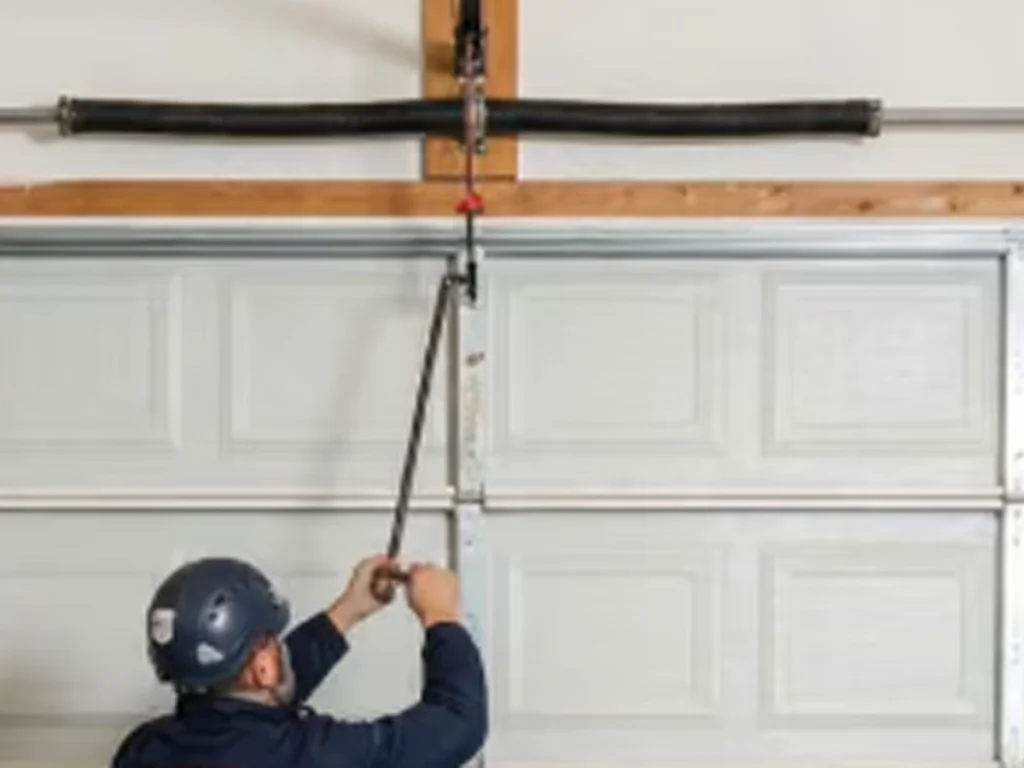
Spring Selection Is a Critical Safety Decision
Springs perform one of the most important jobs in a garage door system.
They help counterbalance the weight of the door.
Because of that role, a replacement door may require a different spring setup from the old door.
A new door can have a different weight because of its size, material, windows, insulation, or construction.
Therefore, existing springs should not automatically be assumed suitable.
- Determine the actual requirements of the replacement door.
- Use springs designed for the correct load.
- Confirm proper balance after installation.
- Inspect cables and related lifting hardware.
- Keep untrained people away from high tension spring work.
For that reason, spring selection is not a minor installation detail.
It is central to safe replacement.
Track Replacement Can Restore Safe Door Movement
Tracks guide the garage door through its movement.
They need the correct position, spacing, support, and alignment.
A replacement project should therefore include a track inspection.
Old tracks should not automatically remain simply because they appear usable.
Damage, movement, corrosion, incorrect geometry, or compatibility problems can affect safe travel.
- Check tracks for bends and physical damage.
- Confirm secure mounting to the supporting structure.
- Check alignment before operating the new door.
- Make sure rollers travel smoothly through the system.
- Replace unsuitable tracks when the new door requires them.
A door that binds can put extra stress on other components.
Likewise, unstable movement can create larger problems.
Therefore, proper tracks support both safety and reliable operation.
The goal should always be smooth and controlled door travel.
Opener Replacement May Be Part of a Safer Upgrade
Replacing the door does not always mean replacing the opener.
However, the opener should be evaluated whenever the door changes.
Compatibility matters because the opener needs to operate the completed door correctly.
In addition, older equipment may not provide the safety functions expected from current residential opener systems.
Automatic residential garage door operators sold in the United States are subject to the federal safety standard in 16 CFR Part 1211.
UL Solutions also explains that the federal requirement directly references UL 325 entrapment protection provisions for residential garage door operators.
Therefore, opener evaluation should include several points.
- Check compatibility with the replacement door.
- Review safety reversal performance.
- Confirm proper external entrapment protection.
- Inspect the manual release function.
- Review controls and connected equipment when applicable.
The opener should operate a properly balanced door.
It should never be expected to overcome a mechanical problem.
Safety Sensors Need Attention During Replacement
Safety sensors are an important part of many automatic garage door systems.
Their location and operation should be reviewed during replacement work.
Moving tracks, changing the door, or working around the opening can affect sensor position.
Therefore, installers should confirm proper operation before routine use resumes.
- Keep the sensor path free from objects.
- Check mounting and alignment.
- Inspect visible wiring for damage.
- Test the system according to manufacturer instructions.
- Never bypass required safety equipment.
Therefore, safety sensors should never be treated as optional accessories.
They are part of the larger safety system.
Door Balance Is One of the Most Powerful Safety Checks
Balance is one of the clearest ways to understand how the door and spring system work together.
A properly configured counterbalance system helps manage the weight of the door.
This reduces the need for the opener to fight excessive weight or resistance.
For that reason, balance should be checked after significant replacement work.
- Confirm that the springs match the door.
- Check movement through the full travel path.
- Watch for uneven or unstable motion.
- Review roller and track performance.
- Investigate a door that feels unusually heavy.
A heavier replacement door can change the demands placed on the spring system.
Likewise, an improperly configured system can place more stress on the opener.
Therefore, replacement is not complete when the panels simply fit the opening.
The completed door must also operate correctly.
Safe Replacement Requires Correct Measurements
Garage door replacement begins long before the old door comes down.
Correct measurements help determine what system will fit the opening and surrounding structure.
Width and height matter, but they are not the only measurements.
Headroom, side room, back room, track type, and opener placement can also affect installation choices.
- Measure the opening accurately.
- Review available headroom above the door.
- Check space beside the opening.
- Confirm the required track arrangement.
- Review the available space for the opener.
Incorrect measurements can lead to poor fit.
They can also create installation problems that affect movement and safety.
For decision makers, this is a strong reason to avoid selecting a replacement door based only on its appearance.
The complete installation environment matters.
Professional Replacement Reduces High Risk Work
Garage doors contain heavy moving sections and loaded components.
Because of that, some replacement tasks carry serious risk.
Spring work deserves particular caution.
A professional replacement process also requires control of the door while sections and hardware are removed.
- Secure the door before major disassembly.
- Keep people away from the work area.
- Use the correct tools and procedures.
- Follow manufacturer installation instructions.
- Test the completed system before normal use.
Do it yourself work may appear cheaper at first.
However, replacement errors can affect balance, travel, hardware, and opener performance.
Therefore, homeowners should carefully consider the risk before attempting major replacement work.
Repair or Replacement Should Be Based on Evidence
One of the most common questions is whether a garage door should be repaired or replaced.
There is no universal answer.
A repair may be appropriate when the damage is limited and the rest of the system remains in good condition.
Replacement can become more reasonable when damage affects several components.
Frequent problems can also change the decision.
- Consider the amount of physical damage.
- Review the condition of the remaining sections.
- Check the tracks and counterbalance system.
- Consider availability of compatible replacement parts.
- Compare the expected outcome of repair with replacement.
Therefore, the safest choice comes from inspection rather than a simple age rule.
An Illustrative Franklin Replacement Case Study
Consider a hypothetical Franklin homeowner whose garage door has been struck near the lower section.
The lower panel is bent.
At first, replacing one panel appears to be the obvious solution.
However, the door also begins making a new sound during travel.
That second symptom changes the assessment.
A complete inspection would need to look beyond the bent panel.
- Inspect the damaged section and nearby hinges.
- Check the tracks for movement after the impact.
- Review rollers and brackets.
- Confirm that cables remain correctly positioned.
- Test balance before returning the system to normal service.
Suppose the inspection finds that the panel is damaged but the tracks and other sections remain sound.
In that case, compatible panel replacement may be worth considering.
Now suppose the impact has also bent the track and damaged several sections.
A wider replacement could become more appropriate.
This case is illustrative only.
It is not presented as an actual Everlast Garage Doors customer result.
The example shows why a safe replacement method begins with evidence.
Why Old Springs Should Not Be Ignored
A new door can look perfect while relying on worn lifting components.
That is not a sound replacement strategy.
Springs wear through repeated operation.
Their expected service life also depends on factors related to the system and its use.
Therefore, spring condition deserves review whenever major replacement work occurs.
- Look at the current spring system as part of the inspection.
- Determine whether it suits the replacement door.
- Review the condition of connected cables and hardware.
- Replace unsuitable parts using correct specifications.
- Test the completed counterbalance system.
The key point is simple.
New panels do not automatically create a new system.
Other components still need to work safely with them.
Safety Testing Should Finish Every Replacement
Installation is not finished when the last fastener is installed.
The system still needs testing.
This stage confirms whether the door behaves as expected under actual operation.
Automatic opener systems need special attention because they combine mechanical movement with powered controls.
- Observe several complete opening and closing cycles.
- Listen for unusual noise.
- Watch for shaking or uneven movement.
- Test required safety functions.
- Confirm proper final positions.
- Check that manual controls work as intended.
Testing after replacement provides a useful baseline.
Future changes become easier to notice when the owner knows how the new system should behave.
Three Trusted Safety Resources for Property Owners
Garage door information should come from reliable sources.
Marketing claims alone are not enough when safety is involved.
Property owners and decision makers can use three strong resources when reviewing replacement choices.
- United States Consumer Product Safety Commission
- UL Solutions
- Door and Access Systems Manufacturers Association
Franklin Decision Makers Need a Whole System Approach
A homeowner may care about reliable daily access.
A property manager may focus on downtime and maintenance.
A business owner may care about security, safe movement, and predictable operation.
Despite these different goals, each decision maker benefits from a whole system replacement strategy.
Everlast Garage Doors states that it provides garage door installation, repair, maintenance, replacement, hardware, and related services. Its website lists service throughout Franklin and surrounding Middle Tennessee communities.
That range matters because replacement decisions can involve several components.
- Door condition affects replacement scope.
- Springs affect balance.
- Tracks affect travel.
- Openers affect powered operation.
- Safety devices affect entrapment protection.
A door should not be treated as a collection of unrelated parts.
Each part affects the finished result.
Smart Features Can Add Useful Safety Awareness
Modern garage door systems may offer connected features.
These options can include door status information, remote controls, alerts, cameras, or access functions.
However, connected features do not replace physical safety.
A smart system still depends on correct installation.
- Choose connected features based on real needs.
- Keep required safety equipment working.
- Review opener compatibility during replacement.
- Protect access settings and account credentials.
- Respond to repeated operating alerts.
The best smart feature is still supported by a stable mechanical system.
Therefore, technology should add awareness rather than hide physical problems.
A door that binds, shakes, or moves unevenly needs mechanical attention.
An app cannot correct bad balance or damaged tracks.
Why Replacement Quality Can Affect Long Term Value
Garage door replacement is a long term property decision.
Appearance often receives the most attention.
However, safe operation and good installation can matter far more during daily use.
A well planned project considers both immediate and future needs.
- Select materials that fit the property and expected use.
- Consider insulation when it provides practical value.
- Choose compatible hardware and opener equipment.
- Plan for future service access.
- Keep manufacturer information after installation.
Decision makers should also compare proposals by scope rather than price alone.
One quote may include tracks, springs, removal, opener work, or safety testing.
Another may not.
Therefore, understanding what is included can prevent false comparisons.
Five Warning Signs That Replacement Needs Expert Review
Some garage door problems deserve prompt professional attention.
Visible damage is only one warning sign.
Changes in movement can be just as important.
- The door becomes crooked during travel.
- Several panels show serious damage.
- Tracks appear bent or unstable.
- The door feels unusually heavy.
- Major parts show repeated failures.
Broken or damaged spring components also deserve caution.
specifically warns that spring failure can cause injury.
Therefore, people should not stand beneath an unstable door or continue cycling a badly damaged system.
The safest action is often to stop using the door until it can be inspected.
Our Expert View on Safer Garage Door Replacement
The strongest replacement method is not always the method that replaces the most parts.
Instead, it is the method that solves the confirmed safety and performance issues.
That difference matters.
Replacing a whole door when one compatible section would solve the problem can create unnecessary cost.
Likewise, replacing only a panel when tracks and lifting components are damaged can leave important problems behind.
A better approach follows a clear order.
- Inspect before deciding.
- Identify damaged and worn parts.
- Confirm compatibility.
- Install the correct replacement system.
- Balance the door correctly.
- Test movement and safety features.
This evidence based process gives homeowners and decision makers a clear reason for each recommendation.
It also supports more transparent service.
Why Everlast Garage Doors – Franklin Fits the Safety Focus
Everlast Garage Doors – Franklin serves homeowners and businesses with garage door services across Franklin and nearby Middle Tennessee communities.
The company’s current website lists installation, repair, maintenance, replacement, garage door springs, motors, and emergency service among its offerings.
That service scope supports a whole system approach.
- Replacement can be considered alongside repair options.
- Spring and opener concerns can be evaluated during the same process.
- Maintenance can support the system after installation.
- Emergency service can address urgent operating problems.
The goal should remain simple.
A replacement garage door must do more than look new.
It must operate safely and reliably.
Final Analysis: Better Replacement Methods Create Safer Doors
Garage door replacement methods can improve safety when they address the complete operating system.
The process begins with inspection.
Next, the installer determines which parts actually need replacement.
Correct measurements, suitable springs, aligned tracks, compatible opener equipment, and functioning safety systems all support the finished result.
- Never judge replacement needs from appearance alone.
- Do not ignore balance or spring condition.
- Review opener safety when replacing the door.
- Test the completed system before regular use.
- Follow manufacturer and recognized safety guidance.
For Franklin homeowners, property managers, and business decision makers, this approach can remove guesswork from an important property decision.
At Everlast Garage Doors, we provide complete Garage Door Services for both residential and commercial properties. Our team handles Garage Door Installation, Repair, Maintenance, Custom Designs , and full Door Replacements to ensure long-lasting performance and reliability. We also offer Emergency Garage Door Service to quickly resolve urgent issues and keep your property secure and fully operational. With Everlast Garage Doors, you can count on quality, durability, and trusted service every step of the way.
Everlast Garage Doors – Franklin provides garage door replacement, installation, repair, and maintenance services in the Franklin area.
For garage door replacement and safety concerns, contact the team for an assessment.
Phone: 615-808-8806
Location: 1107 battle wood St #222, Franklin, TN 37069
A safe garage door replacement starts by understanding why the existing system has failed.
From there, the right replacement method can restore reliable movement, proper balance, safety, and confidence.
Frequently Asked Questions About Garage Door Replacement
How long does a garage door usually last before replacement?
Garage door life varies with material, climate, use, maintenance, impacts, and component condition. Therefore, age alone should not decide replacement. A professional should inspect the panels, tracks, springs, hardware, balance, and opener. Replacement becomes more reasonable when wider damage or repeated problems make dependable repair difficult. This is also a common replacement question in current homeowner guidance.
Can I replace one garage door panel instead of the whole door?
Yes, replacing one section may be possible when damage is limited and a compatible panel is available. However, the remaining sections, tracks, hinges, springs, and balance should also be inspected. A replacement panel can affect weight and appearance. Therefore, whole door replacement may make more sense when several sections or important supporting parts are damaged.
Should I replace my garage door opener with the new door?
Not automatically. A working opener may remain suitable if it is compatible with the new door and meets current needs. However, replacement work is a good time to review opener capacity, condition, safety reversal, controls, and entrapment protection. Automatic residential operators are subject to the federal safety requirements in 16 CFR Part 1211.
Is replacing a garage door a safe do it yourself project?
Garage door replacement involves heavy sections, tracks, cables, and spring systems that can store significant energy. Therefore, major replacement work can create serious risk when performed without the correct training and tools. identifies garage door springs as especially important and dangerous components. Homeowners should consider professional installation when work involves springs, cables, major structural parts, or door balance.
What safety features should I check after garage door replacement?
Check smooth door movement, proper balance, secure hardware, track alignment, safety reversal, external entrapment protection, and manual release operation where applicable. Follow the manufacturer instructions for the specific door and opener. In the United States, automatic residential garage door operators must comply with federal requirements under 16 CFR Part 1211, which address entrapment protection.