
ENERGY STAR reports that about nine out of ten homes in the United States are under insulated. That finding matters because insulation and air sealing work together to control unwanted heat flow. An attached garage can also affect rooms beside it or above it when the surrounding building areas are poorly sealed.
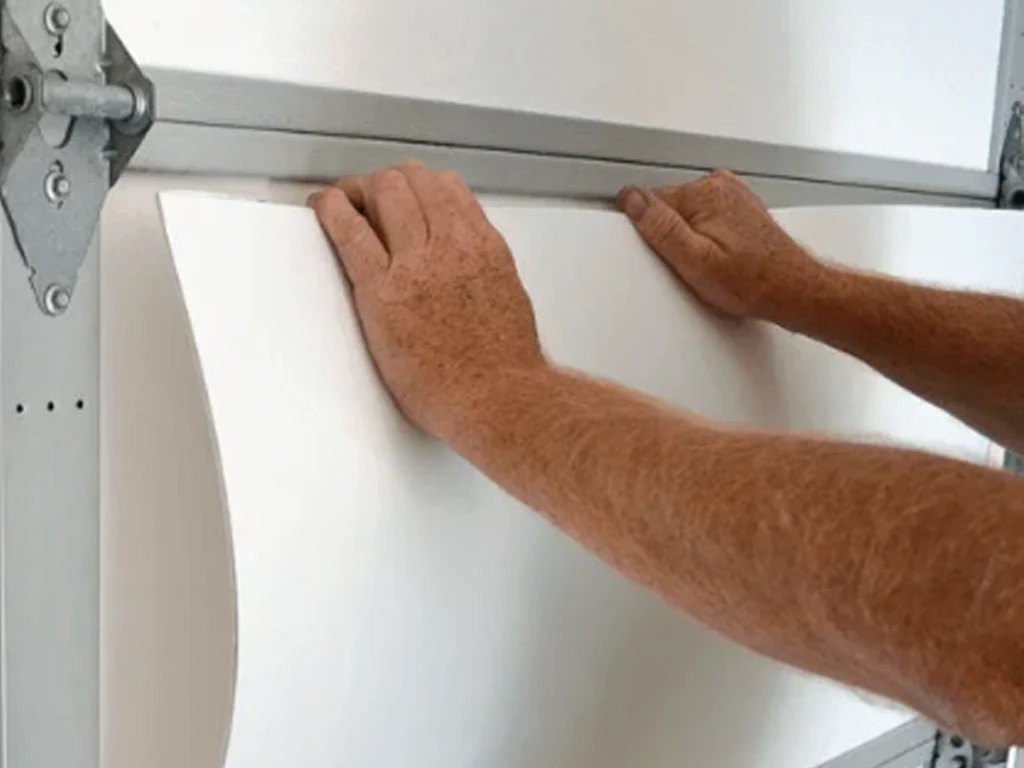
For Franklin homeowners, Insulated Garage Door Installation can be one useful part of a broader energy plan. A garage door covers a large opening. Therefore, its construction, insulation, seals, fit, and daily use can influence temperatures inside the garage.
AI Overview: What Homeowners Should Know First
Insulated Garage Door Installation uses a garage door built with insulating material between its outer surfaces. Common options use polyurethane or polystyrene insulation. As a result, the door can slow heat transfer better than a basic single layer metal door.
However, insulation alone does not make a garage fully energy efficient. Door seals, wall insulation, ceiling insulation, air leaks, windows, and the connection between the garage and home also matter.
A professional installation should therefore focus on the complete door system. That includes panel fit, track alignment, spring balance, bottom seals, perimeter weather seals, and proper operation.
For many Franklin homes, an insulated door makes the most sense when the garage is attached to the house. It may also be useful when a bedroom sits above the garage or when the garage serves as a workshop.
DASMA also explains an important detail. R-value describes resistance to heat flow, while U-factor describes heat transfer through the complete assembly. Therefore, shoppers should avoid judging a garage door by a single insulation number.
- Insulation can slow unwanted heat transfer through the garage door.
- Good seals can help reduce unwanted air movement around the opening.
- Complete door performance matters more than one marketing number.
- Professional installation can help ensure the door closes and seals as designed.
Why Insulated Garage Door Installation Matters in Franklin
Franklin experiences warm summers, cooler winter periods, humidity, rain, and changing seasonal conditions. Because of that, a garage door faces more than simple daily opening and closing.
A thin garage door can allow outdoor temperature changes to reach the garage faster. In contrast, insulation adds thermal resistance between the outdoor surface and the indoor surface.
That difference can become more important when the garage shares a wall or ceiling with living space. The U.S. Department of Energy recommends careful air sealing and insulation between an unconditioned garage and conditioned areas above it. These steps can support comfort, energy savings, and indoor air quality.
Still, homeowners should keep expectations realistic. A garage door opens. Therefore, outdoor air enters whenever the door operates. Insulation slows heat transfer while the door is closed, but it cannot prevent air exchange while the opening is fully exposed.
For that reason, we believe the best approach is practical rather than promotional. Choose an insulated door because it fits the building, garage use, comfort goals, and overall energy plan.
- Attached garages usually deserve closer attention than detached storage garages.
- Rooms above garages may benefit when the full garage boundary is properly insulated.
- Weather sealing should be reviewed at the same time as the door.
- Insulation works best as one part of a complete garage energy strategy.
How Garage Door Insulation Actually Works
Heat naturally moves from warmer areas toward cooler areas. During winter, heat can move from warmer spaces toward colder spaces. During summer, outdoor heat can move toward cooler indoor areas.
Insulation slows that movement.
Therefore, an insulated garage door places material between its exterior and interior surfaces. The material provides resistance to heat flow.
Two common insulation materials are polyurethane and polystyrene.
Polystyrene usually comes in rigid panels placed between the layers of a garage door. It can provide useful insulation while keeping construction relatively simple.
Polyurethane is commonly injected as foam between door skins. As the foam fills the space, it can create a solid, insulated section.
However, insulation material is only one factor.
Door joints also matter. So do windows, frame areas, weather seals, and the bottom seal. notes that a calculated section R-value does not capture every detail of the full installed garage door assembly.
That point is important for buyers.
A door with a high advertised R value may still perform poorly if there are large gaps around the opening. Likewise, a well-designed door cannot reach its intended performance when installation leaves uneven contact with the seals.
- Insulation slows heat flow through the door surface.
- Seals help control air movement around the door.
- Door joints can affect the complete thermal performance.
- Installation quality affects how well the complete system functions.
R Value and U Factor Explained Without the Confusion
Garage door specifications can feel difficult because manufacturers may present several performance numbers.
Fortunately, the basic idea is simple.
R value measures resistance to heat flow. A higher R value means greater resistance.
U factor works in the opposite direction. It measures thermal transmittance through an assembly. Therefore, a lower U factor indicates better thermal performance.
DASMA explains that full door testing can account for the complete installed garage door assembly. That approach includes more system details than a simple calculation based on insulation thickness.
Therefore, when comparing doors, ask what the published number represents.
Does the R value describe insulation material?
Does it describe one door section?
Is a whole door U-factor available?
These questions create a clearer comparison.
In our view, homeowners should not chase the largest number without context. Instead, they should match the door to the garage.
For example, a detached garage used only for parking may have different needs from an attached garage below a bedroom.
- Higher R value generally means greater resistance to heat flow.
- Lower U factor generally means less heat transfer through the assembly.
- Whole door testing can provide a broader performance picture.
- Garage location and use should influence the final choice.
Seven Powerful Benefits of an Insulated Garage Door
Insulated Garage Door Installation can offer several practical advantages beyond a number printed on a product brochure.
Better Temperature Stability
Insulation can slow the rate at which outdoor heat or cold moves through the door.
Therefore, the garage may experience less rapid temperature change while the door remains closed.
Improved Comfort
If you use the garage for hobbies, exercise, storage, repairs, or projects, temperature stability can make the space more comfortable.
However, an insulated garage door does not provide heating or cooling on its own.
Support for Attached Living Areas
emphasizes insulation and air sealing between garages and conditioned spaces. Therefore, homeowners with rooms above or beside the garage should consider the garage as part of the wider building system.
Reduced Sound Transfer
Foam-filled door construction can add mass and rigidity. As a result, some insulated doors may sound more solid during operation and may reduce some outside noise.
Stronger Door Sections
Some multi layer insulated doors have greater panel rigidity than basic single layer doors.
That added structure may also reduce flex during ordinary operation.
More Comfortable Stored Items
Temperature swings can be hard on some tools, finishes, equipment, and stored materials.
An insulated door may help create more stable conditions in the garage.
A More Complete Home Upgrade
If you already plan to replace an aging garage door, selecting an insulated model can make sense.
However, replacing a sound door only to pursue promised energy savings deserves a careful cost comparison.
- Comfort benefits may matter as much as direct utility savings.
- Attached garages often present the strongest case for considering insulation.
- Insulated construction can improve door rigidity.
- Energy performance still depends on the rest of the garage.
Why Air Sealing Is Just as Important as Insulation
A garage door can have excellent insulation and still allow drafts around its edges.
Therefore, professional installation should include close attention to sealing.
The bottom seal should make proper contact with the floor. The perimeter weather seals should also meet the door correctly when it closes.
In addition, gaps between the garage and conditioned living space deserve attention.
The Department of Energy notes that garage separation areas can contain gaps around walls, ceilings, plumbing, wiring, and other penetrations. These openings can allow unwanted air movement.
Also states that sealing air leaks and adding insulation can work together to improve comfort and energy efficiency throughout a home.
As a result, we recommend thinking beyond the door panel.
Ask whether you can see daylight around the closed door.
Check whether the bottom seal is cracked.
Look for damaged perimeter weather seals.
Also, inspect the door connecting the garage to the house.
- Insulation controls heat movement through materials.
- Weather seals help limit air movement around the door.
- Both factors should be considered during an installation.
- Visible gaps can indicate that adjustments or new seals are needed.
Choosing Polyurethane or Polystyrene Insulation
Both materials can provide useful garage door insulation. However, they are not identical.
Polystyrene is often installed as rigid foam panels. It can provide practical insulation for homeowners who want improved thermal performance without choosing the most advanced door construction.
Polyurethane foam is commonly injected between door surfaces. It can fill internal spaces and bond to the door skins.
Therefore, polyurethane construction often results in a dense, rigid door section.
Still, product design matters more than the name of the insulation material alone.
Thickness, door construction, joints, windows, seals, and complete assembly performance should all be reviewed.
For Franklin homeowners, the best choice depends on the garage.
If the garage is detached and rarely occupied, a modest insulated design may be enough.
However, if the garage is located beneath a bedroom or serves as a work area, stronger thermal performance may warrant more attention.
- Polystyrene can provide practical thermal resistance.
- Polyurethane can create a dense foam-filled door section.
- Door thickness and complete construction also affect performance.
- The right choice depends on use, budget, and comfort goals.
What Professional Insulated Garage Door Installation Includes
Garage doors are large moving systems under spring tension. Therefore, installation requires more than placing panels into an opening.
First, the opening should be checked for proper size and condition.
Next, tracks need to be correctly positioned and aligned.
The door sections must then move freely through the track system.
Springs also require proper selection and balance to support the installed door’s weight.
This point becomes especially important because insulated doors can weigh more than basic door designs.
After that, the installer should examine the bottom seal and perimeter contact.
Finally, the completed door should be tested through full opening and closing cycles.
Safety systems and opener operation should also be checked when applicable.
Professional work matters because energy performance depends partly on proper fit.
A door that does not close evenly may leave gaps, even when the panels themselves have excellent insulation.
- A correct balance supports smooth and safe door movement.
- Proper track alignment helps the door operate without binding.
- Seal contact helps reduce unwanted air movement.
- Final testing confirms that the complete system works together.
A Franklin Example and What Homeowners Can Learn
Published a Franklin replacement example involving a home with an older wooden garage door. According to the company’s published account, the existing door had poor insulation and operating problems. Everlast reported replacing it with a steel-backed carriage-style door and updating related components.
Because this is a company-published example, it should be viewed as an illustration rather than independent proof of typical savings.
Still, the example highlights an important decision process.
The homeowner was not simply adding insulation to a perfect existing system.
Instead, the existing door already had performance concerns.
That difference matters.
When a garage door is old, damaged, warped, unreliable, or due for replacement, upgrading to insulated construction can address several goals through one project.
However, a homeowner with a newer, well-maintained door may reach a different conclusion.
Therefore, replacement decisions should consider the current condition of the door, garage use, thermal goals, appearance, maintenance needs, and budget.
- Replacement can solve several existing problems at once.
- Insulation should not be the only reason for every replacement.
- Published project examples should not be treated as guaranteed results.
- Individual homes can respond differently to the same upgrade.
Five Signs an Insulated Garage Door May Make Sense
Not every garage needs the same type of door.
However, several conditions can make insulated construction more useful.
Your Garage Is Attached to Your Home
An attached garage shares part of the building with conditioned living space.
Therefore, temperature and air control around that boundary deserve close attention.
There Is a Room Above the Garage
Rooms above garages can be sensitive to conditions below them.
The Department of Energy specifically recommends continuous air and thermal barriers between unconditioned garages and conditioned spaces above.
You Spend Time in the Garage
A workshop, exercise space, hobby area, or regular work area can benefit from improved temperature stability.
Your Current Door Is Due for Replacement
If the door already needs replacement, comparing insulated models can be more practical than replacing a healthy door only for energy reasons.
You Notice Major Temperature Swings
Significant changes inside the garage may warrant inspecting the door, seals, walls, ceiling, and other areas of the building.
- Garage use should guide insulation choices.
- Building layout matters as much as climate.
- The existing door’s condition should influence replacement timing.
- A complete inspection gives better answers than guessing.
Common Mistakes That Can Reduce Energy Performance
A strong, insulated door can still disappoint when surrounding problems remain.
One common mistake is ignoring worn weather seals.
Another mistake is focusing only on the R value.
In addition, homeowners may overlook the walls or ceilings separating the garage from the house.
Some homeowners also add insulation material to an existing door without considering the added weight.
That can change the door balance and place additional demands on springs or the opener.
Therefore, any major door modification should be evaluated carefully.
Another mistake is expecting exact energy bill savings.
Utility costs depend on weather, thermostat settings, home insulation, HVAC systems, garage use, door opening frequency, and many other factors.
For that reason, responsible contractors should avoid guaranteeing a specific percentage of savings without measurements.
- Do not ignore gaps simply because the door has insulation.
- Do not assume that the highest R value automatically makes for the best purchase.
- Do not add significant door weight without reviewing the balance.
- Do not treat projected savings as guaranteed results.
How We Think About Energy-Efficient Garage Door Upgrades
At Everlast Garage Doors – Franklin, we believe an energy-focused installation should begin with the homeowner’s actual needs.
The first question is not simply, “What is the highest R value?”
Instead, the better questions concern the building.
Is the garage attached?
Is there living space above it?
How often does the door open?
Those answers help define the right solution.
In addition, we believe homeowners deserve clear explanations about product ratings.
R value can be useful. U factor can also be useful. However, neither number should replace a complete evaluation of the door and garage.
This approach also helps decision-makers avoid paying for features that offer little practical value in their situation.
- Start with the garage rather than the product brochure.
- Compare performance numbers in the correct context.
- Review sealing and installation details.
- Choose the door that fits the building and intended use.
Trusted Energy and Garage Door Resources
Homeowners who want to research before choosing a garage door can review guidance from several reputable organizations.
The Door and Access Systems Manufacturers Association publishes technical guidance on R-value, U-factor, and garage door thermal performance.
These sources are useful because they help homeowners understand energy performance without relying only on sales claims.
- Government guidance can help explain whole-home energy principles.
- Industry standards can clarify garage door performance ratings.
- Independent research helps homeowners ask better questions.
- Product claims should be compared with installation conditions.
Contact Everlast Garage Doors – Franklin
If your garage door is aging, poorly sealed, damaged, or due for replacement, an insulated model may be worth considering.
Everlast Garage Doors – Franklin can help homeowners review garage door installation choices based on door condition, garage use, insulation needs, operation, and overall performance.
At Everlast Garage Doors, we provide complete Garage Door Services for both residential and commercial properties. Our team handles Garage Door Installation, Repair, Maintenance, Custom Designs , and full Door Replacements to ensure long-lasting performance and reliability. We also offer Emergency Garage Door Service to quickly resolve urgent issues and keep your property secure and fully operational. With Everlast Garage Doors, you can count on quality, durability, and trusted service every step of the way.
Contact us to discuss Insulated Garage Door Installation for your Franklin property.
Phone: 615-808-8806
Location: 1107 Battlewood St #222, Franklin, TN 37069
A useful consultation should help you understand your options rather than push one solution for every home.
Therefore, consider your garage layout, existing door, sealing condition, comfort goals, and budget before choosing a new door.
- Ask about insulated door construction and complete thermal ratings.
- Ask whether the existing weather seals should also be replaced.
- Discuss how the garage connects to the conditioned living space.
- Request an installation plan based on the actual opening.
Final Thoughts on Insulated Garage Door Installation
Insulated Garage Door Installation can be a smart upgrade when the garage design and household needs support it.
The strongest cases often involve attached garages, living areas above the garage, regular garage use, or an existing door that already needs replacement.
However, insulation should never be viewed in isolation.
Air sealing matters.
Garage walls and ceilings matter.
The connection between the garage and the living space matters.
Door opening frequency matters as well.
Therefore, good energy decisions come from looking at the whole system.
An insulated garage door can slow heat transfer through one of the largest moving surfaces on the home. At the same time, proper installation helps the door close, balance, seal, and operate correctly.
For Franklin homeowners, that combination can support a more comfortable and better-performing garage.
Most importantly, choose measurable product information and realistic expectations.
A professional should explain what the ratings mean, how the door fits your home, and which additional improvements may deserve attention.
That approach protects both your budget and your long-term goals.
- Choose insulation based on how you actually use your garage.
- Combine insulation with proper sealing whenever appropriate.
- Compare the complete door performance rather than a single number.
- Use professional installation for safe and reliable operation.
Frequently Asked Questions
Does insulating a garage door make a difference?
The effect is often more useful in attached garages, workshops, and garages beneath living spaces. However, insulation cannot stop outdoor air from entering when the door opens. Good perimeter seals and insulation around adjacent living areas also remain important.
What R value is good for an insulated garage door?
There is no single R value that is best for every garage. The right level depends on climate, garage use, building layout, and budget. Higher R values indicate greater resistance to heat flow. However, DASMA notes that section R value and complete door thermal performance are different measures. Therefore, homeowners should also ask whether whole door performance information is available.
Is an insulated garage door worth the extra cost?
It can be worth the added cost when the garage is attached, regularly occupied, beneath living space, or already needs a replacement door. However, homeowners should not assume that insulation alone will produce a specific utility bill reduction. Door opening habits, weather sealing, walls, ceilings, HVAC use, and household conditions can all affect the final result.
Should you insulate an unheated garage door?
An unheated garage can still benefit from insulation because insulation slows heat transfer rather than creating heat. Therefore, it may reduce rapid temperature swings and make the garage more comfortable. However, the value may be smaller for a detached garage that is used only for parking or storage. Garage use and surrounding construction should guide the decision.
What type of insulation is best for a garage door?
Polyurethane and polystyrene are two common choices in factory insulated garage doors. Polyurethane can create a dense foam filled section, while polystyrene commonly uses rigid panels. However, shoppers should compare complete door construction, thickness, joints, seals, R value, U factor, warranty, and intended garage use rather than choosing from insulation material alone.