
Why AI and IoT Garage Door Automation Matters
Here is a fact that puts modern garage door technology into perspective. The U.S. Consumer Product Safety Commission reported 43 child deaths linked to unsafe garage door opener entrapment between 1982 and 1990. Those tragedies helped push stronger safety requirements for automatic residential garage door operators.
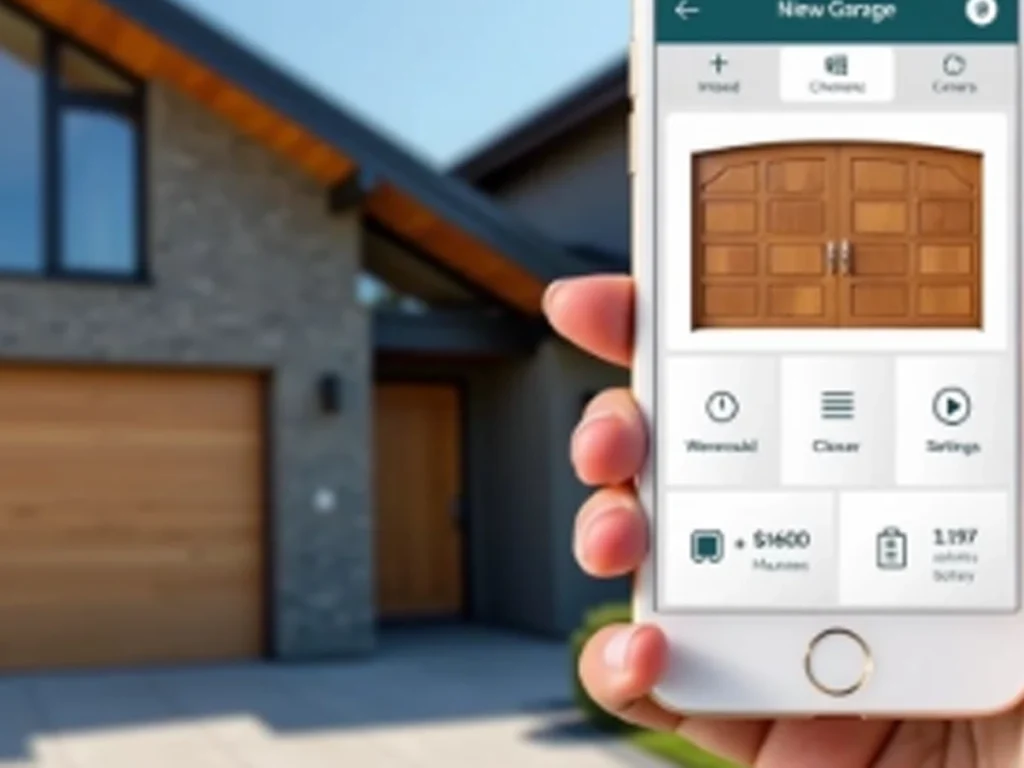
Today, garage door technology has moved far beyond a simple wall button and remote control. AI and IoT garage door automation can connect sensors, software, access tools, cameras, alerts, and mobile controls. However, smart features should support physical safety rather than replace it.
AI Overview
AI and IoT integration gives modern garage door automation systems a new layer of awareness and control. IoT technology allows the opener, sensors, mobile apps, cameras, and other connected devices to exchange information. AI can then help software find useful patterns in that information.
For example, a connected system may report whether a door is open, closed, or active. It may also send an alert after the door stays open longer than expected. More advanced systems may use cameras, motion data, access records, or other signals to make notifications more useful.
Still, the best system starts with a safe and well maintained garage door. UL Solutions explains that proper products, installation, safety devices, use, and maintenance remain important parts of automatic operator safety.
For Franklin homeowners and business decision makers, this creates two clear priorities.
- First, choose automation that solves a real access, safety, or management problem.
- Second, make sure the physical garage door and its safety systems work correctly before adding advanced controls.
That balance is where modern garage automation becomes truly valuable.
How AI Changes Modern Garage Door Automation
Artificial intelligence can make connected systems more useful because it helps software respond to data instead of merely receiving commands.
A traditional opener waits for a person to press a button. In contrast, a connected system can collect door status, access events, motion signals, camera information, and system alerts.
AI does not mean the garage door suddenly thinks for itself. Instead, it usually means software can analyze patterns and help users spot events that may need attention.
For example, an intelligent system could help identify an unusual access pattern. It could also help sort common movement from an event that deserves an alert.
Therefore, AI can support several useful goals.
- It can make notifications more relevant by using context instead of sending every possible alert.
- It can help property owners review access activity and notice patterns that may otherwise be missed.
This matters most when the technology reduces work for the user.
A system that sends constant alerts may create noise. However, a system that helps show why an alert matters can provide much greater value.
For that reason, we believe useful automation should remain simple from the user’s point of view. Complex technology should make garage access easier to manage, not harder.
How IoT Connects the Garage to the Rest of a Property
The Internet of Things refers to connected devices that exchange information through a network.
Inside a garage, those devices may include an opener, door position sensor, camera, keypad, lighting control, mobile app, and compatible security equipment.
For example, Chamberlain explains that compatible Wi Fi connected garage door openers can allow users to monitor and control their garage door through its myQ app. A strong and stable network connection in the garage is an important part of that setup.
Genie also offers connected access through its Aladdin Connect system. The company describes mobile monitoring and smart home connections among its available capabilities.
Therefore, IoT can turn the garage into another managed part of a connected property.
- Homeowners can gain door status information without walking back to the garage.
- Property managers can gain better visibility into access when supported by the selected system.
However, buyers should confirm compatibility before purchasing equipment.
Smart home support can change by product generation, manufacturer, software platform, and service agreement. A feature listed for one model may not exist on another.
That is why product selection deserves the same care as installation.
Why Smart Garage Security Requires More Than an App
Remote access is useful, but it also creates a new security responsibility.
When an opener connects to a network, account security becomes part of garage security. A weak password, an old device, poor update support, or excessive account sharing can reduce the value of otherwise good hardware.
For homeowners and businesses, the practical lesson is simple.
- Use strong account passwords and available extra account protection.
- Keep the opener, app, router, and related connected equipment updated.
Also, remove access when a contractor, former employee, tenant, or guest no longer needs it.
A smart garage door may protect an important entry point. Therefore, digital access should receive the same care as a physical key.
How Smart Automation Can Improve Garage Door Safety
Technology can add convenience. However, the foundation remains the physical door, opener, balance system, sensors, and safety controls.
Federal rules require automatic residential garage door operators manufactured on or after January 1, 1991, to conform to applicable entrapment protection requirements.
UL Solutions reports that UL 325 addresses risks involving automatic door and gate operator systems. These risks include entrapment, electric shock, fire, and other casualty hazards.
UL also notes that safety depends on proper product selection, installation, use, maintenance, and working safety devices.
Therefore, remote control should never become an excuse to ignore the door itself.
- Safety sensors should be installed correctly and kept clear.
- The door and opener should receive routine inspection and testing.
DASMA recommends monthly inspection and testing. Its safety guide explains that users should inspect visible parts, confirm proper door movement, and test opener safety features according to manufacturer instructions.
That point becomes even more important when a door may be controlled from another location.
A mobile command can travel in seconds. Yet the door still moves with real weight and force.
For this reason, smart automation should begin with mechanical safety.
Predictive Maintenance Could Become a Major AI Benefit
One of the most promising uses of AI is not opening the door automatically. It is helping owners notice changes before a failure becomes disruptive.
Garage door systems contain parts that move, flex, pull, guide, and support weight every day. As a result, changes in sound, travel time, vibration, current use, or motion may reveal useful maintenance clues.
Some advanced systems can already provide status information and operating history. In the future, better analysis may make that information more useful.
For example, software could compare normal operating behavior with a new pattern. It might then suggest that the system deserves inspection.
However, that should be viewed as a maintenance signal rather than a remote diagnosis.
- Data can help identify when professional inspection may be wise.
- Data should not encourage an owner to adjust springs, cables, or other dangerous parts.
DASMA warns that garage door springs remain under high tension and that certain components should only be adjusted by trained door system technicians.
This is where human expertise remains important.
AI may help identify a pattern. Yet a trained technician must still inspect the physical cause, test the system, and recommend the correct repair.
A Practical Franklin Smart Garage Example
Consider an illustrative Franklin homeowner who leaves for work early each morning.
This is an example rather than a claim about an actual Everlast Garage Doors customer.
The homeowner often wonders whether the garage door was closed. A connected opener can provide door status through a supported mobile app. Some platforms can also provide notifications based on door activity.
Next, suppose the garage receives deliveries or needs occasional family access.
A supported access system may allow controlled sharing rather than giving every person a permanent remote. Depending on the selected product, account permissions or guest access features may also be available.
Now consider maintenance.
The homeowner hears a new sound during travel. The smart system still reports normal door status, but that status does not prove the hardware is healthy.
The right response is physical inspection rather than assuming the app can diagnose the noise.
This example shows two important lessons.
- Connected data can solve useful questions about status and access.
- Mechanical concerns still require proper inspection and service.
That combination is the practical future of garage door automation.
It is not automation instead of professional service. Instead, it is better information paired with skilled service.
Choosing the Right Smart Garage Door System
The best system is not always the one with the longest feature list.
First, decide what problem you actually want to solve. You may want remote status, controlled access, alerts, video, better lighting, smart home integration, or a complete opener upgrade.
Next, review the existing door and operator.
Some older openers can use compatible smart controllers. Other systems may require a different approach. Compatibility depends on the opener, control method, safety equipment, and manufacturer.
However, platform compatibility can change over time. In late 2025, for example, reporting on Chamberlain’s Security+ 3.0 platform described tighter limits on several third party integration methods. That illustrates why current compatibility should be checked before buying hardware.
Decision makers should review several points.
- Confirm opener compatibility, network needs, access features, update support, and safety requirements.
- Confirm whether important smart home integrations require another device, account, service, or subscription.
Also, consider what happens if the internet connection fails.
A good garage door system should still have a clear local operating method that matches the manufacturer’s design.
Smart features are an added layer. They should not make normal garage access confusing.
Why Professional Installation Still Matters
Smart garage products can look simple because the user controls them through an app.
However, the app represents only one part of the system.
The door must travel correctly. The opener must match the application. Safety sensors must function properly. Controls must be installed correctly. Network setup must also work as intended.
specifically states that proper installation and correct safety device setup affect overall operator safety. It recommends installation by a qualified installer using manufacturer instructions.
That is important for homes, but it is even more important for businesses.
A business may have several users, changing access needs, delivery activity, operating schedules, and security rules.
Therefore, decision makers should think about the full system.
- Installation should address both physical operation and connected functions.
- Training should show authorized users how to operate, monitor, and secure the system.
Franklin states that its service team handles garage door repairs, maintenance, motor work, replacements, and installations. The company also describes serving both residential and commercial needs.
That service range matters because modern automation sits between traditional door expertise and connected technology.
What AI Cannot Replace in Garage Door Service
AI is useful, but it has limits.
A sensor may report that a door is closed. However, that reading alone cannot confirm that every spring, roller, hinge, cable, track, and safety component is in good condition.
Likewise, an app may report an event. It cannot always explain the physical cause of a strange sound or uneven movement.
Therefore, we see AI as an extra tool rather than a substitute for skilled garage door service.
The strongest systems combine three layers.
- Reliable mechanical hardware provides safe physical movement.
- Connected technology adds access, visibility, alerts, and useful information.
Human expertise ties both layers together.
This approach also helps avoid buying technology simply because it sounds advanced.
For example, a homeowner with poor Wi Fi coverage in the garage may gain more from improving network coverage before adding more connected devices. Chamberlain notes that its smart opener needs suitable range for network connection.
Likewise, a door with a mechanical problem should be repaired before extra automation becomes the priority.
The goal should always be a garage door that is safe, dependable, simple to use, and suitable for the property.
Four Powerful Benefits for Franklin Decision Makers
Franklin homeowners, property managers, and business owners may approach garage automation for different reasons. Still, the strongest benefits usually fall into four areas.
First, connected monitoring can improve awareness.
Second, controlled digital access can make some daily tasks easier.
Third, alerts can reduce uncertainty when users need to know the door’s reported status.
Finally, future AI tools may make system data more useful for maintenance planning and event review.
For a decision maker, those benefits should be tied to clear goals.
- Choose features that solve real access, monitoring, maintenance, or security needs.
- Avoid paying for functions that add complexity without useful value.
This is especially important when several people need access.
A household may have family members and service providers. Meanwhile, a commercial property may involve employees, vendors, managers, and deliveries.
Each situation needs a different access plan.
Therefore, modern garage door automation should be designed around how the property actually operates.
Three Essential Steps Before Adding AI and IoT
Before upgrading a garage door with connected technology, start with three simple steps.
First, inspect the existing door system.
The door should move correctly, remain balanced, and have working safety equipment. If the system shows signs of damage or poor operation, service should come first.
Second, identify your desired smart functions.
Decide whether you need status alerts, remote access, guest access, cameras, smart home links, or other features.
Third, review security and compatibility.
A connected opener should work with your network and preferred devices. It should also receive appropriate software support from its manufacturer.
Two principles should guide the entire project.
- Physical safety comes before digital convenience.
- Compatibility should be confirmed before equipment is purchased.
That order can save time, reduce frustration, and produce a system that fits the property instead of forcing the property to fit the technology.
Franklin Fits the Smart Garage Conversation
AI and IoT garage door automation may sound like a software topic, but the technology still depends on a properly operating door.
Franklin provides garage door repair, maintenance, opener and motor service, replacement, and installation services. Its website also describes work for residential and commercial applications.
That creates an important link between new technology and traditional garage door knowledge.
A smart opener cannot correct a worn physical system by itself. Likewise, strong mechanical hardware cannot provide connected monitoring unless the correct technology is selected and configured.
Modern garage door service increasingly requires attention to both areas.
- The physical system must operate safely and reliably.
- The connected system should provide useful features without unnecessary complexity.
For Franklin property owners, that means choosing solutions based on the complete garage door system.
Technology should serve the property, the people using it, and the safety requirements of the door.
Final Thoughts on AI and IoT Garage Door Automation
AI and IoT integration is changing what a garage door system can do.
Connected openers can provide remote status, app based control, alerts, and other access features. Meanwhile, AI has the potential to make growing amounts of device data easier to understand.
Yet the smartest feature remains a safe and dependable garage door.
Therefore, a successful smart garage project should not begin with the question, “What is the newest device?”
It should begin with a better question.
What combination of safety, access, monitoring, security, and service will make this garage work better every day?
That is where AI and IoT garage door automation can deliver real value.
- Start with a sound garage door and working safety equipment.
- Then add connected features that solve clear and useful problems.
At Everlast Garage Doors, we provide complete Garage Door Services for both residential and commercial properties. Our team handles Garage Door Installation, Repair, Maintenance, Custom Designs , and full Door Replacements to ensure long-lasting performance and reliability. We also offer Emergency Garage Door Service to quickly resolve urgent issues and keep your property secure and fully operational. you can count on quality, durability, and trusted service every step of the way.
For professional garage door service in Franklin, contact Everlast Garage Doors – Franklin.
contact at 615-808-8806 visit 1107 Battlewood St #222, Franklin, TN 37069
Frequently Asked Questions
Can I make my existing garage door opener smart?
In many cases, yes. Some existing garage door openers can work with a compatible smart controller or hub. However, compatibility depends on the opener model, age, controls, and safety equipment. Chamberlain, for example, offers connected control options for certain compatible openers. Always confirm compatibility before purchasing an add on controller.
Do smart garage door openers need Wi Fi?
Most systems that offer remote internet access need a suitable network connection. The opener or connected controller usually communicates with an online service through the home’s network. Therefore, weak garage coverage can cause setup or connection problems. Chamberlain specifically notes that a smart opener must be within suitable Wi Fi range.
Are smart garage door openers safe?
A smart opener can provide useful monitoring and access features, but safe operation still depends on proper hardware, installation, sensors, maintenance, and user behavior. UL Solutions explains that residential garage door operator safety depends on proper product selection, installation, use, maintenance, and entrapment protection equipment.
Can AI tell when my garage door needs repair?
AI may help software identify unusual patterns in available sensor or operating data. However, that information should be treated as a signal for inspection rather than a firm repair diagnosis. Springs, cables, rollers, tracks, and other physical components still require proper inspection.
Is a smart garage door opener worth upgrading to?
It can be worthwhile when remote status, controlled access, alerts, or connected monitoring solve a real need. However, buyers should first confirm garage door condition, opener compatibility, coverage, security features, and smart home support. The most valuable system is usually the one that improves daily use without adding unnecessary complexity.