
More than a 50 percent decrease in certain garage door incidents followed stronger safety requirements for residential garage door operators.
That fact shows why working safety parts matter so much. Your garage door may look simple from the driveway. However, springs, cables, rollers, tracks, sensors, hinges, and an opener work together every time the door moves.
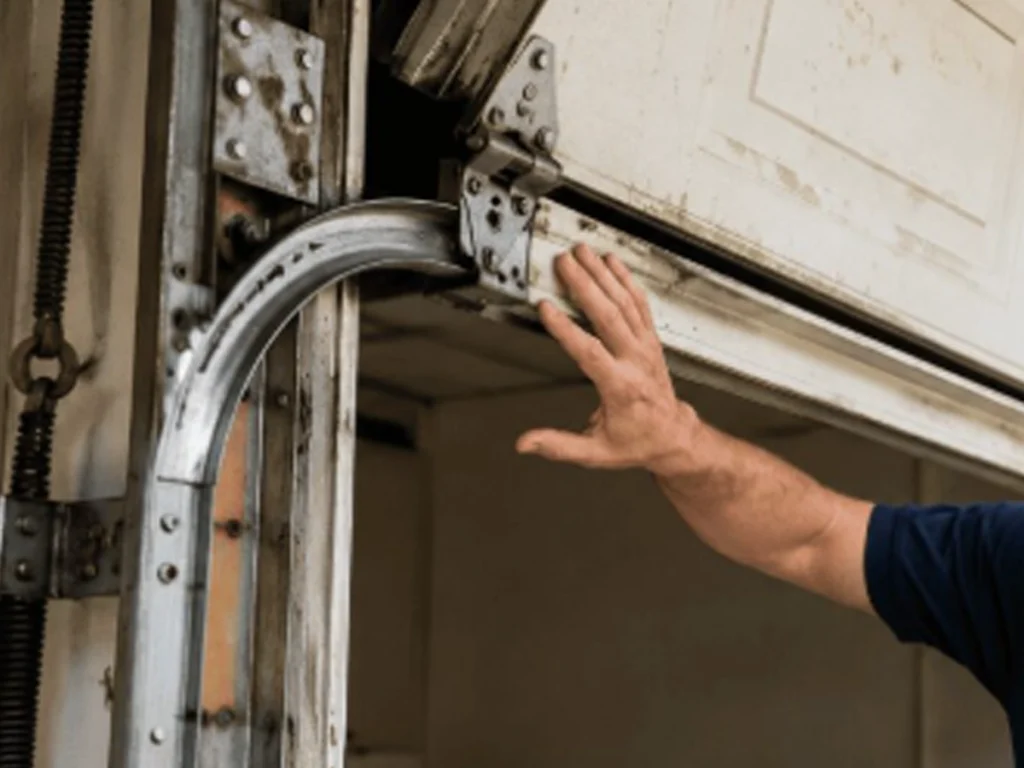
AI Overview: Garage Door Parts Need Professional Attention
Garage door parts need professional attention when the door becomes noisy, uneven, heavy, slow, unreliable, or unsafe. Broken springs, frayed cables, damaged rollers, bent tracks, failing sensors, and opener problems can place extra stress on the entire system.
Some simple checks are safe for homeowners. For example, you can look for blocked sensors or visible debris. However, spring systems and connected cables store significant force. DASMA advises trained technicians for worn cables and spring related repairs.
Professional service becomes especially important when the door drops, jerks, binds, hangs unevenly, or refuses to stay balanced. The warns that a severely unbalanced door can unexpectedly fall and should receive professional service. Watch how your door moves, sounds, stops, and reverses during normal use.
- Stop using the door when a damaged part creates an obvious safety concern.
Knowing these signs early can protect the opener, other door parts, vehicles, property, and people around the garage.
Why Garage Door Warning Signs Matter More Than They Seem
A garage door is a connected system. Therefore, one weak part may affect several other components.
For example, a worn roller can create added resistance. As a result, the opener may work harder. Likewise, damaged cables can affect how evenly the door moves. A weak spring may also make the door feel much heavier.
Because of this connection, a small symptom deserves attention before it becomes a larger repair.
Recommends regular inspection of garage door hardware and safe operation. It also explains that doors that bind, stick, or become unbalanced should be professionally serviced.
- Pay attention when a familiar sound suddenly changes.
- Compare the door movement today with how it normally operates.
In our professional view, changes matter more than noise alone. Every garage door has its own normal sound. Therefore, a new grind, snap, shake, or delay can provide a useful warning.
Everlast Garage Doors – Franklin states that its technicians handle garage door repairs, maintenance, installations, springs, motors, and emergency service. The company also describes years of hands on experience with residential and commercial garage door work.
That experience matters because technicians can inspect the complete system instead of focusing only on the most visible symptom.
Seven Powerful Signs Your Garage Door Parts Need Attention
Several symptoms can tell you that garage door parts need professional attention. However, some warning signs are more urgent than others.
Sign One: You Hear Grinding, Banging, Popping, or Scraping
Garage doors make some sound during normal use. Still, a sudden new sound deserves attention.
Grinding can relate to rollers, tracks, bearings, or other moving parts. Rattling can point toward loose hardware. Meanwhile, a loud snap may suggest a spring or cable problem.
Notes that persistent spring noise can justify professional service. It also warns that worn cables can break and should only be replaced by trained technicians.
- Listen for sounds that appear suddenly or become louder.
- Stop operating the door if you hear a violent snap or see damaged hardware.
Do not diagnose a high tension spring by touching or adjusting it. A visual observation from a safe distance is enough.
The Door Moves Unevenly
A healthy garage door should travel in a controlled path.
If one side rises faster, the door appears crooked, or movement becomes jerky, several parts may need inspection. Springs, cables, tracks, rollers, and brackets can all affect movement.
- Watch both sides of the door while standing safely inside the garage.
- Call for service when one side consistently moves differently from the other.
Uneven travel should not be ignored simply because the door still opens.
The Garage Door Feels Very Heavy
Your spring system helps counterbalance the weight of the garage door.
Therefore, a sudden change in weight can point toward a spring problem or another balance issue. The opener should not be expected to compensate for a badly balanced door.
Properly operating door should remain balanced. A severely unbalanced door can unexpectedly fall and may strike someone below it. Avoid repeatedly using an opener to force a heavy door upward.
- Ask a technician to check the springs, cables, balance, and related hardware.
This sign deserves prompt attention because the problem may affect both safety and opener strain.
Cables Look Frayed, Loose, or Damaged
Garage door cables are easy to overlook.
However, they work closely with the spring system. If you notice fraying, loose strands, unusual slack, or a cable hanging where it should not, professional service is the safer choice.
- Inspect cables visually without pulling, loosening, or adjusting them.
- Keep people away from the door when a cable appears seriously damaged.
Never treat a cable as an isolated piece of wire. Its position within the lifting system makes proper diagnosis important.
The Door Reverses or Refuses to Close
A door that reverses may have a sensor issue, an obstruction, an adjustment concern, or resistance elsewhere in the system.
Modern garage door safety systems are designed to reduce entrapment risks. UL explains that garage door operator standards address hazards including entrapment. Proper installation and maintenance remain important for safety.
- Clear obvious objects from the sensor path before requesting service.
- Seek professional help when the safety system keeps failing after basic cleaning.
Never defeat or bypass a safety sensor simply to make the door close.
Rollers Shake, Bind, or Leave the Track Path
Rollers guide the garage door as it moves.
When they wear, seize, shift, or stop moving smoothly, the entire door can begin to shake or bind. Tracks can also become damaged or misaligned.
- Look for obvious roller damage while keeping your hands away from moving parts.
- Avoid operating a door that appears ready to leave its normal track path.
A technician can determine whether the cause involves rollers, tracks, hinges, brackets, balance, or several parts together.
The Opener Struggles With a Door That Once Moved Easily
The opener is only one part of your system.
If the motor runs longer, strains, pauses, or fails to lift the door, the opener may not be the root problem. Mechanical resistance elsewhere can increase the load placed on it.
For that reason, replacing the opener without inspecting the door can miss the real issue.
- Notice whether the motor sounds different during normal operation.
- Request a complete door inspection when opener problems appear with heavy or uneven movement.
A professional diagnosis can separate electrical opener problems from mechanical door problems.
Three Garage Door Parts You Should Never Treat Casually
Some garage door parts deserve more caution because they work under tension or help control a heavy moving door.
Springs Require Expert Attention
Garage door springs perform demanding work.
- Do not loosen spring hardware to investigate a problem.
- Do not copy an online repair method without proper training and equipment.
A spring may look simple. However, its stored force changes the risk of the repair.
Cables Can Carry Serious Tension
Cables connect important parts of the lifting system.
A damaged cable can affect door balance, movement, and control. Therefore, cable replacement is not comparable to replacing a loose decorative part.
- Never pull a frayed cable to test its strength.
- Never remove connected bottom hardware without understanding the spring system.
Bottom Brackets and Related Hardware Need Caution
Hardware near the lower sections of the door can be connected to loaded cable systems.
Therefore, a loose looking bracket should not automatically become a do it yourself project.
- Keep hands away from loaded cable connection points.
- Let a technician determine whether the hardware can be safely tightened or replaced.
Safety should come before saving a few minutes on a repair.
Four Simple Checks Homeowners Can Do Safely
Professional attention does not mean homeowners must ignore their garage doors.
In fact, careful observation helps you explain symptoms clearly when you call for service.
Look at the Sensor Area
Dust, storage boxes, tools, and other objects can block the sensor path.
- Remove obvious objects without moving wired equipment.
- Clean accessible sensor surfaces gently when needed.
If the problem continues, a technician can check alignment, wiring, settings, and opener operation.
Watch the Door From a Safe Distance
Observe a normal opening and closing cycle.
- Look for shaking, leaning, hesitation, or sudden movement.
- Listen for sounds that were not present before.
Stop using the door when operation appears unsafe.
Look for Visible Wear
You can visually inspect accessible parts without touching tension loaded hardware.
- Look for frayed cable strands or damaged rollers.
- Look for bent tracks, loose visible parts, or damaged panels.
Visible damage does not always reveal the full cause. Therefore, professional diagnosis remains useful.
Test Safety Features According to the Manual
Manufacturer instructions should guide any homeowner safety test.
- Follow the instructions provided for your specific opener.
- Stop using automatic operation when an important safety feature fails.
Never improvise a safety test that conflicts with the manufacturer instructions.
A Practical Example of How Small Problems Become Larger
Consider an illustrative example.
A Franklin homeowner hears a light grinding sound when the garage door opens. The door still works, so the homeowner waits.
Several weeks later, movement becomes rougher. One side begins to shake. The opener now sounds strained.
A technician may find worn rollers, track problems, loose hardware, or another source of resistance. The exact diagnosis will depend on the actual system.
- Early inspection gives the technician more options before failure occurs.
- Waiting can allow one worn component to place added stress elsewhere.
The key lesson is simple. Do not wait for complete failure before asking what changed.
When Should You Stop Using the Garage Door?
Not every squeak requires emergency service.
However, some conditions justify stopping normal operation until a technician can inspect the system.
The strongest warning signs include a broken spring, hanging cable, severe imbalance, a door leaving its normal track path, or a failed safety system.
Stop operation when the door moves in a sudden or uncontrolled way.
- Keep children, pets, vehicles, and people away from an unstable door.
If a door becomes stuck partly open, avoid standing beneath it while inspecting the problem.
Professional technicians have the tools and training needed to determine which parts failed and what needs correction.
Why Professional Diagnosis Can Save Time and Parts
Garage door symptoms often overlap.
A noisy door might have roller wear. It might also have a loose hinge, track issue, spring concern, or several small problems.
Likewise, an opener that appears weak may actually be lifting a poorly balanced door.
That is why replacing the first suspected part can become expensive without a full inspection.
- A complete diagnosis looks at the system rather than one symptom.
- Correct repairs address the cause instead of simply hiding the noise.
Professional service can also reveal whether a part needs adjustment, repair, or replacement.
Services work includes repairs, maintenance, replacement parts, motors, springs, installations, and emergency garage door service. For Franklin property owners, that wider service scope can be useful when several connected parts need attention.
Why Franklin Homeowners Should Act Before Failure
A garage door affects more than convenience.
It can determine whether you can leave for work, secure the garage, park safely, or access stored equipment. For businesses, door failure can also interrupt normal property access.
Therefore, early repair is often easier to manage than an unexpected breakdown.
- Schedule an inspection when symptoms begin repeating.
- Keep records of recent repairs when the same problem returns.
Franklin homeowners can also benefit from paying attention after storms or visible impact damage.
The company website also presents a Franklin customer testimonial involving garage door repair after storm damage. That published example reinforces the value of checking a door when weather or impact changes its operation.
Professional Garage Door Attention Is About Safety First
The best time to call a garage door technician is not always when the door stops working.
Often, the better time is when the door begins telling you something has changed.
New noise matters. Uneven movement matters. Frayed cables matter. Heavy lifting matters. Failed sensors matter. A door that suddenly shakes or reverses deserves attention.
- Treat sudden changes as useful warning signs.
- Choose professional service for springs, cables, balance problems, and unsafe movement.
Industry safety guidance supports that cautious approach.
Those recommendations are not designed to make routine ownership difficult. Instead, they help separate simple observation from repairs that require specialized knowledge.
What Our Franklin Garage Door Team Looks For
When garage door parts need professional attention, a good inspection should look beyond one complaint.
A technician may evaluate springs, cables, rollers, hinges, tracks, brackets, opener behavior, door balance, safety sensors, and general movement.
The goal should be to understand why the symptom appeared.
- The inspection should connect visible wear with actual door behavior.
- Repair advice should clearly explain which parts need action and why.
Its technicians as trained to handle both smaller repairs and full garage door installations. Its site also states that the company uses quality materials and serves residential and commercial customers.
For decision makers, clear diagnosis is important because unnecessary replacement wastes money. At the same time, delaying a necessary repair can create more disruption.
A professional recommendation should therefore balance safety, function, part condition, and the overall state of the door.
How Preventive Attention Helps Protect the Whole System
Preventive maintenance does not guarantee that a part will never fail.
However, regular observation and professional inspections can identify visible wear before some problems become severe.
- Keep tracks and accessible sensor areas clear of obvious debris.
- Schedule service when repeated symptoms appear between routine inspections.
A technician can also explain what normal operation should look and sound like.
That knowledge is valuable. Once you understand your door’s normal behavior, changes become much easier to notice.
These sources support one clear rule. When tension, balance, uncontrolled movement, or important safety systems are involved, qualified help is the better choice.
Five Frequently Asked Questions
How do I know if my garage door needs professional repair?
Watch for new grinding, banging, shaking, slow movement, uneven travel, failed reversing, damaged cables, or a suddenly heavy door. One mild sound may not prove that a part has failed. However, repeated or worsening symptoms deserve inspection. A professional can determine whether the problem involves springs, cables, rollers, tracks, hardware, sensors, or the opener.
What are the signs of a bad garage door spring?
Possible warning signs include a door that becomes very heavy, fails to remain balanced, moves unevenly, or no longer opens normally. You might also notice an obvious broken spring or hear a sudden loud sound. Because garage door springs work under significant tension, spring diagnosis and replacement should be handled carefully by trained professionals.
Is it safe to use a garage door with a broken cable?
Continued use can create a safety concern because cables work with the spring system and help control door movement. that frayed or worn cables are in danger of breaking and recommends trained technicians for replacement. If a cable is hanging, broken, or badly frayed, stop unnecessary operation and request professional service.
Why does my garage door close and then reverse?
A garage door may reverse because the safety system detects an obstruction or another operating problem. Start by checking for obvious objects in the sensor path. If basic cleaning does not solve the issue, professional diagnosis may be needed. guidance stresses the importance of a properly working automatic reverse system for garage door safety.
Should I repair garage door springs myself?
Spring work is not a good beginner repair. Garage door springs store significant force, and connected cables and brackets can also be under tension. describes springs as important and potentially dangerous components and recommends trained technicians for spring related service. Homeowners can observe visible problems, but adjustment or replacement is better left to qualified professionals.
Get Professional Garage Door Service in Franklin TN
Garage door parts need professional attention when normal operation changes in ways that point toward wear, imbalance, damage, or safety failure.
The sooner you recognize those changes, the easier it becomes to make an informed repair decision.
Franklin provides garage door repair, maintenance, installation, spring service, opener service, and emergency garage door support according to its published service information.
If your garage door is noisy, uneven, heavy, stuck, or showing visible part damage, professional inspection can help identify the actual cause.
At Everlast Garage Doors, we provide complete Garage Door Services for both residential and commercial properties. Our team handles Garage Door Installation, Repair, Maintenance, Custom Designs , and full Door Replacements to ensure long-lasting performance and reliability. We also offer Emergency Garage Door Service to quickly resolve urgent issues and keep your property secure and fully operational. you can count on quality, durability, and trusted service every step of the way.
Contact Everlast Garage Doors – Franklin
contact at 615-808-8806 visit 1107 Battlewood St #222, Franklin, TN 37069
The company website confirms this Franklin location and contact information.
- Call when your garage door develops repeated or serious warning signs.
- Arrange professional attention before a damaged part causes a larger system problem.
Your garage door should move in a controlled, predictable, and safe way. When it does not, the problem deserves more than guesswork.