
Garage Door Stuck Open? Start With Safety
A garage door stuck open can become more than a simple inconvenience within minutes. The U.S. Consumer Product Safety Commission warns that a severely unbalanced garage door can unexpectedly fall to the floor. That risk makes careful inspection much more important than trying to force the door closed.
AI Overview
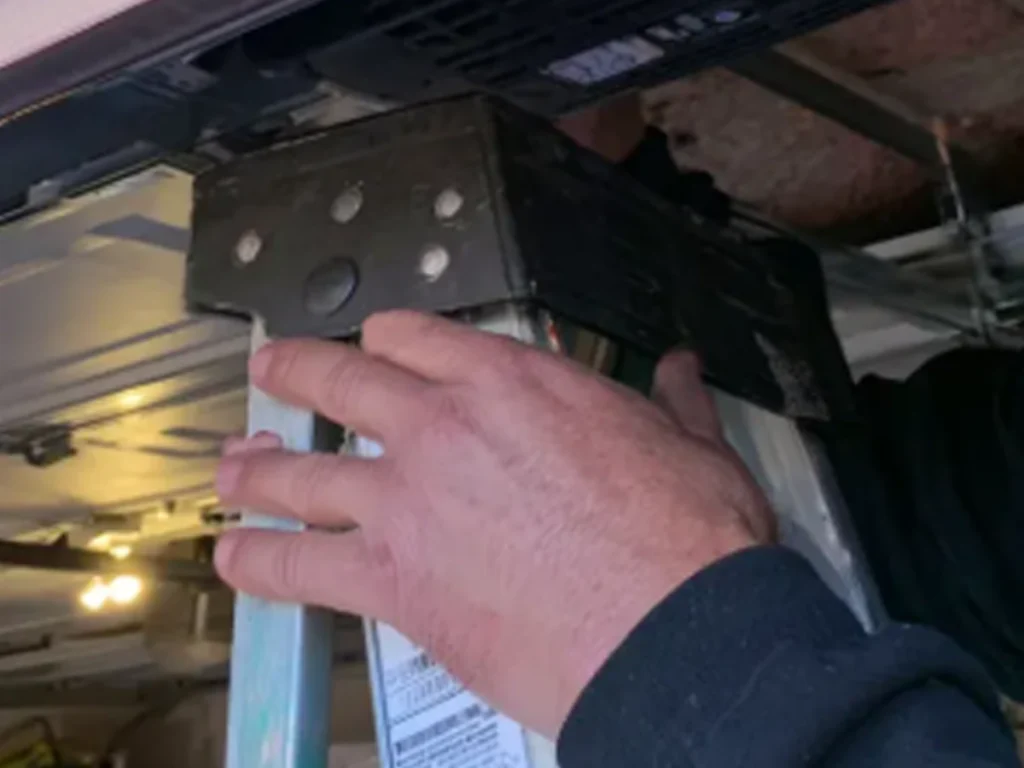
If your garage door is stuck open, first keep people, pets, and vehicles away from the opening. Next, look for obvious damage without touching springs, cables, brackets, or other parts under tension. Check whether the opener has power and whether anything blocks normal door movement. However, stop troubleshooting if the door hangs crooked, feels unusually heavy, has a broken spring, shows loose cables, or has left its tracks.
Older residential doors deserve extra care because several worn parts may contribute to the same problem. A weak spring may strain the opener. Worn rollers may increase resistance. Loose hardware may also affect alignment. Therefore, the safest goal is not simply to make the door move again. The goal is to find out whether it can move safely.
Everlast Garage Doors – Franklin provides garage door repair, maintenance, installation, and emergency service in Franklin and surrounding areas. Its current emergency service information specifically identifies doors stuck open or closed, broken springs or cables, off track doors, and faulty safety sensors as situations that may require prompt service.
Key points to remember include:
- Do not force a garage door that appears jammed, crooked, damaged, or unusually heavy.
- Do not loosen, adjust, or remove garage door springs, cables, or bottom brackets yourself.
Why a Garage Door Stuck Open Needs Quick Attention
A garage door stuck open leaves one of the largest entrances to your home exposed. Therefore, the problem affects convenience, security, weather protection, and mechanical safety at the same time.
For Franklin homeowners, a stuck door may also prevent normal use of the garage. In addition, continuing to press the opener can place extra strain on an already damaged system.
The Door and Access Systems Manufacturers Association states that an older garage door should still operate smoothly. If the door struggles during manual movement, the spring system may be out of balance. also advises homeowners to have spring related problems handled by trained professionals.
Important concerns include:
- An open garage can expose vehicles, tools, stored items, and access points into the home.
- Repeated operation may turn one worn component into damage involving several parts.
This is why quick action should begin with observation rather than force.
Check the Area Before Touching the Door
Before troubleshooting a garage door stuck open, clear the area around it. This simple step matters because damaged doors can move without warning.
Look at the door from several feet away. Notice whether each side sits at the same height. Also, look at the rollers and tracks without placing your hands near moving parts.
A crooked door can point to a cable, roller, track, or spring problem. Meanwhile, a door that looks level but refuses to move may have a different opener or mechanical issue.
Begin with these checks:
- Move children, pets, vehicles, tools, bicycles, and stored objects away from the door.
- Look for a tilted door, loose cable, visible spring gap, bent track, or roller outside its normal track.
If anything looks badly damaged, stop there. Calling a trained garage door technician is safer than trying to identify the exact failed component yourself.
Listen Before Trying the Garage Door Again
Sound can provide useful clues about what happened before a garage door became stuck.
For example, a sharp bang may sometimes accompany a spring failure. Grinding can point toward excessive friction or a problem in the opener. Scraping may indicate abnormal contact between the door, rollers, or track.
However, sounds alone do not prove which component failed. Therefore, use them as clues for the technician rather than as a reason to take the system apart.
Pay attention to:
- Grinding, scraping, popping, rattling, or unusually loud opener sounds.
- A recent loud bang from the garage followed by a door that became difficult to move.
Describe those sounds when requesting garage door repair. Clear details can help a technician understand the situation before inspecting the system.
Check Whether the Garage Door Opener Has Power
Sometimes a garage door problem begins with the opener rather than the door itself.
If it is safe to approach the opener controls, check whether the opener has power. Look at its normal indicator lights. You can also confirm whether other electrical devices in the garage work normally.
However, electrical troubleshooting should remain basic. Do not open the motor housing or work on exposed wiring unless you are properly qualified.
Safe basic checks include:
- Confirm that the opener appears connected to its normal power source.
- Check whether a breaker or protected outlet serving the garage has obviously tripped.
If the breaker trips again after being reset, stop. A repeated electrical fault deserves professional inspection.
Inspect the Garage Door Tracks Without Adjusting Them
Tracks guide the rollers as the garage door moves. Even a small obstruction can create resistance, while serious track damage can stop operation entirely.
Stand at a safe distance and look along both vertical tracks. Check for obvious objects, heavy debris, dents, or rollers that appear outside the track.
Do not loosen track brackets simply because something appears slightly uneven. Adjusting the wrong component may make an unstable door less secure.
Look for:
- An obvious object that blocks the normal path of a roller.
- Bent track sections, loose mounting areas, or rollers sitting outside their proper path.
Never Experiment With Garage Door Springs or Cables
Springs help counterbalance the weight of the garage door. Cables transfer significant force as the system moves.
Consequently, these components deserve a strict safety boundary.
Do not:
- Loosen or remove a spring, cable, drum, bottom bracket, or spring related fastener.
- Attempt to restore spring tension with improvised tools or online shortcuts.
This guidance becomes even more important with older residential doors. Years of movement, moisture, vibration, and normal wear can affect several components at once.
Treat an Older Residential Garage Door Differently
Older garage doors can remain dependable when they receive suitable maintenance. Still, age can make troubleshooting more complex.
A newer system may have one clear failed part. In contrast, an older door may have worn rollers, aging springs, loose hinges, tired weather seals, and an older opener operating together.
Therefore, repairing only the most obvious symptom may not solve the larger problem.
For an older residential door, consider:
- Whether the door has recently become louder, slower, rougher, or less balanced.
- Whether several parts show visible wear rather than only one isolated component.
The U.S. Consumer Product Safety Commission advises homeowners with older automatic garage door openers that do not properly reverse to repair or replace them with suitable reversing systems.
Check the Safety Sensors When Closing Is the Problem
If the garage door opens normally but refuses to close, the safety sensor system may be involved.
Most modern automatic garage doors have sensors near the lower part of the opening. Their job is to detect an obstruction in the door path.
First, make sure nothing blocks the space between the sensors. Next, look for dirt on the sensor surfaces. However, do not bypass a safety system simply to make the door close.
Simple observations include:
- Check for boxes, leaves, tools, toys, or other objects blocking the sensor path.
- Look for obvious dirt or a sensor that appears to have been bumped out of position.
If cleaning an obvious obstruction does not solve the problem, a technician can test the sensor system and opener safely.
Be Careful With the Emergency Release
Many garage door openers include an emergency release that disconnects the opener from the door. However, pulling that release is not automatically safe.
The door should normally be stable before manual operation is considered. A door with a broken spring can become far heavier than expected.
Guidance says a properly operating garage door should remain balanced. It also warns that a severely unbalanced door could unexpectedly fall.
Before considering manual movement:
- Do not use the release on a damaged or unstable door just to see what happens.
- Do not stand beneath the door or place your hands between door sections.
When there is doubt about the spring system, cables, tracks, or door balance, professional service is the safer decision.
Never Force a Stuck Garage Door Closed
It can be tempting to pull hard on a stuck door because closing it seems like the fastest way to secure the house.
However, force can hide the real problem while creating another one.
A roller may be binding. A track may be bent. A cable may have lost tension. A spring may no longer counterbalance the door correctly. The opener could also be fighting mechanical resistance.
Instead:
- Stop if the door resists normal, smooth movement.
- Call for garage door repair when safe basic checks do not reveal a simple obstruction.
The objective is not to win a struggle against the door. The objective is to restore safe, controlled operation.
Know When Garage Door Repair Becomes Urgent
Some problems justify immediate professional attention.
A door stuck fully open can leave the property exposed. A door hanging at an angle may also be mechanically unstable. Meanwhile, broken springs or cables create risks that basic homeowner troubleshooting cannot remove.
Call for help when:
- The garage door hangs unevenly, has left the track, or will not remain in a stable position.
- You see a broken spring, loose cable, severe track damage, smoke, burning smells, or abnormal electrical behavior.
A fast professional inspection can also help prevent additional damage to the opener and door hardware.
What a Professional Garage Door Inspection Should Cover
A good garage door repair visit should focus on the system rather than only the visible symptom.
For an older residential garage door, that broader approach becomes especially valuable. One weak component can increase stress on another.
A technician may evaluate the door balance, spring system, cables, tracks, rollers, hinges, opener operation, safety sensors, and visible hardware. The exact inspection should depend on the door and the reported symptoms.
A useful professional assessment should consider:
- The immediate cause of the stuck door and any related wear.
- Whether repair is reasonable or continued aging makes replacement worth discussing.
Illustrative Case Example for an Older Door
Consider an older residential garage door that has become louder over several months. One evening, the door rises but will not close normally.
This example is illustrative. It is not being presented as an actual Everlast customer case.
A homeowner might first assume the opener has failed. However, a complete inspection could reveal worn rollers creating resistance while older hardware contributes to rough movement. Alternatively, the safety sensors could be involved.
The lesson is straightforward:
- The first visible symptom does not always identify the underlying cause.
- Older doors benefit from looking at the whole operating system rather than replacing parts by guesswork.
In our editorial view, that system based approach is more useful than repeated temporary fixes.
Smart Maintenance Can Reduce Future Garage Door Problems
Preventive maintenance cannot eliminate every garage door failure. However, routine observation can reveal changes before the door becomes completely stuck.
Pay attention to how the door sounds and moves. Changes in speed, vibration, alignment, or noise can provide useful warning signs.
Useful habits include:
- Watch and listen to the door during normal operation instead of immediately walking away.
- Schedule inspection when the door becomes crooked, rough, unusually noisy, heavy, or unpredictable.
Good maintenance is especially valuable for an older residential door because wear develops gradually.
Why Franklin Homeowners Benefit From Local Garage Door Help
A garage door problem is closely tied to the home it protects. Therefore, local service can be valuable when the opening cannot be secured or normal access is disrupted.
For homeowners, the practical benefits include:
- Access to technicians who can inspect springs, cables, tracks, rollers, sensors, and opener problems as one system.
- A local option when a garage door stuck open creates an immediate security or access problem.
Industry leadership should come from useful guidance as much as repair work. That means helping homeowners understand when a simple check is reasonable and when stopping is the safer choice.
- Understand why door balance, reversing systems, springs, and cables deserve careful attention.
- Separate safe observation from repairs that require professional training.
Manufacturer instructions for your exact opener and door model are also important whenever available.
Contact Everlast Garage Doors – Franklin
If your garage door stuck open problem involves a broken spring, loose cable, off track door, unusual weight, or uncertain mechanical condition, professional inspection is the safer next step.
At Everlast Garage Doors, we provide complete Garage Door Services for both residential and commercial properties. Our team handles Garage Door Installation, Repair, Maintenance, Custom Designs , and full Door Replacements to ensure long-lasting performance and reliability. We also offer Emergency Garage Door Service to quickly resolve urgent issues and keep your property secure and fully operational. you can count on quality, durability, and trusted service every step of the way.
Contact information:
- Phone: 615-808-8806
- Location: 1107 Battlewood St #222, Franklin, TN 37069
A garage door stuck open should not become a risky home repair experiment. Start with safe observation, make only simple checks, and stop whenever the door appears mechanically unstable.
Five Frequently Asked Questions
What should I do first if my garage door is stuck open?
Keep people, pets, and vehicles away from the door. Next, inspect it visually for broken springs, loose cables, bent tracks, crooked panels, or displaced rollers. You may also check whether the opener has power. However, do not force the door or touch components under spring tension when visible damage is present.
Can I manually close a garage door that is stuck open?
Sometimes a properly balanced and undamaged door can be operated manually according to its manufacturer instructions. However, a door with a broken spring or other balance problem may be extremely heavy or unstable.
Why does my garage door open but refuse to close?
Several causes are possible. An object may block the safety sensors, the sensors may be dirty or misaligned, the door may encounter abnormal resistance, or the opener may have a fault. Check only obvious and safe conditions first. If the door remains stuck, a professional inspection can identify the actual cause without unnecessary part replacement.
How do I know if my garage door spring is broken?
A visible gap in a torsion spring can be one clue. The door may also become unusually heavy or fail to move normally. However, do not touch or adjust the spring to test it.
Is a garage door stuck open an emergency?
It can be. An open garage may expose your property and an attached entrance to the home. The situation becomes more urgent when the door is crooked, off track, unstable, or affected by a broken spring or cable.