
Garage Door Installation Starts Before the Door Arrives
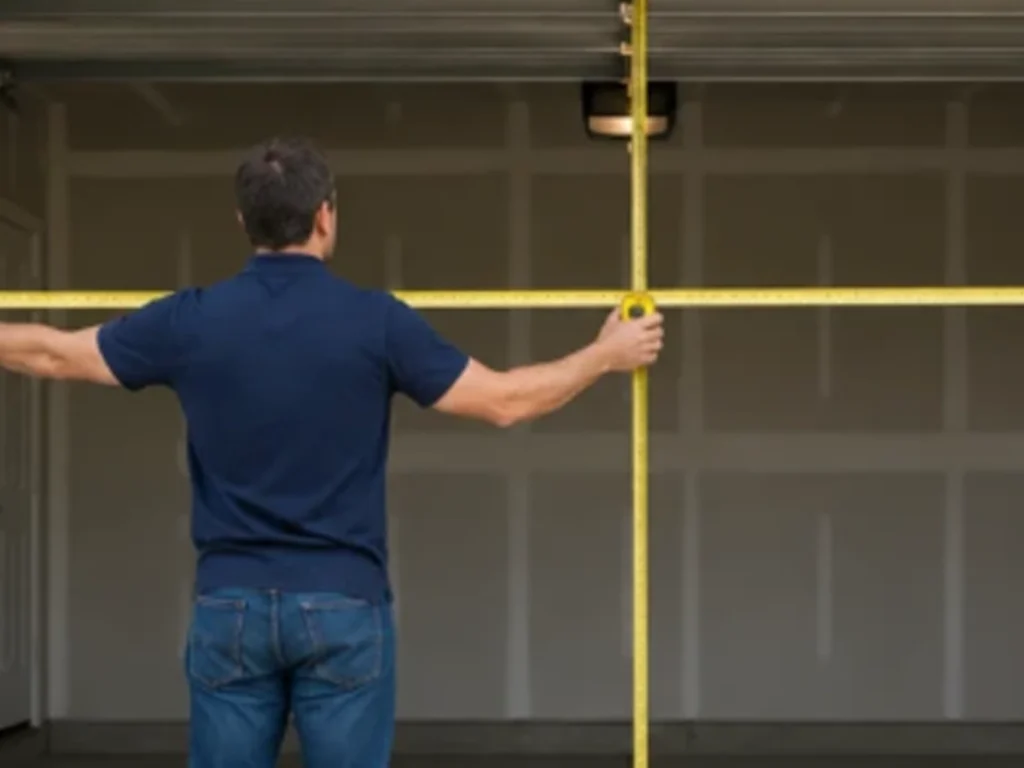
A surprising fact about garage door installation is that measuring only the opening width and height is not enough. A correct installation also depends on side room, headroom, backroom, framing, hardware space, and opener clearance.
Garage door installation begins with accurate measurements of the opening and the space around it. Next, the installer checks the framing, ceiling clearance, side room, backroom, electrical needs, and existing opener setup. The correct door, track system, springs, hardware, and opener must work together as one system.
Final setup should include door balance, smooth travel, safety sensor operation, opener reversal, remote controls, and a complete visual inspection.
Correct installation matters because a garage door is a large moving system. Therefore, even a beautiful new door can perform poorly when measurements, tracks, springs, or opener settings are wrong.
Consumer Product Safety Commission guidance stresses proper balance and automatic reversal because both are important parts of safe garage door operation.
Key points include:
- Accurate measurements help determine whether the selected door and track system can fit the available space.
- Final testing matters just as much as the physical installation because safe operation must be confirmed.
Why Accurate Garage Door Measurements Are Critical
Every strong garage door installation starts with measurements. However, measurement means much more than checking the width of the opening.
Therefore, a door that appears correct on paper can still create problems if the surrounding space is limited.
A careful measurement visit should consider:
- The finished width and height of the garage opening.
- The available side room, headroom, and backroom around that opening.
Precise measurements can also reveal whether special track hardware may be needed.
Measure the Width and Height More Than Once
Garage openings are not always perfectly square. Older homes may also have framing that has shifted slightly over time.
Therefore, installers should not assume one width reading tells the whole story.
When measuring:
- Check the opening at several points rather than trusting one reading.
- Record the smallest meaningful clearance when surrounding conditions vary.
This process can uncover uneven framing before the door is ordered.
Side Room Gives the Tracks Space to Work
Side room means the usable wall space beside the garage door opening.
That space matters because the vertical tracks and related hardware must attach securely beside the opening. Therefore, insufficient side room can affect the installation plan.
Before ordering a door:
- Measure usable space on both sides of the opening.
- Look for pipes, shelves, framing, electrical boxes, or other obstacles.
A clear opening does not guarantee clear installation space.
Headroom Can Change the Entire Track Plan
Headroom is the space between the top of the opening and the nearest overhead obstruction.
This measurement can affect the spring system, horizontal track, and garage door opener. Therefore, low ceilings deserve attention before materials arrive.
Important checks include:
- Measure from the opening to the nearest ceiling or structural obstruction.
- Include beams, ducts, lights, storage systems, and opener equipment in the review.
Solving a headroom problem during planning is far easier than discovering it during installation.
Backroom Matters When the Door Opens Fully
Backroom refers to the distance from the garage opening toward the rear of the garage.
When a sectional door opens, much of the system moves overhead. Therefore, the horizontal tracks need enough usable depth.
Storage racks, ceiling equipment, lighting, and other installations can reduce that space.
Before installation:
- Measure usable depth from the opening toward the rear wall.
- Check whether existing ceiling fixtures interfere with the future track path.
This simple step can prevent costly changes later.
Strong Framing Supports a Reliable Installation
Measurements tell the installer whether the door fits. However, the surrounding structure must also provide suitable attachment areas.
Tracks and other door components rely on secure mounting points. Therefore, weak or damaged framing should not be ignored.
Door & Access Systems Manufacturers’ Association publishes technical guidance on connecting garage door jambs to building framing. It also emphasizes that its general guidance does not replace the instructions supplied by the individual manufacturer.
Before the door goes up:
- Inspect visible framing around the opening for damage or weakness.
- Confirm that attachment points match the selected door instructions.
A solid door still depends on a solid structure.
Choosing the Right Door Comes Before Installation Day
Garage door installation works best when product selection matches the building.
Material, size, insulation, window design, weight, and construction can all affect the final system. Therefore, the installer should know exactly what is being installed before work begins.
Homeowners should consider:
- Whether the door style fits the architecture and daily use of the property.
- Whether insulation, windows, or other options change weight or installation requirements.
The ideal door should fit both the opening and the household.
New Hardware Should Match the New Door
Reusing old hardware may seem like a simple way to reduce work. However, the new door may have a different weight or configuration.
That makes sense because springs, rollers, tracks, and related parts operate together.
During planning:
- Confirm that hardware is designed for the selected door.
- Avoid mixing components unless the manufacturer specifically allows it.
A matched system supports smoother and safer operation.
Removing an Existing Garage Door Requires Care
Replacement garage door installation usually begins with removing the existing door.
However, springs and cables can store significant force. Therefore, removing an old door is not the same as taking down a normal household door.
A safe replacement process should include:
- Securing the old door before critical hardware is removed.
- Keeping untrained people away from springs, cables, and loaded components.
This is one stage where professional experience matters greatly.
Door Sections Must Be Positioned Correctly
Many residential garage doors use several horizontal sections.
During installation, these sections are positioned in the opening and connected with suitable hinges and hardware. Rollers then guide the sections into the track system.
Precision matters because small alignment errors can affect movement.
Installers should:
- Confirm that each section sits correctly before proceeding upward.
- Follow the manufacturer’s hardware locations and fastening instructions.
Good alignment begins at the first section, not the last.
Track Alignment Helps the Door Move Smoothly
Garage door tracks guide the rollers during opening and closing.
Therefore, poor alignment can create noise, resistance, uneven travel, and added wear.
Everlast Garage Doors – Franklin currently describes track alignment as part of the professional installation process discussed on its website. Its published content also notes that poor alignment may contribute to noisy operation and uneven wear.
During track installation:
- Check vertical and horizontal positioning carefully.
- Confirm that rollers can travel smoothly without binding.
The goal is controlled movement with no unnecessary resistance.
Spring Setup Is a Critical Safety Stage
Garage door springs counterbalance much of the door’s weight.
As a result, spring selection and setup affect how heavy the door feels and how hard the opener must work.
During professional setup:
- Springs should match the door and approved system specifications.
- Tension adjustments should be made by trained installers using suitable procedures.
This is not an appropriate stage for trial and error.
Cables and Hardware Must Work as One System
Cables connect important parts of many garage door lifting systems.
If a cable is routed incorrectly or other hardware is poorly fitted, the door may not move evenly. Therefore, the complete assembly must be checked before powered operation begins.
Manufacturer instructions should determine the exact cable and hardware setup.
Installers should:
- Verify cable routing and attachment before operating the door.
- Inspect brackets, rollers, hinges, fasteners, and track connections together.
One loose component can affect more than one part of the system.
Balance Testing Comes Before Opener Dependence
A garage door should not rely on the opener to overcome poor mechanical balance.
Therefore, installers should verify the door itself before treating opener power as the solution.
A balance review should confirm:
- The door moves smoothly through its intended travel.
- The door does not feel unusually heavy or unstable.
The Garage Door Opener Must Match the Door
Not every opener is suitable for every garage door.
An over sized motor cannot correct a poorly balanced door. Likewise, a mismatched opener may create unnecessary stress.
Before opener installation:
- Confirm compatibility with the specific door system.
- Make sure the door operates properly before connecting automatic operation.
Mechanical balance should come before powered convenience.
Safety Sensors Are Essential During Final Setup
Modern automatic garage door openers use entrapment protection systems.
Photoelectric sensors are a common part of these systems.
During final setup:
- Sensors should be installed and aligned according to manufacturer instructions.
- The door should not be placed into normal service when required safety devices fail.
Safety equipment is part of the installation, not an optional accessory.
Automatic Reversal Must Be Tested Carefully
One of the most important final checks involves the opener’s reverse function.
The purpose is simple. A closing door should not keep applying force when the safety system should reverse it.
Final testing should include:
- Confirming that the automatic reverse system operates as designed.
- Checking the photoelectric safety system according to the opener instructions.
A door that moves is not automatically a door that is ready for use.
Wall Controls Need a Safe Location
The location of the wall control also matters.
A convenient button should also be a safe button.
During setup:
- Position the control according to applicable product instructions.
- Keep controls away from unintended access by young children.
The same care should apply to remote controls and wireless accessories.
Final Setup Should Include Every Control
A garage door installation is not complete when the door first travels from floor to ceiling.
The installer should test the wall control, remote devices, safety sensors, reversal function, and manual release.
The final review should include:
- Testing normal opening and closing from approved controls.
- Confirming that safety and manual functions operate correctly.
Every feature should work before the installer leaves.
The Final Visual Inspection Can Catch Small Problems
After operational testing, a final visual inspection can reveal details that movement tests may miss.
Fasteners, weather seals, track supports, hinges, and cables deserve another look. The door should also sit properly against the opening when closed.
A careful final check can help identify issues before regular daily use begins.
Inspect:
- The overall alignment of the closed door and surrounding seals.
- Visible hardware, tracks, rollers, cables, and attachment points.
Small corrections are easier before the system enters daily service.
Weather Sealing Matters After Mechanical Setup
The door must operate properly, but it should also close against its intended seals.
Bottom and perimeter sealing can help reduce drafts, moisture entry, debris, and unwanted gaps.
However, sealing should not create so much resistance that it interferes with door movement.
During completion:
- Check that perimeter seals make suitable contact with the closed door.
- Make sure the bottom seal follows the garage floor as intended.
The best installation combines smooth movement with a clean closure.
Installation Should Follow the Exact Manufacturer Manual
Garage doors may look similar, yet their hardware and setup details can differ.
Therefore, general online instructions should never replace the manual provided for the selected product.
For every installation:
- Use instructions for the exact door, spring system, and opener.
- Do not assume another product’s dimensions or hardware rules apply.
Product specific guidance should control the final setup.
Professional Garage Door Installation Reduces Guesswork
Some homeowners are comfortable with complex projects. However, a garage door combines heavy moving sections, springs, cables, tracks, and powered equipment.
That combination makes mistakes more serious than ordinary cosmetic errors.
Professional installation can help with:
- Accurate measurement and selection before the order is placed.
- Safe spring setup, track alignment, opener setup, and final testing.
The value comes from treating the door as a complete system.
A Practical Franklin Installation Example
Consider a Franklin homeowner replacing an older sectional garage door.
The homeowner measures the visible opening and assumes the replacement will fit. However, a professional site review also checks the available headroom and notices that ceiling storage reduces usable space.
That discovery changes the installation plan before the door is ordered.
The lesson is useful:
- A correct opening measurement does not answer every installation question.
- Early site inspection can uncover clearance problems before they become installation delays.
Good planning is often less expensive than correcting assumptions later.
Older Franklin Homes May Need Extra Planning
Franklin includes homes from different construction periods and architectural styles.
Therefore, installers should not expect every garage opening to follow the same conditions.
Older framing, previous renovations, unusual ceiling heights, or replaced openers may change the available installation space. This does not automatically mean there is a problem.
Instead, it means the site deserves careful measurement.
For older properties:
- Check actual conditions rather than relying on assumed standard dimensions.
- Review framing, clearances, electrical access, and opener placement before ordering.
Custom planning can help the new door fit the existing home correctly.
Installation Planning
Garage Doors – Franklin currently publishes garage door installation services for Franklin homeowners and businesses. Its website describes site inspection, measurement, structural review, installation, track alignment, spring setup, and safety testing as parts of its installation approach.
For decision makers, useful planning should include:
- Matching the selected garage door to the opening and surrounding structure.
- Reviewing safety, opener, hardware, and long term service needs before installation.
A quality installation is about more than getting the new door into the opening.
Why the Final Walkthrough Is Important
The homeowner should understand the new system before regular use begins.
A final gives the installer an opportunity to explain controls, safety features, manual operation, and basic care.
During the walkthrough:
- Ask how the manual release and safety systems are intended to work.
- Ask what routine inspection or maintenance the manufacturer recommends.
Clear instructions can help owners notice changes before small issues become larger ones.
A Simple Garage Door Installation Checklist
A strong installation follows a logical sequence from planning through testing.
Although exact procedures vary by manufacturer, the major stages remain easy to understand.
Use this high level checklist:
- Measure the opening, side room, headroom, backroom, and important obstructions.
- Confirm framing, door selection, hardware compatibility, opener compatibility, balance, safety systems, and final operation.
The details vary. The need for careful planning does not.
Use these resources to:
- Understand the safety and measurement issues behind an installation.
- Prepare better questions before meeting with an installer.
Manufacturer instructions for the exact purchased door should still guide the actual work.
Garage door installation should start with accurate measurements and end with tested, smooth, and safe operation.
At Everlast Garage Doors, we provide complete Garage Door Services for both residential and commercial properties. Our team handles Garage Door Installation, Repair, Maintenance, Custom Designs , and full Door Replacements to ensure long-lasting performance and reliability. We also offer Emergency Garage Door Service to quickly resolve urgent issues and keep your property secure and fully operational. you can count on quality, durability, and trusted service every step of the way.
Contact information:
- Phone: 615-808-8806
- Location: 1107 Battlewood St #222, Franklin, TN 37069
For homeowners and property decision makers, the most useful question is not simply whether a garage door can be installed.
The better question is whether every part of the system has been measured, matched, installed, and tested correctly.
That is what turns a new door into a dependable installation.
Frequently Asked Questions About Garage Door Installation
How do you measure for a new garage door?
Start by measuring the finished opening width and height. Then measure the usable side room on both sides, the headroom above the opening, and the backroom toward the rear of the garage.
Does the garage door rough opening need to match the door size?
For residential doors, its installation guidance states that the opening should correspond to the selected door size. However, framing and trim details can differ between products and projects. Therefore, homeowners should verify dimensions against the exact manufacturer’s instructions before framing, ordering, or altering an existing opening.
How long does professional garage door installation take?
Installation time varies with the door size, construction, site conditions, opener work, existing door removal, and special hardware. Because those conditions differ widely, a fixed time should not be promised before the site is evaluated. A professional installer can give a more useful expectation after measurements and installation conditions are known.
Should I install a garage door myself or hire a professional?
Some manufacturers provide instructions for qualified homeowners, but garage door installation involves heavy sections, loaded springs, cables, tracks, and powered equipment.
What should be tested after a new garage door is installed?
The finished system should be checked for smooth travel, correct balance, control operation, sensor performance, automatic reversal, and manual release function.