
A Clear Garage Door Repair Guide for Franklin Owners
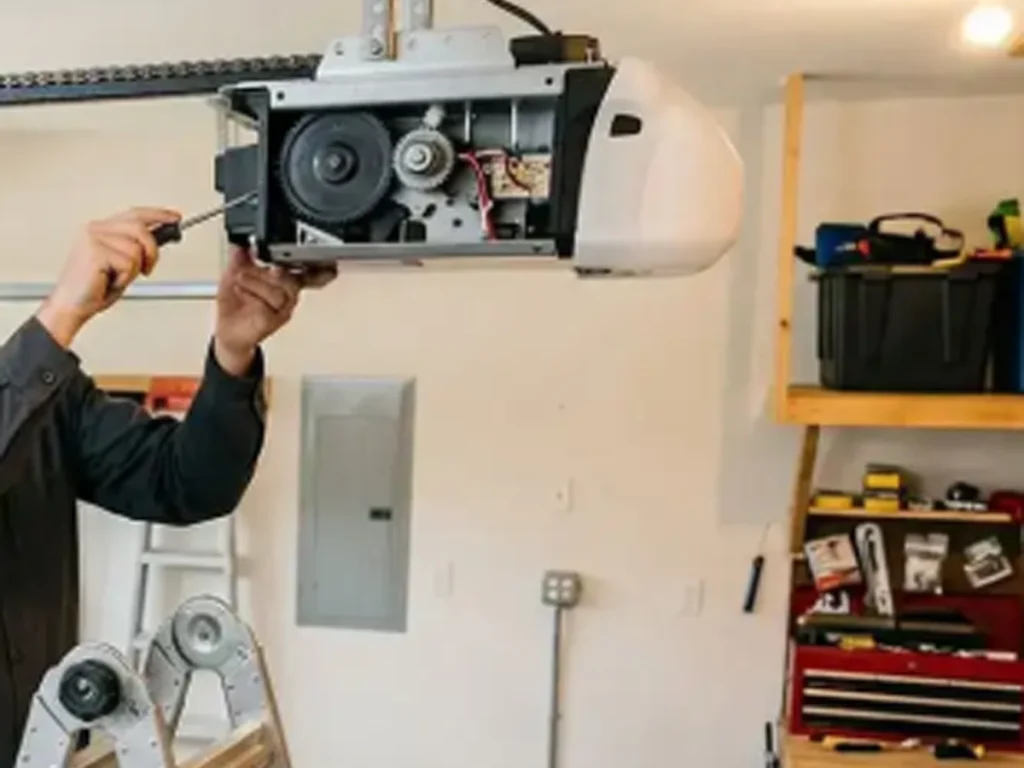
Here is a surprising fact about garage door repair: the motor does not lift most of the door weight. Instead, the spring system offsets that weight, while the opener guides a door that should already move with little strain. Therefore, a weak opener may actually point to a worn spring, tight roller, bent track, or poor door balance. The visible symptom and the true fault can sit in different parts of the system.
To tell whether a garage door problem is mechanical or electrical, first study what the door does, what you hear, and which controls work. Mechanical faults affect movement, balance, alignment, springs, cables, rollers, hinges, or tracks. Electrical faults affect power, remotes, wall controls, sensors, wiring, the motor, or the opener logic board. If the door is fully closed and safe to release, a smooth manual test can help separate the two groups. A door that stays hard to move by hand likely has a mechanical fault. A door that moves well by hand but fails only under powered control likely has an electrical fault. However, both fault types can occur together. Stop testing if the door is crooked, unsupported, off its tracks, or has damaged springs or cables.
This distinction matters because a wrong diagnosis can waste money and create risk. A new opener will not fix a broken spring. Likewise, fresh rollers will not restore power to a failed outlet or logic board. For Franklin homeowners, property managers, and business leaders, a sound first check helps reduce delay and supports a safer repair decision.
The safest approach uses observation before action. Look, listen, and compare control responses without touching parts under tension. Then, leave spring, cable, bracket, track, motor, and wiring repairs to a trained garage door professional.
- Note whether the trouble affects door movement, powered controls, or both.
- Stop immediately when the door hangs crooked, drops, binds, or shows a broken spring or loose cable.
Why the Mechanical and Electrical Split Matters
A garage door is one linked system. Its panels travel on rollers inside tracks. Hinges let the sections bend around the curved track. Meanwhile, springs store energy and counter the door weight. Cables transfer spring force, and drums guide those cables on many systems.
The opener forms the powered side of the system. It uses a motor, drive rail, travel controls, safety sensors, wall control, receiver, and often a backup battery. Because these groups work together, one weak part may make another part seem faulty.
For example, an opener may hum because the door is stuck. That sound does not prove the motor caused the failure. In contrast, a balanced door may move easily by hand while the wall control remains dead.
A correct split also helps leaders plan costs and downtime. A commercial door may need rapid access control. Therefore, the first goal is finding the fault group safely.
- Mechanical faults usually change weight, motion, alignment, resistance, or sound.
- Electrical faults usually change power, commands, sensor response, lights, or motor behavior.
Start Garage Door Repair With a Safe Visual Check
Before pressing any button, stand inside the garage and inspect the full opening. Keep people, pets, vehicles, and stored items away. Do not stand beneath a raised or unstable door. Also, never loosen a bottom bracket, cable, drum, or spring fastener.
Look above the door for the spring system. A torsion spring may show a clear gap when it breaks. Extension springs may appear stretched, loose, or uneven. Next, examine both lift cables from a safe distance. A loose, frayed, or missing cable is a stop sign.
Then, compare both sides of the door. One low corner, a roller outside its track, or a bent track suggests a mechanical problem. Check the floor for a fallen roller, hinge screw, cable strand, or broken hardware. Do not try to force the door back into place.
Finally, inspect the opener without removing its cover. Confirm that the trolley is connected, the rail looks straight, and nothing hangs from the unit. Smell for burned plastic and listen for unusual buzzing. If you see smoke, sparks, melted wiring, or water near power, switch off the safe upstream breaker and call a professional.
- A crooked door, broken spring, loose cable, or escaped roller strongly suggests mechanical failure.
- Dead lights, a burned smell, repeated clicking, or no response from controls suggests an electrical or opener fault.
Signs That Point to a Mechanical Garage Door Problem
Mechanical trouble changes how the door carries weight or travels. The door may rise several inches and stop. It may feel far heavier than normal. It may also jerk, scrape, shake, or move faster on one side.
A loud bang often leads owners to suspect something fell inside the garage. However, that sound can come from a spring breaking and releasing stored energy. Afterward, the opener may lift only a little, or the door may not lift at all. Repeated powered attempts can then strain the opener.
Grinding can point to worn rollers, a damaged hinge, or track contact. Popping may come from a section or roller binding during travel. A door that closes unevenly can involve cable tension, drum alignment, a damaged track, or an obstacle. Since several parts can create similar sounds, noise guides the inspection but does not prove a diagnosis.
Balance also offers useful evidence. A sound spring system helps the door remain controlled through its path. The United States Consumer Product Safety Commission says a properly working door should be balanced and warns that a severely unbalanced door could fall. Its guidance says doors that bind, stick, or lack balance should receive professional service.
- Common mechanical clues include heavy movement, uneven travel, scraping, binding, gaps in springs, and slack cables.
- Never test or repair high tension springs, cables, drums, or bottom brackets without proper training and tools.
Signs That Point to an Electrical Garage Door Problem
Electrical trouble often appears when the door itself still moves smoothly, yet powered commands fail. The wall control may be blank. The opener light may not turn on. The remote may work only at close range, or one control may work while another does not.
Begin with the control pattern. If the wall button works but one remote fails, the issue may involve that remote battery, programming, or device. If no remote works but the wall button does, the receiver or radio setting deserves attention.
Safety sensors can also stop normal closing. Many openers will refuse a remote close command when the sensor beam is blocked or misaligned. Depending on the model, lights may blink or the wall control may show an error. Dust, an object, loose wiring, bright light, or sensor movement can affect the signal.
The opener may receive power but still fail internally. A worn drive gear can make the motor run without moving the door. A failed capacitor may cause humming without a normal start. A damaged logic board may create erratic commands. Those symptoms overlap with mechanical resistance, so a trained test matters.
- Electrical clues include dead controls, blinking sensor lights, lost remote response, humming, clicking, and erratic opener behavior.
- Check simple user controls first, but leave internal voltage tests, wiring repair, and opener disassembly to a qualified technician.
Use a Safe Manual Test to Separate the Faults
A manual movement test can provide strong evidence, but only under safe conditions. The door must be fully closed before the opener is released. If the door is open, crooked, jammed, off track, or supported only by a damaged part, do not pull the emergency release.
First, close the door if it will close normally. Then, disconnect power to the opener and pull the release handle according to the owner manual. Use the correct lift handle, keep fingers away from section joints, and raise the door slowly. Never place your body beneath the door during this check.
If the door moves smoothly with reasonable effort and stays controlled, the mechanical system may still be serviceable. In that case, the opener, controls, sensors, or power supply become more likely. However, this result is evidence, not final proof.
If the door feels extremely heavy, binds, rises unevenly, or will not stay controlled, stop. The problem is likely mechanical or includes a mechanical fault. Lower the door carefully only if you can do so without strain. Otherwise, keep the area clear and request service.
The Consumer Product Safety Commission garage door guidance recommends manual checks with the door closed and calls for professional service when a door binds, sticks, or lacks balance. That advice supports a cautious test, not a repair attempt.
- Smooth manual travel with failed powered travel points toward the opener or electrical controls.
- Heavy, rough, crooked, or unstable manual travel points toward springs, cables, rollers, tracks, or door hardware.
Follow the Control Chain Before Blaming the Motor
When manual movement feels normal, trace the command path in a simple order. First, confirm that the opener plug sits firmly in a working outlet. Use only a safe, approved method to check the outlet. Do not open electrical panels or handle damaged wires.
Next, check whether the wall control has power or a visible status light. Review vacation or lock mode because it can block remote commands on many models. Then, replace the remote battery if only that remote fails. Follow the maker instructions before trying to pair it again.
After that, inspect both safety sensor lenses. Remove any object from the doorway and wipe the lenses with a soft, dry cloth. Compare their indicator lights with the owner manual because light colors and blink codes vary by brand. Never bypass, tape over, or disable a safety sensor.
Finally, listen during one brief command. A silent opener may lack power or a control signal. A click may mean the unit receives a command but cannot start. A motor sound without door travel may involve the drive system, trolley, or door resistance. Stop repeated tests because they can add heat and damage.
- Compare the outlet, wall control, remote, lock mode, and sensor response in a set order.
- Record any blink code or display message because model specific codes can speed professional diagnosis.
A Composite Franklin Case Study Shows the Difference
Consider a composite example based on a common service pattern, not a claim about one identified customer. A Franklin homeowner reports that the opener hums, while the door rises only several inches. The remote and wall button both create the same result.
At first, the motor seems like the obvious cause. However, a visual check finds a gap in the torsion spring. The door also feels far too heavy for a safe manual lift. Those facts show that the motor response is a result, while the broken spring is the central mechanical fault.
Now consider a second composite pattern. The door closes fully and moves smoothly by hand. The wall control works, but the remote does not. A fresh remote battery and correct programming restore the command. In this case, replacing rollers, springs, or the full opener would have wasted money.
A third pattern is more complex. The door binds near one track, and the opener stops with an error. The error is real, but it may be the opener sensing excess force caused by a mechanical bind. Therefore, both mechanical correction and opener setting checks may be needed.
These examples reflect our diagnostic view at Everlast Garage Doors – Franklin: test the system as a whole, explain the evidence, and repair the verified cause. A professional should not sell an opener before checking door balance. Likewise, a technician should not call every control fault a sensor problem.
- Good diagnosis explains why the observed fault creates the reported symptom.
- Good service also checks for linked wear that may cause the same failure again.
Know Which Garage Door Repair Checks Are Safe
Homeowners can complete several low risk checks without taking the system apart. They can clear the doorway, clean sensor lenses, replace a remote battery, review lock mode, and note error codes. They can also inspect visible parts from the floor without touching them.
Lubrication may be suitable when the maker instructions allow it and the door has no serious fault. Use only the product and locations named in the door manual. Do not lubricate tracks unless the maker directs it, and do not use lubricant to hide grinding, binding, or structural damage.
The Door and Access Systems Manufacturers Association safety tips warn that springs and cables can cause injury and should receive trained service. The association also advises monthly safety checks and regular professional care. Those limits are sensible because stored spring energy can release without warning.
The United States Department of Energy has also documented severe hazards from roll up door failures in work settings. Commercial doors differ from residential doors, but the core lesson remains useful: heavy moving systems demand respect.
- Safe owner checks stay outside spring tension, cable tension, internal wiring, and moving door paths.
- Professional work should cover springs, cables, tracks, brackets, openers, circuit boards, and uncertain faults.
9. Stop Testing When These Warning Signs Appear
Some conditions make further testing unsafe. A door that sits crooked may have lost cable support. A roller outside the track can let the door twist or fall. A spring gap shows that the counterbalance system may no longer support normal travel.
Smoke, sparks, melted insulation, or a strong burned smell also require an immediate stop. Do not reset the breaker again and again. Repeated resetting can hide a short or overload and increase damage. Keep the area clear until a qualified person checks the system.
Similarly, stop if the safety reversal system fails. Federal guidance says automatic residential openers sold after January 1, 1991, must have reversing systems. An external entrapment protection requirement followed in 1993. A failed safety feature deserves prompt correction before normal use resumes.
Never walk beneath a damaged or partly open door. Do not clamp, prop, or pull it with a vehicle. Also, never ask another person to hold a heavy door while someone works beneath it. Secure access through another entrance and arrange trained service.
- Stop for a broken spring, loose cable, off track roller, falling door, smoke, sparks, or failed reversal.
- Keep children, pets, staff, vehicles, and stored goods outside the full door travel area.
Get Expert Garage Door Repair in Franklin
Mechanical and electrical symptoms often overlap, but a careful sequence makes the picture clearer. Start with a safe visual check. Compare manual movement only when the door is fully closed and stable. Then, trace power, controls, and sensors without opening the unit or bypassing safety devices.
If the door is heavy or rough by hand, suspect a mechanical fault. If it moves well by hand but powered controls fail, suspect an electrical or opener fault. In every case, evidence should lead the repair.
Franklin serves homeowners, property managers, and business decision makers who need a clear answer and a sound solution. Our goal is to find the cause, explain the options, and restore safe, dependable operation with work suited to the actual door.
Everlast Garage Doors we provide complete Garage Door Services for both residential and commercial properties. Our team handles Garage Door Installation, Repair, Maintenance, Custom Designs , and full Door Replacements to ensure long-lasting performance and reliability. We also offer Emergency Garage Door Service to quickly resolve urgent issues and keep your property secure and fully operational. you can count on quality, durability, and trusted service every step of the way.
Contact us to schedule garage door repair or a professional system check.
Phone: 615-808-8806
Location: 1107 Battlewood St #222, Franklin, TN 37069
- Call when the door is unsafe, stuck, noisy, uneven, or unreliable.
- Request a full diagnosis when earlier repairs did not solve the root cause.
Frequently Asked Questions
Is a garage door opener problem mechanical or electrical?
It can be either, and sometimes both. If the disconnected door is heavy, crooked, or rough, a mechanical fault is more likely. If the door moves smoothly by hand but the opener or controls fail, the electrical side becomes more likely. A technician should verify the cause before any major part is replaced.
Why does my garage door opener click but not move?
A click means the opener may receive a command, but it does not identify the failed part. The cause may be a stuck door, broken spring, failed drive part, weak capacitor, damaged logic board, or lost trolley connection. Stop repeated attempts and arrange service if the door is heavy or damaged.
How do I know if my garage door motor is bad?
Do not judge the motor from sound alone. First, confirm that the fully closed door is safe and moves smoothly by hand. Then, compare the wall control, remote, sensor lights, and opener response. Humming, heat, or no movement can involve the motor, but mechanical resistance can produce similar symptoms.
Why will my garage door open but not close?
A blocked or misaligned safety sensor is a common possibility, but it is not the only cause. Track binding, a damaged panel, travel settings, wiring, or opener faults can also stop closing. Clear the path, clean sensor lenses, review indicator lights, and call for service if the fault remains.
Can I repair a garage door spring or cable myself?
No homeowner repair is recommended for springs, cables, drums, or bottom brackets. These parts can hold extreme tension, and sudden release can cause severe injury or door collapse. Keep the door closed when possible, avoid powered use, clear the area, and ask a trained garage door technician to complete the repair.