
A Simple Franklin Guide to Smooth Garage Door Movement
The garage door is often the largest moving object in a home, yet its tracks are easy to overlook until the door begins to bind or shake. That is why Garage Door Tracks Clean and Aligned is more than a tidy home task. It is a practical way to support smooth travel, protect connected parts, and spot risks early.
To keep garage door tracks clean and aligned, first remove loose dust, leaves, and small objects with a soft brush or vacuum. Then wipe the inside track surface with a clean cloth and mild household cleaner, while avoiding heavy grease inside the tracks. Next, watch the door move from a safe distance and look for rubbing, gaps, loose brackets, bent metal, or rollers that leave the track. Homeowners may tighten only clearly loose track fasteners when the door is closed and the manufacturer allows it. However, do not bend tracks, adjust springs, cables, bottom brackets, or opener force settings. If the door binds, tilts, makes harsh sounds, or comes off track, stop using it and arrange professional service.
The U.S. Consumer Product Safety Commission advises regular checks of garage door hardware and says doors that bind or stick should be serviced by a professional. The Door and Access Systems Manufacturers Association also recommends monthly checks and yearly trained service. Those standards support a sensible goal for Franklin homeowners: clean visible debris, observe the system, and leave tensions or structural repairs to a trained technician.
Why Clean and Aligned Tracks Matter
Garage door tracks guide rollers along a planned path. Therefore, even a small build up of dirt can add drag where the rollers need a smooth surface. A track that has shifted can also make the door rub, shake, or stop before it fully opens.
For decision makers, this matters because a moving door works as one system. The panels, rollers, hinges, cables, springs, tracks, and opener all share the load. When the tracks do not guide the rollers well, other parts may have to work harder.
- Clean tracks reduce the chance that leaves, grit, or loose objects block a roller.
- Aligned tracks help the door travel in a straight and steady path.
A clean track does not correct a worn spring or a bent roller. However, regular observation can make it easier to notice when trained service is needed.
Know What You Can Safely Clean
Before you start, look at the track system without touching any springs, cables, or brackets. The vertical tracks sit beside the door opening. The curved and horizontal tracks guide the door across the ceiling as it rises.
Cleaning is usually a light duty task. Adjustment is different. The door has parts under high tension, so a cautious line between those tasks helps prevent injury.
- You can remove loose dust, cobwebs, leaves, and grit from reachable track surfaces.
- You should not loosen bottom brackets, cable drums, springs, or spring hardware.
This is especially important when a door is heavy, crooked, or hard to move.
Gather Gentle Cleaning Supplies
Simple tools are best for normal garage door maintenance. Harsh abrasives may scratch metal finishes. Thick grease inside the track can also trap more dirt, which defeats the purpose of cleaning.
Use a soft brush, vacuum with a narrow attachment, clean microfiber cloths, mild cleaner, and a small step stool if it is stable. Keep your work area clear so you do not trip near the door path.
- Use a dry brush or vacuum first to lift loose debris without making mud.
- Use a lightly damp cloth next, then dry the track surface before testing the door.
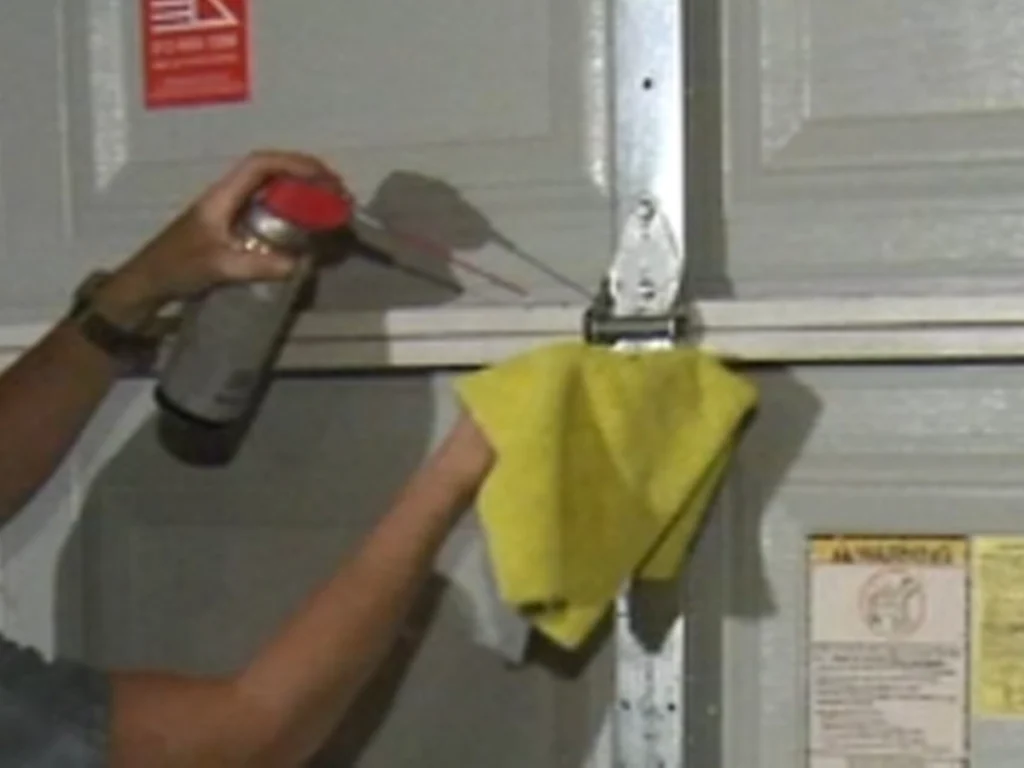
Do not spray lubricant into the track channel unless the door manufacturer specifically directs it. In many systems, rollers and hinges receive the proper lubricant, while the track itself stays clean and dry. The owner manual for your exact door and opener should guide product choices.
Clean the Tracks With the Door Secured
Choose a calm time when you can work without rushing. First, close the garage door fully. Then disconnect no parts unless your owner manual specifically gives a safe maintenance procedure for your model.
Start at the lower vertical tracks. Brush or vacuum the inner faces where the roller wheels travel. Next, wipe the surfaces with a cloth that is only slightly damp. Work upward only as far as you can reach securely.
- Remove pebbles, packed soil, leaves, insect nests, and loose hardware from the track area.
- Keep fingers away from roller paths, hinges, cables, and the spaces between door sections.
Afterward, inspect the horizontal tracks from the floor or a stable position. A vacuum extension can often reach light dust. If you cannot reach safely, leave that part for a maintenance visit. A clean track is useful, but a safe work position matters more.
Look for Signs of Track Misalignment
A garage door track does not need to look perfectly new to work well. Still, it should appear firmly attached, straight through its intended run, and free of visible bends. More importantly, the door should move without rubbing or forcing the rollers sideways.
Watch the door from several feet away while another adult operates it, if that can be done safely. Do not stand beneath the door. Listen for scraping, popping, repeated thuds, or an opener that strains.
- Look for loose track brackets, bent sections, roller wheels riding at an odd angle, or marks where metal rubs.
- Notice whether one side of the door rises ahead of the other or whether the door pauses unexpectedly.
Track symptoms can overlap with other faults. For example, a door that looks crooked may have a cable problem, roller issue, spring imbalance, or track damage. That is why visual checks are valuable, but they are not a substitute for diagnosis.
Check the Door Movement Without Guessing
Once the visible tracks are clean, run the door through one full open and close cycle. Stand clear and use the wall control if possible. Watch rather than touch the moving door.
The goal is not to test the system beyond its limits. Instead, you are checking whether the door travels quietly and evenly after basic cleaning. A smooth door should not scrape hard, jerk, or leave a roller behind.
- Stop the door and seek service if a roller comes out of the track or metal starts to bend.
- Stop using the opener if the door binds, reverses for no clear reason, or needs repeated commands.
Because balance involves springs, it is best to follow your manual and avoid spring adjustments. If manual movement feels heavy or unstable, a trained technician should inspect the system.
Keep Rollers and Hinges in View
Clean tracks are only one part of good garage door maintenance. Rollers carry the door through the tracks. Hinges help each section bend as it follows the curve. When either part wears, the track may show the result.
During a visual check, look for cracked roller wheels, worn stems, missing hardware, or hinges that appear bent. Do not pull on the door or remove rollers yourself. A roller can be close to cable or spring hardware, depending on its position.
- A roller that wobbles, chips, or makes a loud repeated clatter needs professional attention.
- A hinge that is loose, bent, or cracked can affect how the panel enters the curved track.
In our view, the best maintenance habit is to notice patterns early. One new sound may be minor. However, a growing scrape combined with shaking or slow travel deserves prompt inspection. This approach can reduce disruption before a small concern becomes a stuck door.
Avoid Common Track Care Mistakes
Well meant repairs can create more trouble when they focus only on the visible track. For instance, forcing bent metal back into shape may weaken it or change the track spacing. Adding thick oil can make the path sticky with dust.
Another mistake is tightening every visible bolt without knowing its purpose. Some hardware supports a system that needs precise placement. Therefore, random adjustment can make a door run worse.
- Do not hammer, bend, pry, or reshape tracks while the door is attached.
- Do not remove red marked parts, bottom brackets, cable hardware, springs, or winding components.
That warning is worth taking seriously. If the problem looks structural, choosing professional garage door repair is the careful choice.
Use a Simple Monthly Routine
A short monthly routine keeps the task realistic. You do not need to dismantle the door. Instead, give the door a few minutes of focused attention, then arrange service when you find warning signs.
Begin with a look at both track runs. Next, remove loose debris near the opening. Then listen during one open and close cycle. Finally, test safety features according to the opener manual.
- Clear the floor near the photo eyes and track entrances so objects do not block travel.
- Record a new sound, shake, or travel issue with the date so changes are easier to describe later.
That schedule is practical for busy Franklin households because it combines simple owner care with professional expertise. It also helps keep the door part of the regular home care plan.
A Franklin Example of Early Action
Consider a typical example, not a record of a specific customer visit. A homeowner sees leaves and fine gravel collecting near the lower track after yard work. The door still opens, but it begins to make a light scrape near the floor.
The homeowner clears the loose debris and sees that the sound remains. Rather than forcing the door or bending the track, they schedule an inspection. A technician can then check the rollers, track brackets, cable path, door balance, and opener travel as a complete system.
- The useful owner action is cleaning visible debris and reporting the exact symptom.
- The useful professional action is finding the cause without disturbing dangerous tensioned parts.
This example shows why track care works best as an early warning habit. It is not about doing every repair yourself. It is about making a clear decision before the door becomes unreliable at the busiest time of day.
When to Call a Garage Door Professional
Call for help promptly when the door is off track, visibly crooked, difficult to move, or making harsh metal sounds. Also call when a cable looks loose or frayed, a spring looks broken, or the opener strains. These conditions can worsen if the door keeps running.
We do not treat a dirty track as an automatic major repair. Instead, we look for the condition that explains the door behavior and discuss clear next steps.
- Request service after a vehicle impact, a severe scrape, a roller escape, or repeated opening failure.
- Request planned maintenance if the door is aging, used often, or beginning to sound different.
For local building questions connected to a larger garage change, consult the City of Franklin permitting information. For general safety guidance, review the DASMA garage door safety tips. These sources reinforce the same practical rule: observe and maintain what is safe, then call trained help for tension or structural work.
A Final Checklist for Garage Door Tracks Clean and Aligned
Keeping Garage Door Tracks Clean and Aligned is a small routine with a strong purpose. Clean the visible path. Watch the door travel. Listen for change. Then avoid risky adjustments and ask for help when the system shows strain.
- Remove loose dirt and leaves with a brush, vacuum, and lightly damp cloth.
- Stop using the door if it binds, tilts, scrapes hard, or comes off track.
For dependable garage door maintenance in Franklin, contact Everlast Garage Doors through the website to schedule a professional inspection. A careful check can help you protect safe access, smoother daily use, and confidence in your garage door system.
Everlast Garage Doors we provide complete Garage Door Services for both residential and commercial properties. Our team handles Garage Door Installation, Repair, Maintenance, Custom Designs , and full Door Replacements to ensure long-lasting performance and reliability. We also offer Emergency Garage Door Service to quickly resolve urgent issues and keep your property secure and fully operational. you can count on quality, durability, and trusted service every step of the way.
For service, call 615-808-8806. The Franklin office is at 1107 Battlewood St #222, Franklin, TN 37069.
Frequently Asked Questions
How do I clean garage door tracks without damaging them?
Close the door, then remove loose debris with a soft brush or vacuum. Wipe reachable track surfaces with a lightly damp cloth and mild cleaner, then dry them. Avoid heavy grease in the track channel because it can hold dust. Do not bend the track or loosen spring, cable, or bottom bracket hardware.
Should garage door tracks be lubricated?
Usually, the inside track channel should be kept clean rather than coated with thick lubricant. Product guidance can differ by door and roller type, so check the owner manual first. A garage door technician can lubricate the correct rollers, hinges, and bearings during service while keeping the track path free from buildup.
Why does my garage door scrape when it opens?
Scraping may come from debris, a bent track, worn rollers, loose brackets, or a door that is not moving evenly. The sound alone cannot confirm the cause. First, remove loose debris and watch the door from a safe distance. If the sound continues, stop forcing the door and arrange an inspection.
Can I fix a bent garage door track myself?
It is safer not to force a bent track back into shape while the door is attached. Track position affects roller travel, and the door system includes parts under high tension. A professional can check whether the track needs adjustment, repair, or replacement and can also inspect related rollers, cables, and brackets.
How often should garage door tracks be checked?
quick visual check each month is a practical routine. Look for loose debris, rubbing marks, bent metal, unusual sounds, and uneven travel. More frequent attention may help when a door receives heavy daily use.