
A garage door may complete thousands of cycles while a hidden fault slowly develops inside its moving system. In fact, federal standards require certain switches and relays used in garage door entrapment protection circuits to withstand 100,000 operating cycles. However, that requirement does not mean every spring, roller, cable, bearing, track, or fastener will remain healthy for the same period.
Automated garage door fault identification gives owners a clearer way to recognize changes before a door stops working. The process can track movement time, motor load, vibration, sound, position, and safety sensor activity. Still, automated results should support a trained inspection rather than replace one.
AI Overview
Automated garage door fault identification uses sensors, opener data, and set performance limits to find unusual door behavior. For example, a system may detect slower travel, rising motor effort, excess vibration, repeated reversal, or uneven movement. These changes can point toward track friction, poor balance, worn rollers, weak hardware, sensor trouble, or an opener problem.
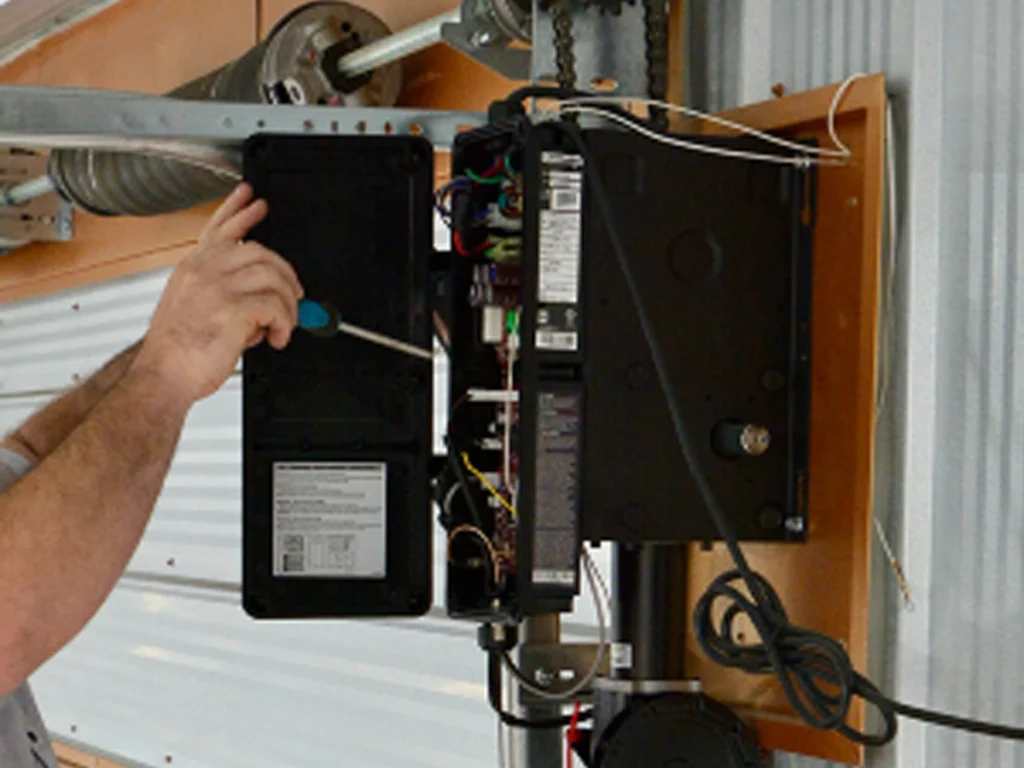
However, one warning signal does not prove that a specific part has failed. Therefore, a trained garage door professional should inspect the complete system, confirm the cause, and recommend a safe response. This approach combines early alerts with human judgment, which can reduce surprise failures and support better maintenance planning.
Why Garage Door Mechanical Fault Identification Matters
A garage door is not simply a panel connected to a motor. Instead, it is a linked mechanical system that depends on balance, alignment, controlled force, and safe movement.
For instance, the springs help counter the door weight. Meanwhile, cables transfer force, rollers guide movement, tracks control the path, and the opener manages powered travel. Consequently, a problem in one part can place added strain on several other parts.
Mechanical fault identification matters because many problems begin with small changes. At first, a homeowner may hear a faint scrape or notice a short pause. Later, the same condition may cause severe binding, a cable problem, or opener damage.
Early identification is important for several reasons:
- It can reveal changes before the door becomes stuck or unsafe.
- It can help a technician distinguish a door problem from an opener problem.
In addition, early findings support better repair decisions. A technician may correct poor alignment or replace one worn component before added strain damages a larger section of the system.
How Automated Garage Door Fault Identification Works
An automated diagnostic system observes how a garage door behaves during normal operation. First, it creates or uses a reference range for healthy movement. Next, it compares later cycles with that expected pattern.
The monitoring method may be built into a modern opener. Alternatively, separate sensors may collect data near the motor, track, shaft, or door section. More advanced systems can combine several signals before producing an alert.
Common measurements include:
- Travel time, position, vibration, sound, and motor current.
- Reversal events, sensor interruptions, cycle counts, and temperature.
Suppose a door normally opens in twelve seconds. If the same door gradually needs sixteen seconds, the system may record a meaningful change. However, slower travel alone cannot identify the cause.
Cold weather, track friction, a weak spring, poor balance, or opener wear could produce similar results. Therefore, the alert should begin an inspection rather than deliver a final diagnosis.
Powerful Signals That Can Reveal Hidden Faults
No single signal provides a complete picture. Instead, accurate mechanical fault identification depends on patterns across several measurements and operating cycles.
Movement Time and Position
Travel time is easy to understand and useful for trend tracking. If opening time rises slowly, resistance may also be rising somewhere within the system.
Position data can reveal incomplete opening or closing. Likewise, it may show that the door pauses repeatedly at the same point.
- Longer travel may suggest friction, weak lifting support, or motor strain.
- Irregular position readings may suggest slipping, binding, or limit trouble.
Motor Current and Workload
A motor often draws more current when it must work against greater resistance. Therefore, current monitoring can expose a change that remains hard to see.
Still, current readings require context. Door size, opener type, weather, balance, and operating voltage can affect the measurement.
- A rising current pattern may indicate added mechanical resistance.
- A sudden current spike may appear when the door binds or meets an obstruction.
Vibration and Sound
Loose hardware, worn bearings, damaged rollers, and poor alignment can change the vibration pattern. Similarly, they can create new scraping, popping, rattling, or grinding sounds.
Modern diagnostic methods can compare sound or vibration with an established normal pattern. Yet ordinary background noise can reduce accuracy.
- Repeated vibration at one travel point may support an alignment inspection.
- New impact sounds may point toward loose, worn, or shifting hardware.
Safety Sensor Activity
Photoelectric sensors help protect the garage door opening. Dust, sunlight, loose wiring, movement, and poor alignment can interfere with their operation.
Federal garage door operator rules include requirements for entrapment protection. Readers can review the relevant provisions in 16 CFR Part 1211.
- Repeated unexplained reversals can justify a safety sensor inspection.
- A flashing sensor indicator may suggest obstruction, alignment, or wiring trouble.
Critical Garage Door Faults a System May Flag
Automated monitoring can detect symptoms connected with many faults. Nevertheless, the software usually recognizes abnormal behavior rather than physically confirming a broken component.
Door Balance Changes
Springs counter much of the door weight. As a result, proper balance allows the door and opener to move together with controlled effort.
If balance changes, motor demand and travel time may rise. The door may also move unevenly or fail to remain in place during a professional balance test.
- A heavy feeling can suggest reduced spring support.
- Uneven movement may indicate a balance, cable, track, or hardware concern.
Because springs store dangerous energy, homeowners should never loosen, adjust, or replace them without suitable training and tools.
Roller and Track Problems
Rollers should follow the tracks without severe drag or impact. However, wear, dirt, damage, loose brackets, and poor alignment can disturb that movement.
An automated system may detect vibration or slower travel near the affected point. Meanwhile, a technician can examine the rollers and tracks to confirm the source.
- Scraping may appear when a roller or door section rubs incorrectly.
- Repeated shaking may indicate wear, looseness, or alignment trouble.
Cable and Drum Concerns
Lift cables work with springs and drums to manage the door. A damaged or poorly seated cable can cause uneven movement and serious safety concerns.
Automated monitoring may notice a change in position or speed between operating cycles. Even so, cables require a close professional inspection.
- A visibly loose cable requires prompt professional attention.
- A tilted door should not be forced through another powered cycle.
Opener and Drive Wear
A belt, chain, screw, gear, sprocket, rail, or carriage can wear over time. The opener may then produce noise while struggling to transfer movement correctly.
Monitoring can detect higher vibration or added operating time. Yet the cause may remain inside the opener or elsewhere in the door assembly.
- Motor sound without normal door movement can indicate drive trouble.
- Jerking travel may involve the opener, door balance, track, or rollers.
Automated Alerts Cannot Replace an Expert Inspection
Automated fault identification has limits. Most importantly, a sensor cannot see every cable strand, fastener, crack, bracket, spring surface, or track connection.
Moreover, different problems can create nearly identical data. For example, rising motor effort may come from cold lubricant, track resistance, poor balance, damaged rollers, or opener wear.
A qualified inspection adds essential context:
- The technician can compare digital alerts with physical evidence.
- The technician can test the entire system under safe conditions.
Therefore, an alert should be treated as an informed warning. It should not encourage an owner to perform hazardous repairs.
The Door and Access Systems Manufacturers Association safety guide recommends regular visual checks and safety testing. It also explains when professional service is appropriate.
A Practical Diagnostic Process for Franklin Properties
A good diagnostic process follows a clear order. First, the technician listens to the owner and reviews the observed symptoms. Then, the technician studies the door through a complete operating cycle when safe.
Next, recorded data can help narrow the investigation. However, the technician must still inspect the mechanical and safety systems directly.
A thorough process may include:
- Reviewing alerts, error codes, cycle history, and recent behavior.
- Inspecting springs, cables, rollers, tracks, hinges, brackets, and fasteners.
After that, the technician may evaluate balance, travel limits, opener connection, and safety reversal behavior. Finally, the findings should be explained in plain language.
This process matters in Franklin because local homes vary greatly. Some properties have newer attached garages, while others have older doors, custom materials, or heavier designs. Accordingly, one fixed data limit may not fit every door.
A Realistic Example of Early Fault Identification
The following is a composite example, not a claim about a specific customer. It demonstrates how an automated alert and professional judgment may work together.
A Franklin homeowner receives several alerts showing longer closing times. At the same time, the opener records two unexpected reversals during one week.
At first, the homeowner assumes the motor is failing. However, a technician inspects the whole system and finds that one roller binds near a track connection. A safety sensor bracket has also shifted slightly.
The findings show why complete diagnosis matters:
- The recorded data correctly identified abnormal operation.
- The automated alert alone could not determine the exact causes.
After appropriate corrections, the technician can compare new movement with the earlier readings. If the travel pattern returns to normal, the data provides useful support for the completed work.
However, this outcome cannot be promised for every door. Each system requires its own inspection, measurements, and repair plan.
My Expert View on Smart Garage Door Diagnostics
In my view, automated monitoring offers its greatest value through trend awareness. A single reading can mislead, while a repeated change across several cycles can justify closer attention.
For that reason, a useful system should provide clear observations rather than dramatic claims. An alert such as “closing time increased repeatedly” is more responsible than “spring failure confirmed.”
Decision makers should expect the system to explain:
- Which measurement moved outside its usual range.
- When the change began and how often it occurred.
Owners should also know whether data remains on the device or enters an online service. Consequently, privacy, access control, retention, and software support deserve consideration before installation.
Most importantly, diagnostic tools should promote safe action. They should never instruct an untrained owner to adjust springs, cables, drums, or loaded brackets.
Essential Safety Steps After Receiving an Alert
Not every notification represents an emergency. Nevertheless, certain symptoms deserve immediate caution because garage doors are heavy and contain parts under high tension.
Stop using the door when it is severely tilted, hanging from a cable, leaving its track, falling, or moving without control. Likewise, keep people and vehicles away from the opening.
Safe responses include:
- Leave springs, cables, drums, and loaded brackets untouched.
- Arrange a professional inspection when operation appears unsafe.
The United States Department of Energy has documented serious industrial door failures involving chains, sprockets, alignment, and stored spring energy. Although industrial doors differ from common residential doors, the report reinforces the need for trained inspection around loaded components. See the Department of Energy roll up door safety report.
If the door is open and appears unstable, do not stand beneath it. Additionally, do not keep cycling the opener to reproduce a severe problem.
How Preventive Maintenance Improves Detection
Automated monitoring works best when paired with regular maintenance. Otherwise, the system may repeatedly report symptoms while the underlying condition continues to worsen.
Maintenance also creates useful reference information. For example, a technician can record how the door sounds and moves after confirmed service. Future changes can then be compared with a known condition.
A practical maintenance program should include:
- Regular visual observation and manufacturer recommended safety tests.
- Professional inspection whenever movement, balance, or hardware raises concern.
Owners can safely keep the sensor area clean and watch the door during operation. However, lubrication, adjustment, and testing should follow the door and opener manufacturer instructions.
Commercial decision makers may benefit from a written door register. It can identify each door, service date, observed fault, completed work, and next review date.
Choosing an Automated Garage Door Monitoring System
A monitoring product should solve a real problem. Therefore, buyers should begin by identifying whether they need basic status alerts, safety notifications, usage records, or deeper condition monitoring.
Compatibility is equally important. A device may work with one opener platform but provide only limited functions with another.
Before choosing a system, ask:
- Which conditions can the system directly measure?
- Which alerts are observations, estimates, or confirmed faults?
Also, ask whether the device monitors door position independently. A command sent through an application does not always prove that the door reached the expected position.
For a business, system reliability and account control also matter. Administrators should know who can open doors, receive alerts, edit settings, and review activity.
Why Franklin Decision Makers Need a Clear Plan
Homeowners want reliable access and family safety. Meanwhile, property managers need predictable service, useful records, and less unplanned downtime.
An automated diagnostic approach can support both goals. It can reveal gradual changes that people may overlook during daily use.
A clear plan should define:
- Which alerts require observation, service scheduling, or immediate shutdown.
- Who will inspect the door and document the confirmed cause.
Everlast Garage Doors – Franklin can help owners move from uncertain symptoms toward an informed service decision. The priority should remain accurate inspection, clear communication, and repairs suited to the actual door.
That approach positions technology where it belongs. Automation provides helpful evidence, while trained professionals confirm the fault and determine the safe next step.
Conclusion: Early Detection Supports Safer Decisions
Automated garage door fault identification can make hidden changes easier to notice. It can track travel time, vibration, motor effort, position, reversals, and safety sensor activity.
However, monitoring is not a complete mechanical inspection. Data may show that something changed, but a trained technician must determine why it changed.
The strongest approach combines:
- Automated alerts that reveal unusual operating patterns.
- Professional inspection that confirms the cause and repair need.
For Franklin homeowners and property decision makers, this combination can improve maintenance planning and reduce uncertainty. Above all, it encourages action before an unusual sound or slow movement develops into a larger problem.
Frequently Asked Questions
Can a smart garage door opener detect mechanical problems?
Some smart openers can report position, repeated reversals, error codes, and incomplete movement. More advanced monitoring may also measure vibration or motor effort. However, these signals usually indicate abnormal behavior rather than confirm one failed component. A technician should inspect the door, opener, springs, cables, tracks, and safety equipment before recommending repairs.
Why does my garage door reverse before reaching the floor?
A door may reverse because the photoelectric sensors are blocked, dirty, misaligned, loose, or affected by wiring trouble. Excess resistance, incorrect limits, or another mechanical issue may also cause reversal. Since several conditions can create the same symptom, inspect the clear sensor area first and arrange professional service if the problem continues.
What are the common signs of a garage door mechanical fault?
Common warning signs include jerking, scraping, popping, slow travel, uneven movement, repeated reversal, visible cable trouble, or new motor strain. The door may also stop at the same location during several cycles. These symptoms do not prove one specific failure. Therefore, a complete inspection is needed to identify the responsible component.
Can garage door sensors tell whether a spring is broken?
Standard safety sensors do not diagnose broken springs because they mainly monitor the doorway for obstructions. Other systems may notice added motor effort, slower movement, or incomplete travel after spring support changes. Still, those symptoms can have several causes. A trained technician must inspect the spring and test door balance safely.
How often should an automatic garage door receive an inspection?
Follow the maintenance schedule supplied by the door and opener manufacturers. In addition, request an inspection when the door becomes noisy, uneven, slow, unreliable, or difficult to operate. High use doors may need closer attention. Springs, cables, drums, and loaded brackets should always be evaluated and serviced by properly trained professionals.
Contact Everlast Garage Doors – Franklin
Do not wait for an unusual sound, slow cycle, or repeated reversal to become a complete breakdown. Everlast Garage Doors – Franklin can inspect the system, identify the verified cause, and explain suitable service options.
At Everlast Garage Doors, we provide complete Garage Door Services for both residential and commercial properties. Our team handles Garage Door Installation, Repair, Maintenance, Custom Designs , and full Door Replacements to ensure long-lasting performance and reliability. We also offer Emergency Garage Door Service to quickly resolve urgent issues and keep your property secure and fully operational. With Everlast Garage Doors, you can count on quality, durability, and trusted service every step of the way.
Contact us at
Phone: 615-808-8806
Location: 1107 Battlewood St #222, Franklin, TN 37069