
Here is a surprising garage door opener fact. Federal safety rules require garage door openers made or imported for United States sale after January 1, 1991 to include reversing systems. An external entrapment protection requirement was added in 1993. Therefore, choosing an opener involves much more than deciding whether a chain or belt sounds better.
AI Overview
Chain drive and belt drive garage door openers perform the same basic task, yet they move the trolley differently. Chamberlain explains that a belt drive uses a steel reinforced rubber belt. In contrast, a chain drive uses a heavy duty chain similar in concept to a bicycle chain.
For many homeowners, the choice comes down to noise, budget, door requirements, and garage location. Belt drive openers are usually the quieter option. Therefore, they often fit attached garages and rooms near the garage. Chain drive models remain popular because they offer dependable operation and often cost less within similar product ranges. (LiftMaster)
However, the drive type is only one factor. Door balance, opener power, safety sensors, installation quality, battery backup, lighting, and smart features also matter.
Two quick conclusions help simplify the decision:
- Choose belt drive when quiet and smooth operation lead your priorities.
- Consider chain drive when dependable operation and budget value matter more than minimum noise.
How Chain Drive Garage Door Openers Work
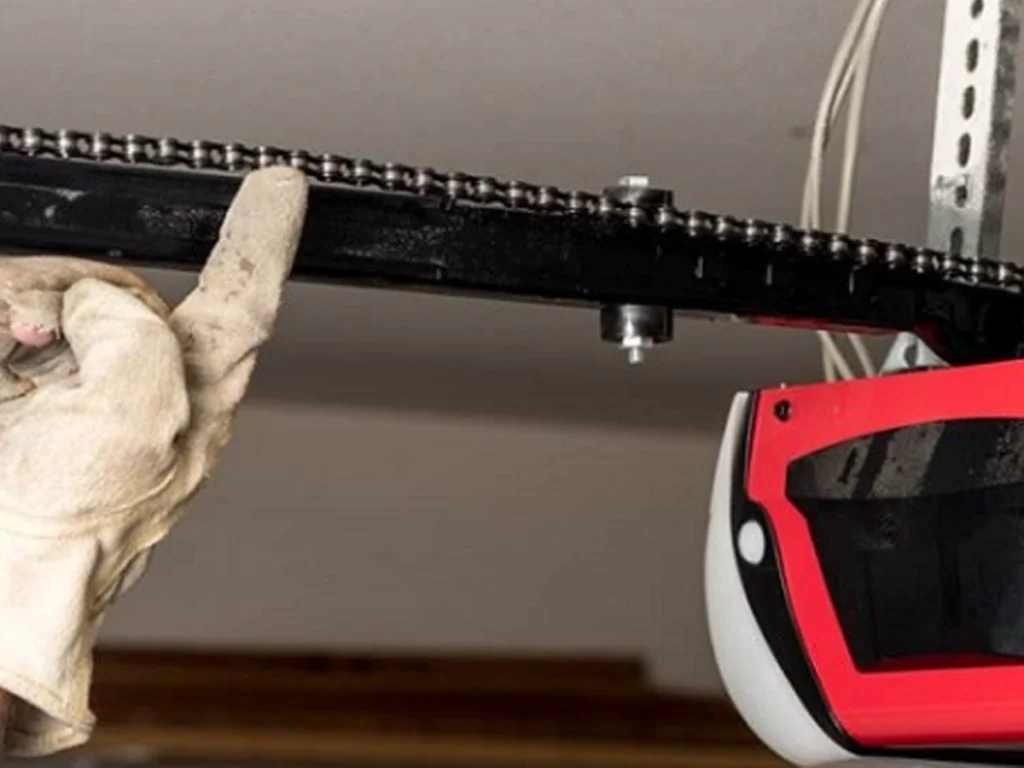
A chain drive opener uses a metal chain to move a trolley along the opener rail. The trolley connects to the garage door through the opener arm.
However, the opener should not be expected to lift the full uncontrolled weight of the door. A properly balanced garage door relies on its spring system to counterbalance much of its weight.
United States Consumer Product Safety Commission warns that doors that bind, stick, or become badly unbalanced should receive professional service.
Chain drive systems remain common because their design is proven and dependable. Chamberlain currently describes chain models as durable and budget friendly.
Consider chain drive when:
- Your main priorities include reliable operation and purchase value.
- Garage noise has little effect on bedrooms or other living areas.
How Belt Drive Garage Door Openers Work
A belt drive uses a reinforced belt instead of a metal chain to move the trolley.
Chamberlain currently describes its belt drive design as using a steel reinforced rubber belt. The company identifies smooth and very quiet operation as major advantages.
Because the drive does not rely on a metal chain moving through the rail system, it can produce less noticeable vibration and sound.
LiftMaster specifically promotes belt drive systems for attached garages, home town, and homes with living areas above the garage. It states that reducing vibration can help limit the amount of opener noise that reaches those rooms.
Belt drive deserves close attention when:
- A bedroom, office, or family room sits near the garage.
- Smooth and quiet operation has high value for your household.
The Powerful Difference Is Usually Noise
Noise is often the clearest difference between these two opener types.
A chain contains metal links, while a belt uses reinforced flexible material. Therefore, their movement and vibration can sound noticeably different.
For homeowners, garage location matters as much as the opener itself.
Think about:
- Whether someone sleeps or works directly above the garage.
- Whether the garage shares walls with quiet living areas.
If noise travels into the home, belt drive often earns its higher consideration.
Why Belt Drive Can Feel Better in an Attached Garage
An attached garage can transfer sound and vibration through framing into nearby rooms.
Therefore, an opener that seems only moderately noisy inside the garage may become more noticeable elsewhere in the house.
LiftMaster identifies attached garages and homes with rooms above the garage as strong applications for quieter belt drive systems. Chamberlain similarly calls belt drive openers ideal for garages near bedrooms. (LiftMaster)
This makes home layout an important buying factor.
Before choosing:
- Open your current door while standing in the nearest bedroom or office.
- Decide whether reducing opener noise would create meaningful daily comfort.
For many attached garages, noise control can matter more than a small difference in purchase price.
Chain Drive Still Offers Strong Everyday Value
Quiet operation is not every homeowner’s first goal.
A detached garage may be far enough from living space that additional chain noise has little practical effect. In that setting, a reliable chain drive model can make excellent sense.
Therefore, chain drive should not be treated as outdated simply because belt drive is quieter.
Chain drive may fit when:
- The garage is detached or far from bedrooms.
- Purchase value matters more than achieving the lowest possible noise.
The right choice depends on the property, not a universal ranking.
Do Not Assume Chain Always Means More Lifting Power
A common mistake is assuming the metal chain automatically means greater lifting ability.
In practice, homeowners should look at the complete opener specification rather than drive material alone.
Chamberlain separates drive type from lift power in its current buying guide. Its guide offers different power levels while explaining belt and chain as separate drive choices.
Therefore, compare actual specifications.
Ask:
- What lift capacity does the exact opener provide?
- Does that opener match the size and construction of the garage door?
The word chain by itself does not answer those questions.
Door Balance Matters More Than Brute Opener Force
A garage door opener should operate a door that is already mechanically sound.
Therefore, buying a stronger opener is not the correct fix for a door that is too heavy because of spring problems.
Before replacing an opener:
- Have unusual door weight or binding evaluated first.
- Repair door balance problems before expecting a new opener to solve them.
This principle applies to both chain and belt systems.
A good opener works with a balanced garage door rather than fighting against it.
Belt Drive Offers a Smooth Daily Experience
Garage door openers may operate several times on a busy day.
Therefore, small differences in vibration and sound can become more important over years of daily use.
This can make belt systems appealing even when the garage does not sit directly below a bedroom.
Consider daily use:
- Count how often household members enter through the garage.
- Think about whether early morning or late evening operation disturbs others.
A quieter opener may offer its greatest value through repeated everyday use rather than one dramatic improvement.
Chain Drive Noise Is Not Always a Deal Breaker
Chain drive openers produce more drive related sound than belt systems in typical comparisons. However, actual garage noise has several possible sources.
Rollers, hinges, loose hardware, door balance, track conditions, vibration, and installation quality can all affect what you hear.
Therefore, replacing a chain opener may not fix every noisy garage door.
LiftMaster’s own sound comparison notes that actual sound levels vary. (LiftMaster)
Before replacing an opener solely for noise:
- Identify whether the opener or the door creates most of the sound.
- Have grinding, scraping, binding, or unusual vibration inspected.
A noisy door can sometimes signal maintenance or mechanical concerns rather than merely an unpopular drive type.
Compare Maintenance by Exact Manufacturer Instructions
Maintenance advice should come from the manual for the exact opener.
Different models can have different requirements. Therefore, homeowners should avoid assuming that every exposed chain needs added lubricant or every belt is completely maintenance free.
That distinction is important.
For either drive type:
- Follow the maintenance schedule in the exact manufacturer’s manual.
- Do not apply grease or oil simply because an online article recommends it.
Proper maintenance is product specific.
The garage door itself may also require separate roller, hinge, spring, or hardware care according to manufacturer instructions.
Compare Purchase Price With the Features You Actually Need
However, final prices vary by model and feature package.
Battery backup, cameras, lighting, smart controls, locks, power ratings, remotes, and installation can change the total cost.
Therefore, comparing one basic chain model against a premium belt model may create a misleading conclusion.
When comparing quotes:
- Match similar power and feature levels whenever possible.
- Separate opener price from installation and additional hardware costs.
Paying more makes sense only when the added features solve needs that matter in your home.
Smart Features Are Available With Both Drive Types
Choosing chain or belt does not automatically decide whether your opener can be smart.
Therefore, compare drive type and technology separately.
Useful questions include:
- Do you want remote monitoring from a phone?
- Would battery backup or an integrated camera add real value?
A homeowner may choose a quiet belt model with smart features.
Another may choose a connected chain model because value and dependable operation matter more than sound.
Battery Backup May Matter More Than Chain or Belt
Drive type gets most of the attention during shopping.
However, power outages can change what matters very quickly.
Therefore, a complete buying decision should compare more than the rail mechanism.
Consider:
- Whether the garage provides a major entrance into your home.
- Whether continued powered access during an outage matters to your household.
A belt or chain opener with the features you need may be a better choice than selecting a drive type first and ignoring everything else.
Safety Features Should Outrank Convenience Features
Quiet movement and smartphone access are useful.
However, safe closing performance matters more.
Therefore, safety should remain central when replacing an old opener.
Check:
- Whether required safety sensors operate correctly.
- Whether the door reverses correctly during approved testing.
If an old opener fails its safety test, disconnecting or repairing the system according to proper guidance is more important than debating chain against belt.
Monthly Safety Checks Are a Smart Habit
These checks apply whether the opener uses a chain or belt.
A premium drive system does not remove the need for safety maintenance.
Each month:
- Observe normal opening and closing for unusual movement.
- Test required safety functions according to the opener manual.
If the door binds, sticks, becomes unbalanced, or fails to reverse properly, stop treating the problem as a simple drive preference.
Professional garage door service may be appropriate.
Think About the Age of Your Existing Opener
Replacing an opener can be a chance to review more than noise.
Older systems may lack features common on current products. More importantly, very old openers may not meet later entrapment protection requirements.
Therefore, age and safety condition deserve attention before drive type.
When reviewing an older opener:
- Identify the model and locate its manufacturer instructions.
- Confirm that its required safety systems operate correctly.
If replacement is justified, then compare chain and belt based on the home’s layout, door needs, budget, and desired features.
An Illustrative Franklin Home Comparison
Consider a Franklin household with a two story home and a bedroom directly above the garage.
The family uses the garage early each morning. Their current opener can be heard upstairs.
Now consider a detached garage where nobody hears the opener.
Two practical conclusions follow:
- Belt drive can add meaningful comfort in the first home.
- Chain drive may provide better value in the detached garage.
Context changes the answer.
Another Practical Example Shows Why Budget Matters
Imagine a property owner replacing several dependable openers in detached garage spaces.
Again, this is an illustrative planning example rather than a reported Everlast customer project.
Noise may have little value because the garages do not connect to occupied rooms. Therefore, paying more specifically for reduced drive noise may not produce a meaningful benefit.
A rational comparison would:
- Price models with similar power and core safety features.
- Spend more only where added features improve the property.
Decision makers should buy for the actual application rather than automatically selecting the most premium mechanism.
Franklin on Opener Selection
Everlast Garage Doors – Franklin currently publishes guidance comparing belt, chain, and screw drive opener systems.
Its own website describes belt systems as suitable where quiet operation matters and chain systems as dependable choices where budget and durability are important.
A useful professional assessment should:
- Review the door type, condition, use pattern, and garage location.
- Match the opener to practical needs rather than recommending one drive type for every home.
That approach creates a stronger long term decision.
The Essential Chain Drive vs. Belt Drive Decision Guide
There is no universal winner for every garage.
Therefore, begin with the household rather than the product label.
Choose based on:
- Noise needs: Belt drive has the advantage when quiet operation matters.
- Budget priorities: Chain drive often deserves consideration when cost matters more than minimum sound.
Then compare power, safety functions, battery backup, lighting, smart control, warranty terms, and professional installation needs.
The best opener is the one that fits the whole garage.
Contact Everlast Garage Doors – Franklin
Chain Drive vs. Belt Drive Garage Door Openers is ultimately a question about how your garage fits your life.
If quiet operation matters because the garage sits near a bedroom, belt drive may deserve the strongest consideration. If the garage is detached and budget value matters more, chain drive can remain a practical option.
Contact us at:
- Phone: 615-808-8806
- Location: 1107 Battlewood St #222, Franklin, TN 37069
A professional review can also determine whether the existing door needs service before a new opener is installed.
Final Verdict on Chain Drive vs. Belt Drive Garage Door Openers
Therefore, the practical decision is simple:
- Choose belt drive when quiet, smooth operation is worth more to you.
- Choose chain drive when dependable value matters and extra noise is less important.
Finally, remember that drive type cannot correct a damaged or poorly balanced garage door.
Frequently Asked Questions About Chain and Belt Openers
Which is better, a chain drive or belt drive garage door opener?
Neither is automatically better for every home. Belt drive is usually the stronger choice when quiet and smooth operation matter, especially near bedrooms. Chain drive remains attractive when dependable service and
Are belt drive garage door openers quieter than chain drive openers?
Yes, quieter operation is one of the main advantages manufacturers identify for belt systems. LiftMaster says belt drive systems reduce vibration and sound, while Chamberlain describes belt models as very quiet and smooth.
Can a belt drive garage door opener lift a heavy garage door?
The correct answer depends on the exact opener and door rather than the belt alone. Chamberlain separates drive system from lift power in its buying guidance and offers different lifting ratings across opener models.
Do chain drive garage door openers need more maintenance?
Maintenance requirements depend on the exact model, so homeowners should follow the manufacturer manual rather than general assumptions. Some opener manuals state that the opener itself needs no additional lubrication even though the garage door requires periodic maintenance.
Should I replace an old chain opener with a belt drive opener?
Replace an old opener based first on safety, condition, reliability, and household needs. If replacement is already appropriate and the garage is near living space, a belt drive can also provide a meaningful reduction in noise and vibration.