A Startling Safety Fact About Garage Door Emergency Repairs
Notably, here is a surprising safety fact. In fact, the U.S. Consumer Product Safety Commission advises homeowners to inspect the garage door and opener every 30 days. Therefore, waiting several weeks can pass an entire recommended check period. More importantly, the same alert warns that a badly unbalanced door may fall without warning. Garage door emergency repairs deserve fast attention because a small fault can affect a very large moving system.
AI Overview
Garage door emergency repairs should not wait when a door is crooked, stuck, falling, or unable to close. Likewise, prompt help is wise after a spring breaks, a cable frays, or a roller leaves its track.
First, stop using every wall button, remote, keypad, and phone control. Next, keep people, pets, vehicles, and stored items away from the door path. Then, note the door position, visible damage, recent sounds, and opener response.
Also, do not pull the emergency release when the door is open, crooked, or likely to have a broken spring. Instead, share the visible signs with a trained Liftmaster technician and request prompt assessment.
• First, treat lost balance, broken lift parts, and a crooked door as urgent safety concerns.
• Also, treat a door stuck open as an access and security problem that needs prompt action.
Why a Small Delay Can Create Serious Risk
At first, one slow cycle or strange sound may seem minor. However, a garage door works as one linked system. Specifically, springs balance the door, cables transfer force, rollers guide travel, and tracks control the path. Therefore, one weak part can change the load on several other parts.
For example, a damaged roller may drag instead of turning. As a result, the hinge, track, panel, and opener may face more strain. Likewise, a weak spring can make the opener work against far more weight than normal. Therefore, repeated use may spread damage beyond the first fault.
Delay can also place people near an unstable door. Indeed, the says an unbalanced door may crash to the floor. Therefore, convenience should never outrank safe control of the opening.
• First, stop repeated cycles when the door moves differently from its normal pattern.
• Next, seek urgent help when the fault affects balance, travel, closing, or secure access.
Eight Urgent Door Problems That Should Never Wait
Some faults need planned service, while others need emergency action. Therefore, use visible condition and door motion to judge urgency. Consequently, the following signs should lead to stopped use and prompt professional help.
A broken spring
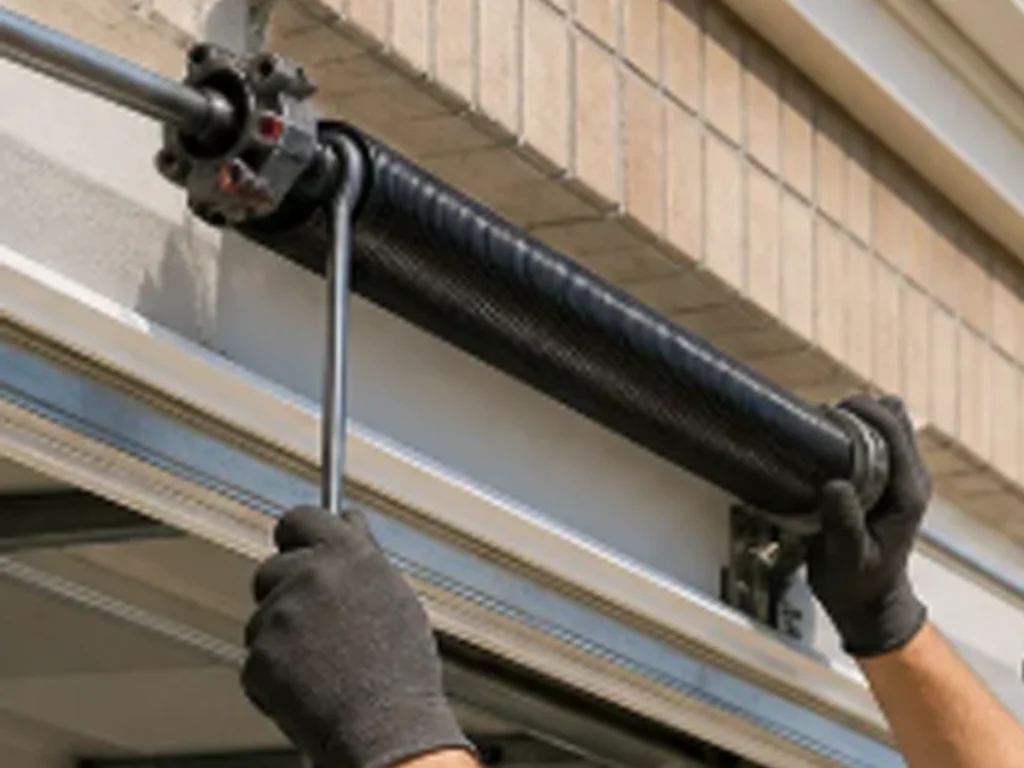
First, a broken spring may follow a loud bang. In addition, a visible gap may appear in a torsion spring above the door.
A frayed or broken cable
Next, a cable may show loose strands, rust, slack, or complete separation. Indeed, that worn cables are in danger of breaking.
A door that has left its track
Likewise, a roller outside the track can leave the door crooked or badly jammed. Therefore, keep every control unused.
A door stuck partly open
Similarly, a partly open door may have poor balance, a cable fault, or a blocked track. Therefore, nobody should walk beneath it.
A door that slams or drops
Clearly, a door that falls faster than normal has lost safe control. For example, spring support may be weak or a cable may have failed. Therefore, clear the area and stop testing.
A door stuck fully open
Meanwhile, a fully open door may expose vehicles, tools, stock, and a building entry. Therefore, do not force it down. Instead, explain to the technician that the property cannot be secured.
A failed reversal or sensing system
Also, an opener that fails its reversal test needs prompt attention. Accordingly, it should remain disengaged until adjusted, repaired, or replaced.
Finally, smoke, sparks, or a hot electrical smell can point to an opener or wiring fault. Therefore, stop all controls. Otherwise, keep away and request qualified help.
• Above all, never stand beneath a door that is crooked, partly open, or unable to hold position.
• Also, tell the service provider which urgent sign you can see before the technician arrives.
The Critical Truth About Springs, Cables, and Tracks
In fact, garage door springs do much of the balancing work. Therefore, the opener should guide a balanced door rather than lift its full dead weight. When a spring breaks, the door may become too heavy for normal use. The opener may hum, stop, or lift only a short distance.
Still, a loud bang does not prove spring failure by itself. Therefore, look only from a safe distance for a gap, hanging cable, or changed door position. Above all, do not touch the spring or its anchors. Instead, a trained technician must confirm the cause and match the replacement to the door.
Cables help lift both sides at the same rate. Therefore, one damaged cable can make the door lean or bind. Likewise, a bent track can push rollers from their safe path.
• First, report any bang, spring gap, loose cable, crooked door, or sharp track bend.
• Most importantly, never loosen spring anchors, drums, cables, or bottom brackets.
How Stuck Doors and Repeated Opener Use Add Risk
Clearly, a door stuck open creates an immediate access problem. It may leave vehicles, tools, goods, and connected rooms easier to reach. Therefore, prompt repair helps restore normal control of the property.
A door stuck closed creates a different problem. A vehicle may be trapped, or a business bay may become unusable. However, urgency does not make forced movement safe. Therefore, use another route or transport plan when possible.
A partly open door creates both concerns at once. It leaves a gap while the door may remain unstable. Therefore, do not crawl under it or ask another person to hold it.
Also, repeated button presses rarely identify the fault. Instead, they can keep applying force to a blocked or unbalanced system. For example, a broken spring may leave the opener facing much more load than normal. Likewise, a bent track may stop a roller while the motor keeps pulling.
As a result, added force may affect the trolley, rail, arm, brackets, gears, or panels. Therefore, stop after the first clear failure.
• First, report whether the door is closed, open, partly open, or crooked.
• Also, report whether a vehicle is trapped or the property cannot be secured.
Safe Steps Before Professional Help Arrives
A calm first response can reduce exposure while help is arranged. Therefore, follow simple steps that do not disturb loaded parts.
Stop every control
First, stop using the wall button, remote, keypad, vehicle control, and phone app.
Clear the area
Next, move people and pets away.
Note the door position
Then, record whether the door is closed, open, partly open, or crooked. Also, note any gap, loose cable, bent track, smoke, or unusual smell.
Leave the release cord alone when damage is possible
LiftMaster warns that the release should be used only when the door is fully closed, when possible. It also warns that weak springs may let a door fall quickly.
Prevent accidental use
Next, tell everyone not to operate the door. Also, disable shared phone routines when that can be done from a safe place.
Call trained service
Then, share the model, door position, visible signs, recent sounds, and access problem.
Wait outside the danger zone
Finally, remain away from the door path, springs, cables, and loose hardware. Do not begin a repair while waiting.
• First, place safety and clear facts ahead of speed or convenience.
• Also, follow the exact owner manual when it gives stricter steps for your model.
Five Risky Actions Homeowners Must Avoid
Do not repair springs or cables
First, springs and cables work with stored force. that spring systems are dangerous and that cable replacement needs trained service.
Do not force a jammed door
Next, pushing or pulling a crooked door can move rollers, panels, or tracks. Therefore, a trapped vehicle is not a reason to force clearance.
Do not pull the release beneath an open door
Also, the release separates the door from the opener. It does not add spring support.
Do not bypass safety sensors
Likewise, blocked or failed photo eyes should be cleaned, aligned, tested, or repaired as the manual directs. They should not be defeated.
Do not stand beneath the door
Finally, never inspect a partly open or unstable door from below. Use a safe side view instead. Also, keep fingers away from section joints and moving parts.
• Above all, never trade a few minutes of access for exposure to a falling door.
• Also, leave high tension and structural repair work to a trained door systems technician.
A Smart Repair or Replacement Plan Protects Value
Prompt service begins with diagnosis, not a rushed part change. Therefore, the technician should inspect the door, opener, tracks, and balance system. A broken part may be clear, but linked damage may also need attention.
For example, impact that bends one track may harm rollers and panel edges. Likewise, a broken cable may change drum position and door level. Therefore, the repair plan should explain both the first fault and any related damage.
Many emergencies can be repaired. A technician may replace springs, cables, rollers, hinges, sensors, or opener parts. However, replacement deserves review when panels are badly bent, parts are obsolete, or failures keep returning.
A clear quote should separate urgent safety work from useful care and optional upgrades.
• First, ask which part failed and what linked parts were checked.
• Next, request a clear difference between required repair, advised care, and optional improvement.
Three Honest Case Examples From Common Emergencies
The following cases are composite examples. Therefore, they show realistic choices without describing named customers or promising exact results.
A loud bang before the morning commute
A Franklin homeowner hears a bang during the night. In the morning, the opener hums and the door rises only a few inches. A visible spring gap appears above the closed door.
In this example, repeated opener use would not restore balance. Therefore, the owner stops all controls and reports the signs. A technician must inspect the springs, cables, drums, door balance, and opener before normal use returns.
A door becomes crooked after light vehicle contact
A driver touches the lower door section while parking. Later, one side scrapes and a roller moves near the track edge.
However, that extra cycle may worsen track or panel damage. Therefore, the safer choice is stopped use and professional assessment. The check should cover the section, tracks, rollers, hinges, cables, and door level.
A business door will not close after hours
A small business door reverses each time it nears the floor. Staff members see no large object, but one sensor light looks wrong.
In this example, staff can check for a clear path without bypassing protection. However, they should not hold the control to defeat the safety system. Therefore, prompt service is reasonable because safe closing and security both matter.
• These cases show why door position and motion matter more than guesswork.
• They also show why one calm response can prevent repeated force on damaged parts.
A Powerful Prevention Plan for Franklin Properties
Emergency repair starts after a fault, but prevention begins earlier. Therefore, a simple inspection plan can reveal change before normal access is lost.
First, watch one full cycle from a safe place. Next, listen for a new scrape, pop, grind, or rattle. Then, look for frayed cables, loose parts, worn rollers, rust, gaps, and uneven movement. However, never adjust spring or cable parts during a visual check.
For business properties, keep a record for each door. Record the date, sound, motion, fault, service, replaced parts, and next check. Also, train staff to stop using any door that leans, drops, binds, or leaves its normal path.
• First, set one fixed day each month for a visual and safety review.
• Also, plan annual professional service or more frequent checks when use is high.
Five Frequently Asked Questions
The questions below reflect recurring search language and topics covered by current industry support pages. Therefore, each answer focuses on safe action rather than unverified repair claims.
Is a broken garage door spring an emergency?
Yes, a broken spring can make the door very heavy and hard to control. Therefore, stop using the opener and keep everyone away. Do not touch the spring, cable, drum, or bottom bracket. Instead, request prompt service and report any loud bang, visible spring gap, heavy movement, or uneven door position.
Can I open a garage door with a broken spring?
Manual opening can be unsafe because the spring no longer provides normal balance. LiftMaster warns that a heavy door or damaged spring needs professional service. Therefore, do not pull the release or lift the door when spring damage is suspected.
What should I do when my garage door is stuck open?
First, stop every control and keep the opening clear. Next, do not force the door down or pull the release when damage is possible. Then, move valuable items only when they can be reached safely. Finally, request emergency service and explain that the property cannot be secured.
Can I fix a garage door that has come off its track?
A door outside its track may be crooked, loaded unevenly, or linked to cable damage. Therefore, owner repair can create more movement. Stop every control and keep people away. Do not push rollers back or loosen track supports. A trained technician should inspect tracks, rollers, hinges, cables, panels, and balance.
Why does my opener run while the garage door does not move?
Several causes are possible, including a broken spring, disconnected trolley, worn drive part, or blocked door. Therefore, sound alone does not prove one fault. Stop repeated attempts and inspect only from a safe distance. If the door is heavy, crooked, or damaged, leave the release untouched and request trained service.
Get Fast, Careful Help From Everlast Garage Doors – Franklin
Delaying garage door emergency repairs can increase uncertainty, disrupt access, and expose linked parts to more strain. Therefore, the safest plan is simple. Stop operation, clear the area, note the visible signs, and seek qualified help.
At Everlast Garage Doors, we provide complete Garage Door Services for both residential and commercial properties. Our team handles Garage Door Installation, Repair, Maintenance, Custom Designs , and full Door Replacements to ensure long-lasting performance and reliability. We also offer Emergency Garage Door Service to quickly resolve urgent issues and keep your property secure and fully operational. you can count on quality, durability, and trusted service every step of the way.
Contact information:
- Phone: 615-808-8806
- Location: 1107 Battlewood St #222, Franklin, TN 37069