
Residential Garage Door Repair Signs Franklin Homeowners Should Know
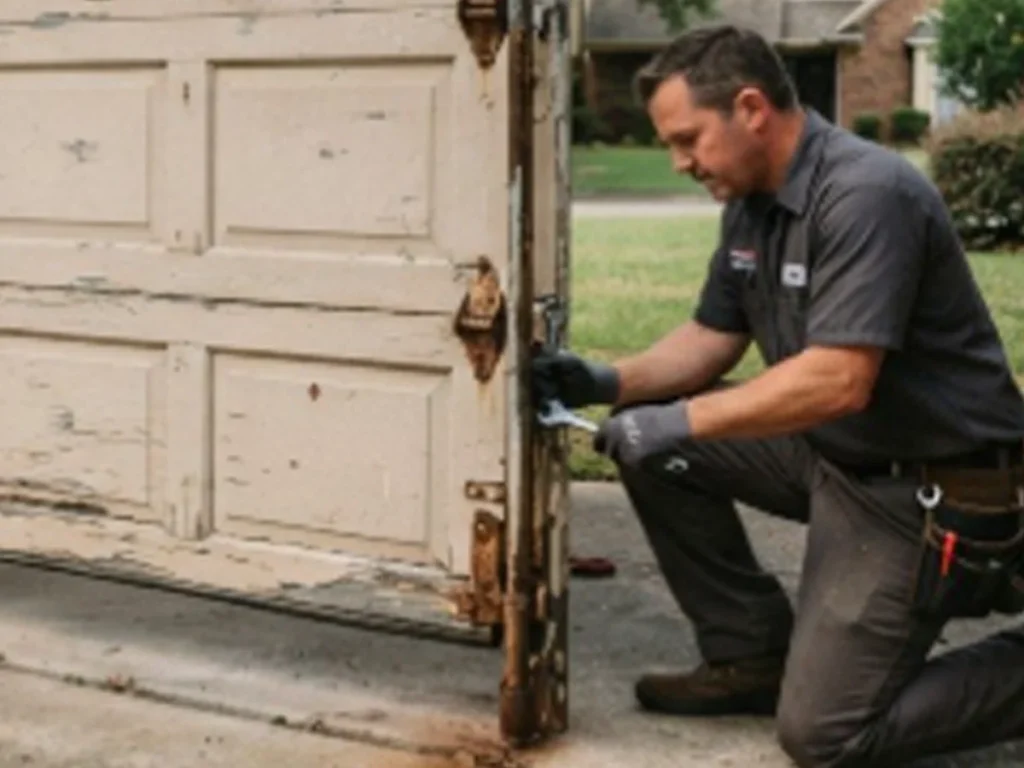
Garage doors are among the largest moving objects in a home, yet hidden damage can begin long before a door stops working. The Door and Access Systems Manufacturers Association warns that springs and spring hardware are under high tension. Therefore, a small change in door movement deserves prompt and careful attention.
Residential garage door repair is often needed when a door has damage that is not obvious from the driveway. Hidden damage may include worn rollers, loose hinges, bent tracks, frayed cables, weak panels, strained opener parts, or safety sensor faults. These concerns can lead to noise, uneven movement, slow operation, and poor closing. A professional inspection helps identify the cause, explain repair choices, and protect safe door use. Homeowners should never adjust springs, cables, drums, or bottom brackets because those parts can store dangerous energy.
A garage door can still open while a problem is growing behind the scenes. Therefore, normal operation does not always prove that the system is in good condition. A door may hide stress in its rollers, hinge points, track brackets, spring system, or opener connection. Early action can help protect the door, the opener, and the people who use the garage every day.
We approach residential garage door repair as a complete system check, not a quick look at one visible symptom. In service work, the first concern a homeowner sees may not be the root cause. A loud sound may come from a roller, for example, yet the roller may be reacting to a track or hinge concern. This guide explains what hidden damage can look like, what homeowners can safely observe, and when professional service matters.
Why Hidden Garage Door Damage Matters
Hidden garage door damage matters because the parts rely on one another. Panels connect through hinges. Rollers move inside tracks. Springs and cables counterbalance the door weight. The opener moves a balanced door, while safety devices help protect the opening. Consequently, damage in one area can place extra stress on another part.
- A worn roller can create friction that affects the track, hinge, and opener.
- A weak top panel can place added stress on the opener arm connection.
Some damage begins after a clear event, such as a vehicle bump, strong wind, or a falling object. However, normal daily use can also slowly wear moving parts. A hinge can loosen. A roller can wear. A cable can fray. A seal can harden. Since these changes often happen slowly, homeowners may only notice the issue when the door becomes loud or unreliable.
The goal is not to worry about every normal sound. Instead, it is to notice changes. A door that suddenly shakes, scrapes, reverses, moves unevenly, or feels heavy needs attention. In our view, early assessment is often the most practical way to prevent a smaller repair from becoming a larger system concern.
New Noises Can Point to Damage Below the Surface
A garage door does not need to be silent. Still, a new or sharp sound deserves attention. Grinding can suggest a roller or track concern. Popping can point to a hinge, panel, or spring related issue. Scraping can occur when a roller binds or a track shifts. Each sound needs an inspection before anyone assumes the cause.
- Grinding sounds can occur when rollers or bearings wear down.
- Scraping sounds can occur when tracks, rollers, or panels lose proper alignment.
For example, a homeowner may hear a brief squeal and assume the opener needs repair. Yet the opener may be responding to resistance elsewhere in the door system. If the door is not moving freely, the opener has to work harder. Therefore, replacing the motor without checking the door can leave the real issue in place.
A qualified inspection can look at the complete travel path. The technician can review rollers, hinges, tracks, mounting points, balance, and opener force. That wider view matters because the most obvious sound is not always the source of the problem. It also helps a homeowner make a repair decision based on facts rather than guesswork.
Uneven Movement May Reveal Roller or Track Damage
A level door should rise and close in a controlled way. If one side moves faster, the door shakes, or a roller appears out of place, stop using the door if it cannot move safely. Uneven travel can suggest concerns with rollers, tracks, cables, drums, springs, or door panels.
- Rollers help each panel follow the intended track path.
- Tracks keep the door guided as it moves from the opening to the ceiling.
A roller that wears down may not fail in one dramatic moment. Instead, it may begin with extra noise or light vibration. Over time, it can bind in the track and increase stress on the hinge where it sits. Likewise, a track can shift when a fastener becomes loose or after an impact. A visual check may reveal an obvious bend, but hidden track alignment issues need professional assessment.
Do not pull a door back into a track or loosen track hardware to make it fit. The door can be heavy, unstable, and connected to high tension hardware. Keep the opening clear and arrange residential garage door repair from a trained technician. This protects the door from further damage and reduces risk for everyone nearby.
Damaged Panels May Hide Structural Weakness
Garage door panel damage is easy to see when there is a large dent. However, smaller dents and creases can hide a deeper concern. A panel may bend near a hinge, roller, strut, or opener arm point. As a result, the door may flex more than intended during movement.
- Panel joints must bend smoothly as the door follows the curved track sections.
- Reinforcement struts help support wider panels and top sections during normal use.
A panel with a minor cosmetic mark may remain safe. On the other hand, a panel with a crease near a hardware connection may affect alignment or movement. The correct repair depends on door age, panel construction, availability of a matching replacement, and the condition of nearby parts.
Look beyond the front view. From inside the garage, inspect the closed door for cracked interior skin, loose struts, pulled fasteners, or a section that no longer sits square. Do not touch spring related hardware. Instead, note what you see and share it during service. After severe weather, water exposure, or a direct impact, an inspection may be wise even if the door still operates.
Cables and Springs Can Signal Urgent Safety Concerns
The spring and cable system is one of the most important parts of a garage door. Springs counterbalance much of the door weight. Cables transfer that force to the lower part of the door. Because these components store energy, they require professional handling.
- A broken spring can leave the door unusually heavy or unable to rise.
- A loose or frayed cable can cause the door to move unevenly or become stuck.
Look only from a safe distance. A cable that appears loose, tangled, or frayed is not a home repair project. Bottom brackets, drums, cables, and springs can all be connected to stored spring force. The DASMA consumer checklist advises against removing, repairing, or adjusting these parts.
Opener Trouble May Start With the Door Itself
The opener is often blamed when a garage door will not open. Yet an opener can only work well when the door is properly balanced and able to travel through the tracks. A heavy door, damaged roller, bent track, or weak panel can make the opener work beyond its intended role.
- The opener moves a balanced door through its rail, trolley, and arm connection.
- The door springs offset weight so the opener does not carry the full lifting load.
A door that strains, jerks, or reverses may have an opener issue. However, it may also have a mechanical problem that needs correction first. This is why a complete residential garage door repair inspection should include both the door and the opener rather than treating them as separate systems.
In practical service work, the better question is not only, “Is the opener working?” The better question is, “What is making the opener work harder?” This approach helps homeowners avoid replacing an opener while a hidden balance or travel issue remains. Never try to force a heavy, crooked, or stuck door open.
Sensor Problems Should Never Be Ignored
Safety sensors are usually located near the bottom of the garage door opening. They send a beam across the path of the door. If the beam is blocked or the system identifies a concern, the door may refuse to close or may reverse. This safety function helps protect people, pets, and property.
- Dirty sensor lenses can interrupt the beam and affect closing.
- Misaligned sensors or damaged wires can cause a door to reverse unexpectedly.
Homeowners can safely check whether boxes, tools, leaves, or other items block the sensor area. They can also gently clean the lenses with a soft cloth. However, do not bypass or disable the sensors to force the door closed. If basic cleaning does not solve the concern, a professional should inspect the system.
Small Gaps and Weather Wear Can Cause Larger Problems
The bottom seal and perimeter seals help limit rain, dirt, pests, and outside air from entering the garage. When seals crack, flatten, or pull away, homeowners may notice light under the door, water near the threshold, or debris inside the garage.
- Bottom seals help the door meet the floor more evenly.
- Side and top seals help close gaps around the door opening.
Seal wear is not always urgent. However, it can reveal another concern. A new gap on one side may mean the door is not sitting level. A worn seal near a bent panel can make weather entry more likely. Therefore, the right repair decision considers both the seal and the reason it no longer meets the opening.
Franklin homeowners may also notice that garage door materials respond to changing heat and moisture. That does not prove damage by itself. Still, regular visual checks can help identify hardened rubber, cracked seal material, loose retainers, or panel movement before the issue grows.
A Safe Homeowner Check Has Clear Limits
Homeowners can make useful observations without performing risky repairs. A short visual and sound check can provide helpful details for a technician. The purpose is to recognize warning signs, not to adjust parts under tension.
- Watch the door from a safe distance as it opens and closes.
- Listen for new scraping, grinding, banging, or repeated clicking sounds.
Look for worn weather seals, visible panel dents, and sensor obstructions. Notice whether the door travels evenly and whether it closes fully. If the door is moving poorly, do not continue repeated tests. One careful observation is enough to identify the need for service.
A Franklin Service Example of Hidden Damage
Consider a Franklin homeowner who notices that the door gives a short shudder near the middle of its travel. The door still closes, so the concern seems easy to postpone. Later, the opener begins to sound louder and the door sits slightly uneven at the floor.
- The visible concern is vibration during movement.
- The full inspection considers rollers, hinges, tracks, cables, balance, panels, and opener force.
This is an illustrative example, not a diagnosis for every door that shakes. In a real service visit, the technician would inspect the specific door and explain what the findings mean. The point is that several connected parts can create one symptom. A repair that only addresses the sound may miss the source.
Our service philosophy is to explain the observed issue in plain language. Homeowners need to know what is worn, what is urgent, what can wait, and why the repair is recommended. That clarity supports better decisions for households, property managers, and anyone responsible for a Franklin home.
When to Schedule Residential Garage Door Repair
Schedule professional service when the door will not move normally, appears uneven, makes a new harsh noise, or has visible cable, spring, track, or panel damage. You should also arrange service after a direct impact, a severe weather event, or a failure of the safety reversing function.
- Stop operating the door after a broken spring, loose cable, or off track event.
- Request prompt service when the opener strains or the door becomes unusually heavy.
It is also useful to schedule maintenance before a failure. A trained technician can look for worn rollers, hinge wear, loose hardware, seal problems, balance concerns, and sensor operation. This does not guarantee that future damage will never occur. However, it can help identify current wear while repair choices are still straightforward.
For decision makers, the value is simple. A garage door that operates safely and reliably supports daily routines, vehicle access, home security, and peace of mind. Ignoring early signs may allow a manageable concern to affect more parts of the system.
Frequently Asked Questions
Can a garage door have hidden damage if it still opens?
Yes. A garage door may still move even when rollers, hinges, tracks, panels, cables, or opener parts show early wear. Operation alone does not prove that the system is sound. New noise, vibration, uneven movement, or a change in closing position can justify a professional inspection. A technician can assess the complete system and explain the specific findings.
What are signs that my garage door spring may be damaged?
A loud bang, an unusually heavy door, uneven lifting, or a door that only rises slightly can be signs of a spring issue. These symptoms can also have other causes, so they do not confirm a diagnosis by themselves. Do not touch or adjust the spring. Keep people clear of the door and arrange professional garage door service.
Why does my garage door make a grinding noise?
A grinding noise can come from worn rollers, a binding track, damaged hinges, or another mechanical concern. It can also make the opener work harder than normal. Because several parts can produce similar sounds, a professional inspection is the safest way to identify the cause. Avoid adding force or repeated opener cycles while the noise continues.
Is a bent garage door panel only a cosmetic problem?
Not always. A small dent may be cosmetic, but a crease near a hinge, roller, strut, or opener arm connection can affect door movement or panel strength. The correct answer depends on the panel location, door construction, and nearby hardware condition. A technician can determine whether repair, reinforcement, or panel replacement is appropriate.
Can I fix a loose garage door cable myself?
No. Garage door cables connect to spring loaded parts that may store significant energy. A loose cable can also mean that another part of the system has failed or moved out of alignment. Do not try to reinstall, cut, or tension the cable. Stop using the door and request trained residential garage door repair.
Conclusion
Hidden garage door damage is easier to manage when homeowners notice changes early and respond safely. New sounds, uneven movement, loose cables, panel dents, worn seals, sensor faults, and strained openers all deserve thoughtful attention. The cause may be simple, or it may involve several connected garage door parts.
We provide complete Garage Door Services for both residential and commercial properties. Our team handles Garage Door Installation, Repair, Maintenance, Custom Designs , and full Door Replacements to ensure long-lasting performance and reliability. We also offer Emergency Garage Door Service to quickly resolve urgent issues and keep your property secure and fully operational. you can count on quality, durability, and trusted service every step of the way.
For clear guidance and complete residential garage door repair in Franklin, contact Everlast Garage Doors to request a professional evaluation. A careful inspection can identify hidden damage, explain sensible repair options, and help restore dependable daily door operation.
For services, call 615-808-8806. The Franklin office is at 1107 Battlewood St #222, Franklin, TN 37069.